
Decius Brutus in Julius Caesar
Major character
A smooth-talking Roman noble who joins the conspiracy and uses flattery and re-interpretation to persuade Caesar to the Capitol.
Who is Decius Brutus?
Decius Brutus is a polished member of Caesar’s circle who aligns with the conspirators because they value his tact. He serves primarily as a persuader and facilitator: he reassures Caesar by recasting Calpurnia’s frightening dream as an omen of honor, thereby coaxing Caesar to go to the Senate when Caesar had resolved to stay. Decius also appears among the masked conspirators who come to Brutus’s orchard and volunteers to bring Caesar to the Capitol despite the bad omens. He moves comfortably between public flattery and private collusion, playing the role of the man who can make a proud ruler feel lauded rather than threatened. In the assassination scene, he is one of the conspirators who stab Caesar and then help attempt to justify the killing to the populace. Across his appearances he functions as the practical, eloquent instrument who turns conspiratorial intent into action by managing perceptions and coaxing Caesar into a vulnerable position.
In the book: We meet him as a poised Roman noble moving in Caesar’s circle, the kind of man who speaks smoothly and is used to being listened to. Early on, he’s valued for his tact and quick wit—especially his knack for turning bad omens into reassuring talk—and others look to him to coax Caesar where polite words are needed.
Personality
- Tactful
- In Brutus’s orchard he volunteers to persuade Caesar to go to the Capitol despite ominous signs, showing his willingness to use diplomacy where blunt force won’t work.
- Eloquent
- He flatly reinterprets Calpurnia’s dream as a sign of renewal and honor, speaking in a way that flatters and shames Caesar into attendance.
- Pragmatic
- He joins the conspirators in disguise and accepts the practical task of ensuring Caesar reaches the Senate, focusing on results rather than ideology.
- Manipulative
- He reframes a vivid omen to exploit Caesar’s vanity, warning that staying away will make the Senate whisper that Caesar is fearful.
Character arc
Decius Brutus enters the play as a composed, politically skilled courtier who belongs to Caesar’s circle but is willing to conspire against him. Early on he is used by the conspirators for his particular talent: turning bad omens and private fears into public virtues. In Brutus’s orchard he steps forward to undertake the job of persuading Caesar when portents make the ruler hesitant; his success in Act 2, Scene 2 directly causes Caesar to change his mind and leave Calpurnia’s house. Decius does not undergo a deep moral transformation—he stays consistently pragmatic and effective at managing appearances. He moves from being a court insider to an active participant in the assassination itself, visible among the conspirators who stab Caesar. After the murder he helps enact the conspirators’ attempted control of public opinion, bathing hands in blood as a ritual of justification. His trajectory is thus steady: a tactician whose skills convert conspiracy into deed, with little internal change but a clear escalation from persuader to perpetrator.
Relationships
- Julius Caesar A member of Caesar’s train who flatters and then persuades Caesar to go to the Senate, directly enabling his vulnerability.
- Brutus An ally in the conspiracy who stands by Brutus’s principles enough to join the plot and to enter Brutus’s orchard with the other conspirators.
- Cassius A co-conspirator whose recruitment efforts create the plot Decius helps execute, cooperating in plans to sway public opinion and Brutus.
- Calpurnia Her fearful dream prompts Decius’s interpretive flattery; he counters her warning by reframing the omen to praise Caesar.
- Trebonius A fellow conspirator who draws Antony away during the assassination while Decius participates in ensuring Caesar reaches the Capitol.
- Metellus Cimber A conspirator present in the petition that distracts Caesar at the assassination, working alongside Decius in the plot’s execution.
Quotes by Decius Brutus
“This dream is all amiss interpreted: It was a vision fair and fortunate.”
Act 2, Scene 2Decius begins his flattering re-interpretation of Calpurnia’s nightmare, turning a bad omen into a public honor to persuade Caesar to go.
Why Decius Brutus matters
Decius Brutus embodies the power of rhetoric and image in the play: he shows how words can reshape omen, shame, and honor to produce political outcomes. By reframing Calpurnia’s nightmare as glory, he underlines the theme that persuasion and public perception can be more decisive than private warnings or moral scruple. His steady pragmatism also highlights the play’s exploration of means versus ends: Decius employs smooth speech to serve a violent end, asking readers to consider how eloquence can be enlisted to mask or enable wrongdoing. In that way he helps dramatize the instability of public truth and the danger of rhetoric divorced from conscience.
Chapters with Decius Brutus
More Julius Caesar characters
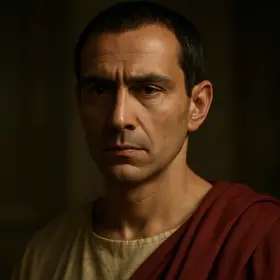 BrutusProtagonist
 CassiusAntagonist
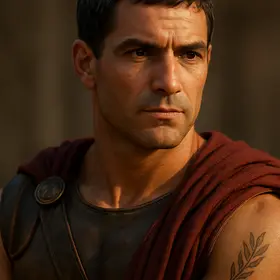 Mark AntonyAntagonist
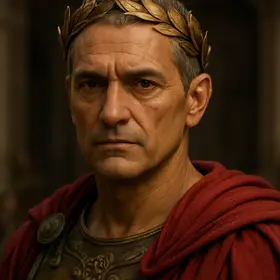 Julius CaesarProtagonist
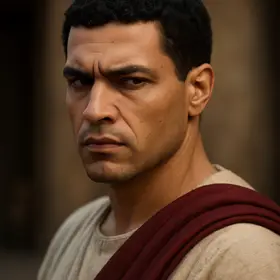 CascaMajor character
 LuciliusMajor character
 TitiniusMajor character
 Octavius CaesarMajor character
All chapter summaries ›Characters ›
Read Julius Caesar illustrated
Every scene in these notes comes from the Book2Life reader, where the full public-domain text is illustrated as you read, with character portraits and narration. Free in your browser and on iPhone.
