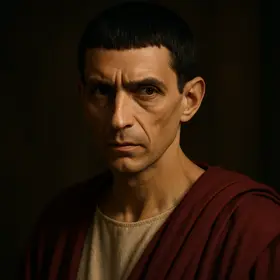
Cassius in Julius Caesar
Antagonist
A shrewd, persuasive Roman noble who plots Caesar’s assassination and manipulates Brutus to protect the republic as he sees it.
Who is Cassius?
Cassius is a seasoned Roman noble and the principal instigator of the conspiracy against Julius Caesar. He wants to prevent Caesar’s rise to unchecked power and restore what he views as proper republican rule. From his first appearance he flatters and probes Brutus, recounts stories that show Caesar’s weakness, and engineers forged letters to manipulate public opinion and Brutus’s sense of duty. He organizes and recruits other senators, convinces them to act, and stands among the conspirators when they murder Caesar. After the assassination he continues to play a leading role in the opposition, quarrelling with Brutus over strategy and honor in the camp. At Philippi he faces worsening omens and the collapse of their position; a fatal misreading in the field leads him to order his own death rather than be captured, believing the cause irretrievably lost. Throughout, Cassius’s energy, political skill, and distrust of ambition drive the plot from conspiracy to civil war.
In the book: When we first meet Cassius, he’s a seasoned Roman noble talking privately with Brutus, quick with stories and sharp observations about the people around them. He’s skeptical of Caesar’s growing spotlight and good at nudging conversations where he wants them to go, reading Brutus closely and pressing just the right buttons.
Personality
- manipulative
- He forges and arranges letters to be placed for Brutus and coaches others to flatter Brutus into joining the plot (Act 1, Scene 2; Act 1, Scene 3).
- courageous
- He deliberately exposes himself to a violent storm to prove his fortitude and to interpret the omens as signs of political upheaval (Act 1, Scene 3).
- practical
- He organizes the conspirators, times the assassination during petitions to divert Caesar, and participates directly in the stabbing (Act 2, Scene 1; Act 3, Scene 1).
- suspicious
- He grows distrustful and anxious on the Philippi plain, misreading troop movements and fearing betrayal or defeat (Act 5, Scene 1; Act 5, Scene 3).
- proud
- He responds to perceived slights by demanding personal explanations from Brutus and engages in a bitter verbal quarrel about honor and conduct (Act 4, Scene 3).
Character arc
Cassius begins as an active, politically astute conspirator who believes decisive action is necessary to check Caesar’s ambition. Early on he is the plot’s engineer: he flatters and manipulates Brutus, arranges forged letters, and recruits respected Romans to lend legitimacy to the cause. After the assassination he maintains his leadership but increasingly confronts moral and strategic tensions, most visibly in his clash with Brutus over principles and accusations of personal wrongdoing. In the camp his bluntness and suspicion surface, though he and Brutus reconcile and cooperate in planning the march to Philippi. As the campaign progresses, Cassius’s confidence falters; ominous signs and battlefield developments amplify his fear that the cause is failing. A critical misinterpretation of events on the field — believing Titinius captured and the battle lost — drives him to order his own death rather than endure capture or dishonor. His arc closes not with triumph but with despair and a fatal, irreversible decision born of mistrust and a sense that the republic’s fate cannot be redeemed.
Relationships
- Brutus Close but fraught: he flatters and manipulates Brutus into joining the conspiracy, later quarrels with him over honor and strategy, then reconciles before Philippi.
- Caesar Object of Cassius’s opposition: he resents Caesar’s elevation and repeatedly points to Caesar’s human weakness to justify the plot.
- Casca Co-conspirator and companion: Casca reports public events to Cassius and joins in plotting and waking Brutus to secure his involvement.
- Cinna Instrument: Cassius instructs Cinna to plant forged letters praising Brutus to sway him toward action.
- Pindarus Servant and eyewitness: Pindarus brings reports from the field and, following Cassius’s command in despair, carries out the fatal blow that kills him.
- Titinius Friend and officer: Cassius trusts Titinius to check troops’ loyalty, and a misread report about Titinius’s fate triggers Cassius’s suicide.
Quotes by Cassius
“The fault, dear Brutus, is not in our stars, But in ourselves, that we are underlings.”
Act 1, Scene 2Cassius argues that Romans are responsible for their own subordination and that they should act against Caesar's dominance.
“Why, man, he doth bestride the narrow world Like a Colossus, and we petty men Walk under his huge legs, and peep about To find ourselves dishonourable graves.”
Act 1, Scene 2A vivid image Cassius uses to persuade Brutus that Caesar’s power overshadows Rome and diminishes other men.
“Three parts of him Is ours already, and the man entire Upon the next encounter, yields him ours.”
Act 1, Scene 3Cassius expresses confidence that Brutus is almost won over and that a final push (the forged letters and a nocturnal visit) will secure his full support.
“Most noble brother, you have done me wrong.”
Act 4, Scene 2Cassius opens their meeting with a direct accusation, making clear that personal grievances will drive their private conference.
“This day I breathed first. Time is come round, And where I did begin, there shall I end.”
Act 5, Scene 3Cassius accepts death as fate and signals resignation before ordering Pindarus to fulfill his oath and end his life.
Why Cassius matters
Cassius embodies the play’s exploration of political manipulation, ambition, and the moral ambiguity of violent action for the public good. He drives the conspiracy through persuasion and deceit, showing how personal resentment and political principle can intertwine. His mistrust of Caesar’s rise and of Rome’s complacency highlights themes of power and honor, while his ultimate misreading of events and choice of suicide underscore tragedy’s role in political upheaval: well-intentioned action can lead to unintended, catastrophic consequences when judgment is clouded by fear and pride.
Chapters with Cassius
More Julius Caesar characters
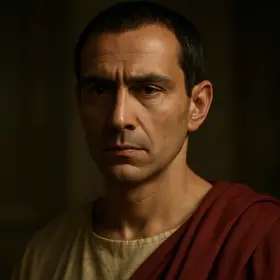 BrutusProtagonist
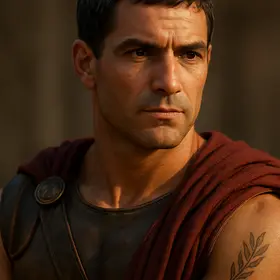 Mark AntonyAntagonist
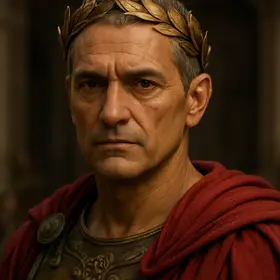 Julius CaesarProtagonist
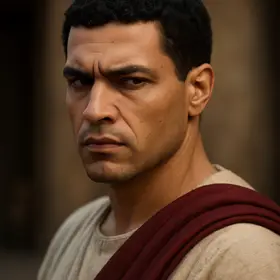 CascaMajor character
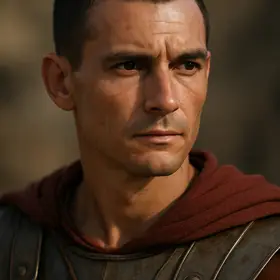 LuciliusMajor character
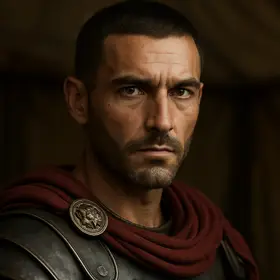 TitiniusMajor character
 Decius BrutusMajor character
 Octavius CaesarMajor character
All chapter summaries ›Characters ›
Read Julius Caesar illustrated
Every scene in these notes comes from the Book2Life reader, where the full public-domain text is illustrated as you read, with character portraits and narration. Free in your browser and on iPhone.
