
Titinius in Julius Caesar
Major character
A trusted officer and messenger whose steadiness and loyalty link Cassius and Brutus during the campaign at Philippi.
Who is Titinius?
Titinius is a trusted Roman officer who serves as a courier, sentinel, and confidential aide to the commanders of the conspirators. He first appears moving between tents and standing guard at Brutus’s doorway, carrying messages and helping to maintain appearances when leaders must hide private tensions. On the march to Philippi he remains close to Cassius and Brutus, receiving orders and reporting troop movements; his calm presence helps the generals take counsel and give orders. At the decisive battle he rides out to verify the status of forces near Cassius’s position, returning with Messala to the hill where he discovers Cassius dead. Struck by grief and the sense that he has failed his friend, Titinius takes his own life with Cassius’s sword. Throughout, he wants to be loyal, reliable, and to serve the commanders’ needs in moments of uncertainty, and his actions—relaying information, guarding doors, and seeking confirmation on the field—directly affect the timing and tragic outcomes of the final scenes.
In the book: When we first meet Titinius, he’s a trusted Roman officer moving between leaders’ tents, carrying messages and gauging the mood of the troops. He matters because the generals rely on his eyes and steadiness when tempers run hot and information is thin.
Personality
- Loyal
- He stands guard at Brutus’s tent and obeys Cassius’s order to ride out and determine the status of nearby troops.
- Steady
- He routinely carries messages and calmly reports troop dispositions to officers such as Cassius and Brutus in camp.
- Duty-bound
- When Cassius instructs him to verify whether horsemen are friend or foe, Titinius immediately rides off to perform the task.
- Emotionally devoted
- After finding Cassius dead, he publicly laments mistrust’s role in the tragedy and then kills himself with Cassius’s sword.
Character arc
Titinius begins as a composed, reliable officer who moves between the commanders’ tents and carries messages with discretion. In Brutus’s camp he is positioned to safeguard privacy and help conceal internal strife by standing watch at the tent door, embodying the practical support that enables the generals to argue, reconcile, and plan. As the campaign proceeds, his responsibilities shift from camp routine to urgent reconnaissance: on the hill at Philippi Cassius sends him to determine whether nearby horsemen are allies or enemies. This mission places Titinius at the center of a misread moment—Pindarus mistakes what he sees, and Cassius, convinced of disaster, kills himself. Titinius returns to find Cassius dead and, overwhelmed by grief and a sense that his own actions (or the circumstances he reports on) contributed to the loss, he refuses to live without his commander. He kills himself with Cassius’s sword, completing a tragic arc from composed courier and sentinel to the bereaved follower who sacrifices his life in the aftermath of miscommunication and battlefield confusion.
Relationships
- Cassius Trusted subordinate and close ally; he obeys Cassius’s orders and is devastated by Cassius’s death.
- Brutus Fellow officer under Brutus’s command who stands guard at Brutus’s tent and serves the generals’ needs.
- Pindarus Observer and fellow attendant on Cassius whose misreported sighting contributes to the tragic sequence that leads to Cassius’s suicide.
- Messala Comrade on the field who returns with Titinius to Cassius’s body and hears Titinius’s lament before his suicide.
- Lucilius Comrade-in-arms present later in the battle who compares Titinius’s death to Young Cato’s and mourns him.
Quotes by Titinius
“Come, Cassius’ sword, and find Titinius’ heart.”
Act 5, Scene 3Upon finding Cassius dead, Titinius kills himself with Cassius’ sword to share his friend's fate and honor his memory.
Why Titinius matters
Titinius embodies the human cost of loyalty, miscommunication, and the fragile chain of trust in wartime. His role as messenger and sentinel highlights how small acts of relay and reconnaissance shape commanders’ decisions. The tragic misreading of events around him and his subsequent suicide underline themes of honor, friendship, and the destructive consequences of haste and misunderstanding. Titinius’s death dramatizes how personal devotion can both dignify and doom those caught in political violence, reinforcing the play’s meditation on responsibility, fate, and the moral fallout of political assassination.
Chapters with Titinius
More Julius Caesar characters
 BrutusProtagonist
 CassiusAntagonist
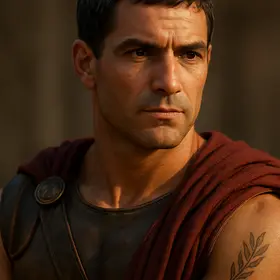 Mark AntonyAntagonist
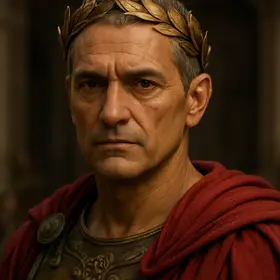 Julius CaesarProtagonist
 CascaMajor character
 LuciliusMajor character
 Decius BrutusMajor character
 Octavius CaesarMajor character
All chapter summaries ›Characters ›
Read Julius Caesar illustrated
Every scene in these notes comes from the Book2Life reader, where the full public-domain text is illustrated as you read, with character portraits and narration. Free in your browser and on iPhone.
