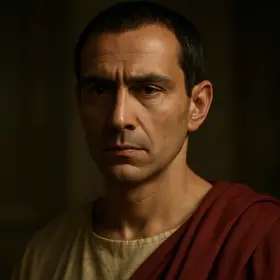
Brutus in Julius Caesar
Protagonist
A respected Roman senator torn between private honor and public duty, leader of the conspiracy against Caesar.
Who is Brutus?
Brutus is a serious, well-regarded Roman senator whose reputation for honour makes him the moral compass many Romans trust. Troubled by Caesar’s concentration of power, he wants to protect the republic from perceived tyranny while preserving his own integrity. Convinced—partly by forged letters and Cassius’s persuasion—that killing Caesar is necessary for Rome’s freedom, Brutus joins and then leads the conspirators. He argues against oaths, rejects unnecessary bloodshed (sparing Antony), and tries to frame the assassination as a principled act for the common good. After Caesar’s murder, Brutus publicly defends the deed in the Forum and remains committed to the cause despite growing unrest and the rise of Antony and Octavius. In the field he commands troops, struggles with Cassius over strategy and discipline, mourns personal losses (including Portia), and confronts omens and a ghostly visitation. Ultimately, faced with military defeat at Philippi and the collapse of his cause, Brutus chooses suicide rather than capture, and even his enemies acknowledge the nobility of his motives.
In the book: When we first meet Brutus, he’s a respected Roman senator and a friend everyone trusts, the kind of man people look to for an honorable compass. He’s quiet, serious, and already troubled by Caesar’s growing power, which makes others eager to win him to their side.
Personality
- Honorable
- He refuses to bind the conspirators with oaths, insisting their cause and personal honour should suffice (Act 2, Scene 1).
- Idealistic
- He argues that Caesar must be killed to prevent tyranny, comparing Caesar to a serpent’s egg that must be destroyed before it hatches (Act 2, Scene 1).
- Resolute
- He delivers the final blow to Caesar and stands publicly to justify the assassination to the Roman crowd (Act 3, Scene 1 and Scene 2).
- Conflicted
- He broods alone over sleeplessness and the torment of deciding and executing a dreadful deed in his orchard (Act 2, Scene 1).
- Stoic
- Facing defeat, he arranges his own death and chooses to run on Strato’s sword rather than be taken prisoner (Act 5, Scene 5).
Character arc
Brutus enters the play as a trusted, contemplative senator whose private reputation gives weight to public matters. Early scenes show him resisting Cassius’s repeated urgings, yet susceptible to manipulation by appeals to civic duty and carefully forged letters; he moves from private unease about Caesar to active leadership of the conspiracy. After the assassination he shifts from philosophical justification to the practical burdens of leadership: he addresses the people, argues strategy with Cassius, and struggles with divided loyalties and the consequences of political violence. The campaign against Antony and Octavius exposes Brutus to moral and military strain—personal grief over Portia’s unknown fate, friction with Cassius, and demoralizing omens culminate in a ghostly visitation that confirms his sense of doom. In the end, when defeat is inevitable at Philippi, Brutus refuses despairing bitterness and opts for an honorable death on his own terms, completing a tragic trajectory from principled idealism to fatal resolution.
Relationships
- Cassius A persuasive co-conspirator who grooms and manipulates Brutus into leading the assassination; they quarrel and later reconcile before Philippi.
- Julius Caesar A close public associate whose rise spurs Brutus’s moral crisis and whose assassination Brutus helps carry out.
- Portia Brutus’s wife, who demands to share his burdens and ultimately dies—news of her death deepens Brutus’s anguish.
- Mark Antony A political opponent whom Brutus spares during the plot and allows to speak at Caesar’s funeral, a decision with grave consequences.
- Lucilius A loyal subordinate in Brutus’s camp who impersonates him in battle to protect him and is captured, proving Brutus’s leadership inspires devotion.
- Strato A trusted companion who honors Brutus’s final request by holding the sword for his suicide.
Quotes by Brutus
“It is the bright day that brings forth the adder, And that craves wary walking.”
Act 2, Scene 1Brutus imagines how power might change Caesar and uses the adder image to justify preventive action.
“Let us be sacrificers, but not butchers, Caius. We all stand up against the spirit of Caesar, And in the spirit of men there is no blood.”
Act 2, Scene 1Brutus argues the conspirators should act for Rome’s good without appearing driven by envy or cruelty.
“He greets me well.”
Act 4, Scene 2Brutus responds to Pindarus' message and signals initial satisfaction while signalling there may be causes for concern.
“When love begins to sicken and decay It useth an enforced ceremony.”
Act 4, Scene 2Brutus diagnoses the cooling of friendship, explaining why Cassius' distant manners worry him and framing the coming confrontation.
“There is a tide in the affairs of men, Which, taken at the flood, leads on to fortune; Omitted, all the voyage of their life Is bound in shallows and in miseries.”
Act 4, Scene 3Brutus argues that they must seize the moment and march to Philippi rather than wait, using a metaphor of tides to justify action.
“Portia is dead.”
Act 4, Scene 3Brutus announces Portia's suicide, a sudden and personal blow that shifts the scene from political dispute to private grief.
Why Brutus matters
Brutus embodies the play’s central moral conflict between personal honour and political necessity. His choices force characters and the public to ask whether murder can be justified by intent and whether Republican ideals survive violent means. By acting from what he believes are noble motives rather than envy, Brutus complicates the moral landscape: his tragedy shows how virtuous intentions can produce catastrophic political consequences, and his death prompts even adversaries to call him 'noblest'—underscoring themes of honour, rhetoric, and the instability of public power.
Chapters with Brutus
More Julius Caesar characters
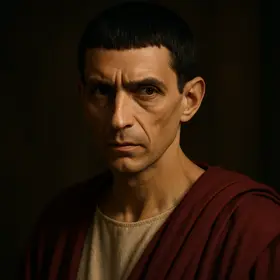 CassiusAntagonist
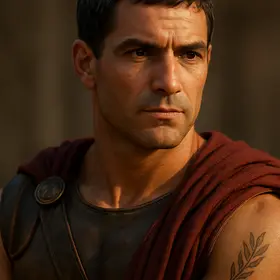 Mark AntonyAntagonist
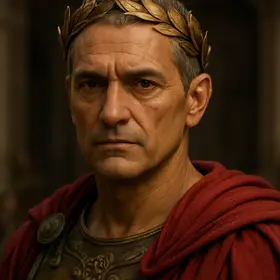 Julius CaesarProtagonist
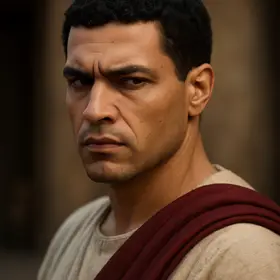 CascaMajor character
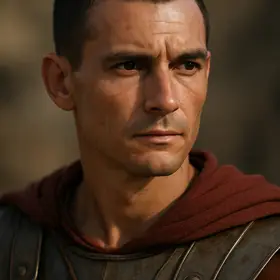 LuciliusMajor character
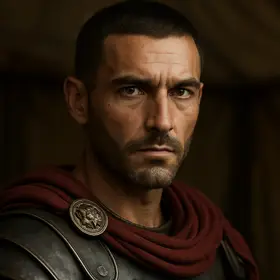 TitiniusMajor character
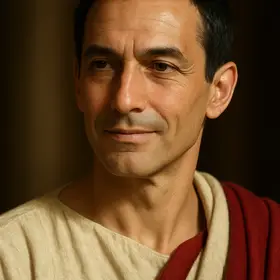 Decius BrutusMajor character
 Octavius CaesarMajor character
All chapter summaries ›Characters ›
Read Julius Caesar illustrated
Every scene in these notes comes from the Book2Life reader, where the full public-domain text is illustrated as you read, with character portraits and narration. Free in your browser and on iPhone.
