Soldiers in Macbeth
Minor character
Unnamed ranks of Malcolm’s invading force who march on Dunsinane and carry out tactical orders.
Who is Soldiers?
The soldiers are the anonymous rank-and-file of Malcolm’s army who appear in the play’s final acts. They accompany the Scottish nobles and the English contingent led by Siward and are the physical force that brings the prophecy’s fulfillment from rumor into action. Their duties are practical and immediate: they march with drum and colours, listen to commanders’ reports, cut branches from Birnam Wood to mask their numbers, and take up arms at Dunsinane. They represent the organized military response to Macbeth’s tyranny and the material means by which Macbeth’s rule is confronted and ended. Though unnamed individually, their presence is decisive—supplying manpower, obeying orders, and suffering losses (including the death of Siward’s son). They shift the play from prophetic ambiguity and psychological unraveling into concrete, collective action that enables the duel, the siege, and the eventual restoration of Malcolm’s reign.
Personality
- disciplined
- They obey Malcolm’s tactical order to cut and carry boughs from Birnam Wood to conceal the army’s strength.
- willing
- They take up drum and colours and march off toward Birnam when the captains resolve to meet the English advance.
- anonymous
- They remain unnamed in the notes, functioning collectively as the army supporting Malcolm and Siward.
- sacrificial
- The notes record the loss of many young soldiers among their ranks, including Siward’s son, who dies honorably in the fight.
Character arc
The soldiers enter as a driven, organized force preparing to confront Macbeth’s hold on the crown. In Act 5, Scene 2 they gather with nobles, hear reports about the English invasion, and resolve to march to Birnam; this demonstrates their initial readiness and purpose. By Act 5, Scene 4 they shift from readiness to execution, following Malcolm’s explicit tactical command to cut and carry boughs—an act that turns strategy into literal movement and brings the witches’ prophecy toward realization. In Act 5, Scene 5 their presence helps to spread alarm and confirm the approaching threat when messengers report the moving wood, preparing the ground for battle. At the climax in Act 5, Scene 8 they become the context for the final confrontation: fighting, suffering losses, and then forming the audience for Macduff’s victory and Malcolm’s restoration. Their arc is collective rather than personal: they move from mobilization to action to witness and instrument of political renewal, trading anonymous obedience for a restored commonwealth.
Relationships
- Malcolm Their commander whose tactical orders they accept and carry out in the advance on Dunsinane.
- Siward Senior ally and leader among the invading forces under whom many soldiers, including his son, serve.
- Young Siward A fellow combatant whose death among the soldiers exemplifies the personal cost of the battle.
- Macduff Comrade-in-arms and key avenger whose duel and victory they enable and witness.
- Menteith One of the Scottish captains who leads and directs them in the march toward Birnam and Dunsinane.
- Macbeth Their principal enemy: the tyrant whose fall they help to bring about through siege and battle.
Why Soldiers matters
The soldiers embody the collective force required to overturn tyranny and restore political order. As anonymous participants they highlight how public action and obedience to lawful leadership contrast with Macbeth’s isolation and collapsed loyalties. Their measured compliance with commands (cutting boughs, marching, fighting) turns prophecy into history, showing that grand outcomes depend on ordinary people acting together. By suffering losses and witnessing the transfer of power, they also remind the play that restoration is communal and costly, not merely the result of a single hero’s deed.
Chapters with Soldiers
More Macbeth characters
 Macbeth
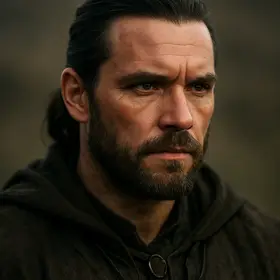 Banquo
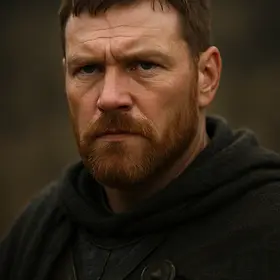 Macduff
 Malcolm
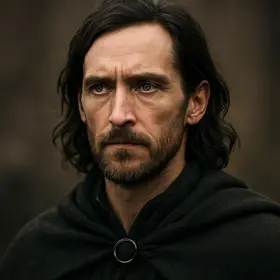 Ross
Ross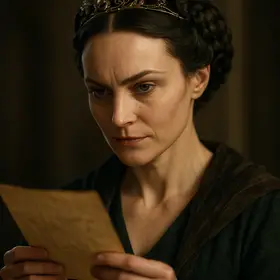 Lady Macbeth
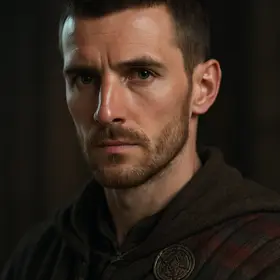 Lennox
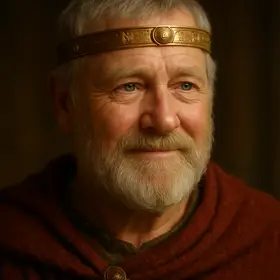 Duncan
All chapter summaries ›Characters ›
Read Macbeth illustrated
Every scene in these notes comes from the Book2Life reader, where the full public-domain text is illustrated as you read, with character portraits and narration. Free in your browser and on iPhone.
