
Joshua Rigg in Middlemarch
Minor character
A stranger who appears at Peter Featherstone’s will reading and unexpectedly inherits the residuary estate of Stone Court.
Who is Joshua Rigg?
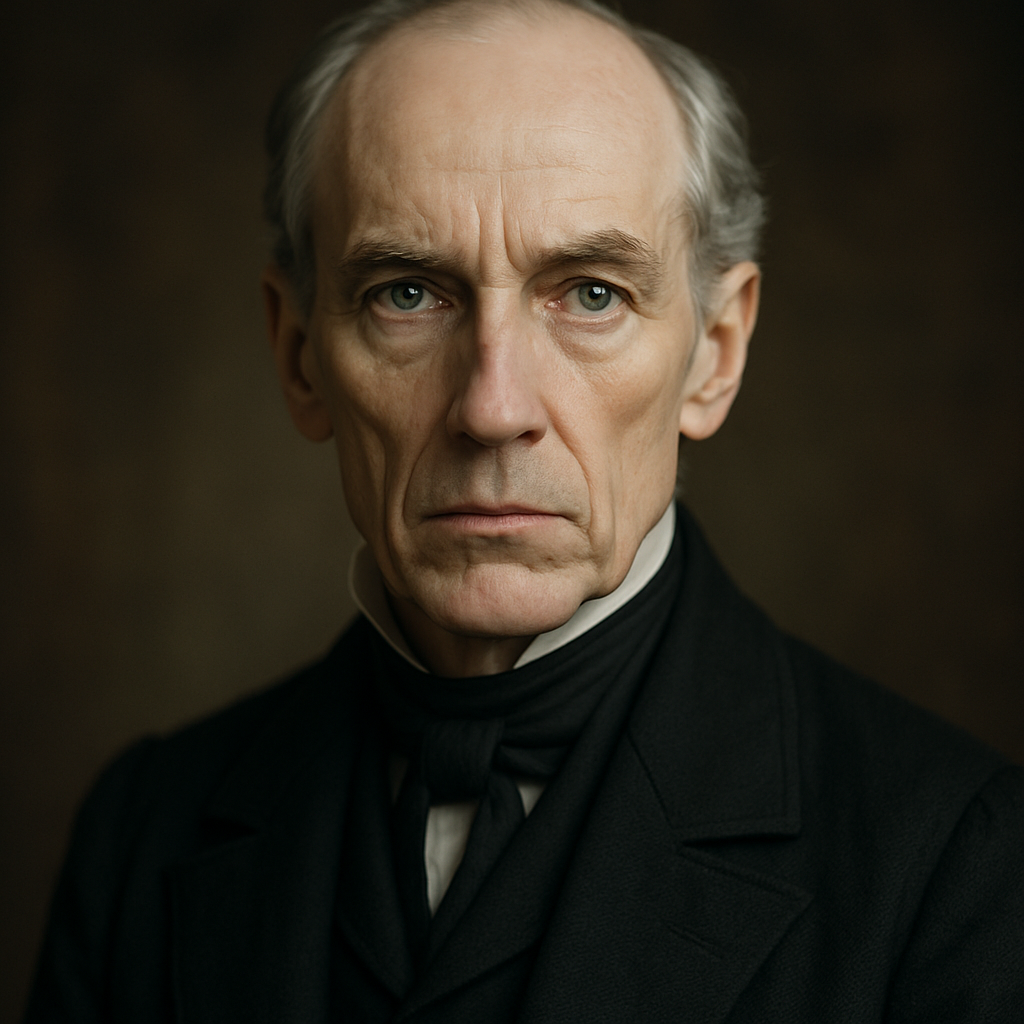
Joshua Rigg turns up at Stone Court for Peter Featherstone’s will reading and is identified by Mary and Caleb Garth as someone who had visited the old squire. When the lawyer reads the sequence of wills, the company learns that the large residuary estate passes not to the Featherstone kin but to Joshua Rigg, who will assume the name Featherstone; small personal bequests instead fund almshouses. The room reacts with shock, anger, and immediate talk of disputing the will. Rigg remains calm and businesslike amid the tumult: he accepts the inheritance, takes control of affairs at Stone Court, and becomes the focus of neighborly gossip about his low origin and the upset his arrival causes to familial expectations. Though he does not dominate subsequent scenes, his sudden elevation reshapes local calculations, devastates hopeful relatives like Fred Vincy, and sets new social dynamics in motion for Middlemarch’s community.
In the book: The illegitimate son of Peter Featherstone, Joshua Rigg arrives in Middlemarch at the reading of the old man’s will and, unfazed, steps into an unexpected inheritance. Practical, self‑possessed, and motivated by money, he quickly turns Stone Court into a means to pursue his own ambitions elsewhere. Though he is not a central figure, his actions and connections help set off events that ripple through the town’s social and moral fabric without requiring him to remain in the foreground.
Personality
- calm
- At the will reading, while others cry and denounce the testator, Rigg remains composed and takes businesslike control of the situation.
- businesslike
- After the lawyer announces the residuary bequest to him, Rigg immediately assumes practical management of affairs at Stone Court.
- unsettling outsider
- Neighbors regard him with suspicion and gossip about his low origin when he appears among the Featherstone kin.
- mysterious connection
- Mary and Caleb Garth recognize him as someone who had visited Peter Featherstone, implying a prior private relationship with the squire.
Character arc
Joshua Rigg’s dramatic entrance is essentially his whole arc within the chapters where he appears. He arrives as a stranger at the reading of Peter Featherstone’s will and, by the final instrument, is revealed as the residuary legatee. The company’s shock and outrage contrast with Rigg’s measured manner: rather than contesting or boasting, he accepts the legal outcome and steps into control of Stone Court. There is no recorded moral crisis, repentance, or explicit ambition narrated in these chapters—his role is to catalyze change in others rather than to undergo a prolonged transformation himself. By the chapter’s end he has been elevated from an obscure visitor to proprietor, and the immediate consequence is social disruption among the Featherstone kin and new calculations across Middlemarch. His steadiness and removal from the center of further scenes mean his presence functions chiefly as an instigating fact rather than as a developed personal journey.
Relationships
- Peter Featherstone The deceased squire whose final will makes Rigg the residuary legatee and requires Rigg to assume the Featherstone name.
- Mary Garth One of the few who recognizes Rigg at the will reading and notes that he had visited Featherstone earlier.
- Mr. Garth Mary’s father Caleb recognizes Rigg as a previous visitor of the squire and observes the consequences of the bequest.
- Fred Vincy A disappointed hopeful heir whose expectations of inheriting are dashed when Rigg is named residuary legatee.
- Mr. Vincy Present at Stone Court and implicated in the family’s reaction to the will that elevates Rigg above the expected kin.
- Rosamond Vincy Part of the visiting company whose household’s social calculations are affected by the unexpected transfer of the Featherstone estate.
Why Joshua Rigg matters
Joshua Rigg embodies the disruptive force of unexpected inheritance and the fragility of social entitlement in Middlemarch. His calm assumption of Stone Court exposes how property, legal formality, and private ties can upend family expectations and provoke gossip about origin and worth. By catalyzing humiliation for would‑be heirs and prompting practical adjustments among townspeople, Rigg’s presence foregrounds themes of social mobility, the moral ambiguities of legacy, and the distance between reputation and legal reality.
Chapters with Joshua Rigg
More Middlemarch characters
 Dorothea BrookeProtagonist
 Tertius LydgateMajor character
 Will LadislawMajor character
 Mr. BrookeMajor character
 Sir James ChettamMajor character
 Rosamond VincyMajor character
 Nicholas BulstrodeMajor character
 Mr. VincyMajor character
All chapter summaries ›Characters ›
Read Middlemarch illustrated
Every scene in these notes comes from the Book2Life reader, where the full public-domain text is illustrated as you read, with character portraits and narration. Free in your browser and on iPhone.
