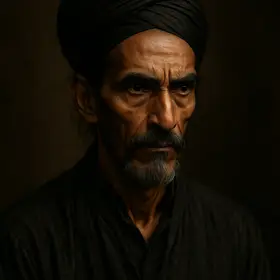
Fedallah in Moby-Dick
Major character
Ahab’s secretive Parsee harpooneer and closest attendant, a watchful, oracular presence who binds Ahab to fate.
Who is Fedallah?
Fedallah is the mute, turbaned Parsee who serves as Captain Ahab’s private harpooneer and closest attendant aboard the Pequod. He commands a hidden boat-crew for Ahab, keeps lookout in moonlit watches, and issues cryptic warnings and prophecies that the crew notices but seldom understands. He appears quietly at Ahab’s side during preparations for the hunt, stands sentinel in night vigils (first announcing uncanny spouts), and shares private, fatalistic pledges with Ahab about omens, hearses, and the manner of death. In the final chase he vanishes during the second day’s chaos and is later revealed lashed to Moby Dick’s back on the third day, a grim sign of the whale’s power and the voyage’s doom. His inscrutable calm and prophetic language intensify the ship’s atmosphere of destiny and fatalism, amplifying Ahab’s monomania and shaping how the crew reads omens and interprets the hunt.
In the book: Fedallah is Captain Ahab’s secretive Parsee harpooneer and closest attendant, a silent, watchful figure who commands a hidden whaleboat crew and serves as Ahab’s confidant. His foreign faith and calm intensity lend him an oracular air, and his cryptic sayings and vigilance deepen the voyage’s atmosphere of fate and foreboding. Through his influence and mysterious counsel, he amplifies Ahab’s monomaniacal pursuit and becomes a symbolic embodiment of destiny’s pull within the narrative.
Personality
- Secretive
- He embarks as Ahab’s covert crew in Chapter 48, silently casting off a fourth boat hidden from the ship’s company.
- Oracular
- He first cries the ghostly midnight-spout in Chapter 51 and later speaks prophecy to Ahab about hearses and hemp in Chapter 117.
- Watchful
- He habitually stands lookout at the main-mast head on moonlit nights (Chapter 51) and crouches watching sharks by the dead whale at night (Chapter 117).
- Calmly intense
- Throughout dangerous lowers and storms he remains composed at Ahab’s rail and in the bow, notably crouching unmoving beside Ahab in the whale-watch (Chapter 117).
- Loyal
- He serves as Ahab’s private harpooneer and confidant, joining Ahab’s secret boat and later promising to go before Ahab as pilot (Chapter 117).
Character arc
Fedallah’s presence is steady rather than developmental: he appears as an enigmatic, steadying shadow for Ahab from his first revealed lowering through the final chase. Early scenes establish him as Ahab’s private hand and hidden harpooneer (Chapter 48, Chapter 50), then deepen his symbolic role when he first announces the uncanny spirit-spout (Chapter 51) and stands as a nightly oracle. He converses privately with Ahab about omens, pledging to precede the captain in death and declaring circumstances of Ahab’s doom (Chapter 117), thereby reinforcing Ahab’s sense of destiny. In the storm and typhoon episodes he kneels before Ahab and participates in the ship’s ritualized defiance (Chapter 119). During the climactic chase his physical fate marks the escalation of doom: he disappears in the second day’s chaos (Chapter 134) and is later revealed lashed to the whale’s back on the third day (Chapter 135), transforming from inscrutable adviser to one of the voyage’s starkest portents. He does not change inwardly; instead his steady composition and prophetic utterances increasingly externalize the fatalism that drives Ahab and the Pequod to destruction.
Relationships
- Ahab Ahab’s secret attendant, closest confidant, and leader of Ahab’s private harpooneer crew; he shares private omens and pledges with Ahab.
- Narrator Observed and noted by the narrator in several scenes; the narrator later takes Fedallah’s place as Ahab’s bowsman after the Parsee’s disappearance (Epilogue context).
- Starbuck A figure Starbuck watches with distrust and unease; Fedallah’s prophetic presence deepens Starbuck’s worries about Ahab’s monomania.
- Tashtego A fellow harpooneer whose work and final visible implements (hammer) remain part of the violent chase in which Fedallah is found lashed to the whale.
- Pequod Placed aboard and operating in secret on the Pequod, Fedallah both serves the ship as part of Ahab’s inner circle and embodies an alien, ominous element within its company.
- Moby Dick The White Whale becomes the force to which Fedallah is ultimately bound—he is later discovered lashed to the whale’s back, a portent of the voyage’s doom.
Quotes by Fedallah
““There she blows!””
Chapter 51The cry announcing the silvery midnight spout that spurs the ship to make sail and begin pursuit.
Why Fedallah matters
Fedallah functions as a living omen and ritual mirror to Ahab’s obsession: his silence, foreign faith, and prophetic assertions harden the Pequod’s sense of inevitable destiny. By voicing fatalistic pledges and maintaining a calm, inscrutable presence at Ahab’s side, he externalizes the voyage’s theology of doom and the captain’s rejection of ordinary morality and prudence. His ultimate fate—discovered lashed to Moby Dick—materializes the book’s themes of fate, the limits of human agency, and the destructive consequences of pursuing an obsessive vendetta against nature.
Chapters with Fedallah
More Moby-Dick characters
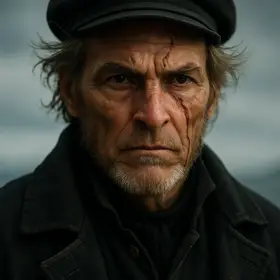 Ahab
Ahab Ishmael
 Stubb
Stubb Queequeg
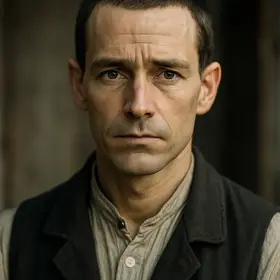 Starbuck
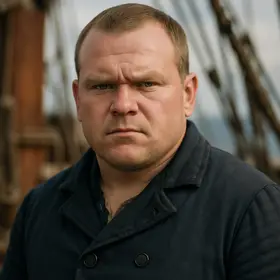 Flask
Flask Tashtego
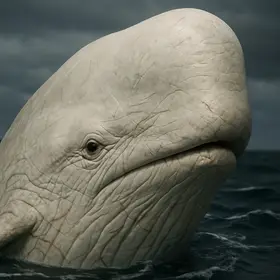 Moby Dick
All chapter summaries ›Characters ›
Read Moby-Dick illustrated
Every scene in these notes comes from the Book2Life reader, where the full public-domain text is illustrated as you read, with character portraits and narration. Free in your browser and on iPhone.
