Pequod in Moby-Dick
Major character
The whaling ship commanded by Ahab, a moving locus of pursuit, crew life, and the voyage toward Moby Dick.
Who is Pequod?
The Pequod is the American whaling ship on which Ahab leads his obsessive hunt for the White Whale. As a vessel she is both setting and actor: her decks host Ahab’s charting, social encounters with other ships, and incidents that reveal the voyage’s moral and material stakes. Under Ahab’s command the Pequod follows routes plotted to intercept whale “veins,” drifts among other ships like the Rose-bud and the Samuel Enderby, and bears practical signs of whaling life—a life-buoy-coffin at the stern, lowered boats, and rigging for cutting-in whales. The ship facilitates Ahab’s rituals: he studies charts aboard her, smashes scientific instruments on her deck, and leverages her boats to seize opportunities like ambergris. Encounters with other vessels (the Rose-bud, the Samuel Enderby, the Delight) play out with the Pequod as stage and agent—her boats, crew, and helm enact Ahab’s impulses and the crew’s responses. Through these actions she embodies the voyage’s mixture of method, brutality, superstition, and spectacle.
Personality
- Instrumental
- Ahab uses the Pequod as a platform to spread charts and log-books, plotting routes to intercept whales (Chapter 44).
- Symbolic
- The life-buoy-coffin swinging from her stern is a visible emblem of death and doom during the voyage (Chapter 131).
- Responsive
- Her yards and helm instantly obey Ahab’s commands when he orders sail adjustments after smashing the quadrant (Chapter 118).
- Active
- Her boats are lowered and manned to board other ships and to seize opportunities—Stubb’s cutting into the Rose-bud’s whale yields ambergris (Chapter 91).
- Exposed
- Her decks host intimate displays of Ahab’s prosthesis and the Samuel Enderby’s one-armed captain, making the ship a public stage (Chapter 100).
Character arc
Across these chapters the Pequod remains largely constant as Ahab’s operational and symbolic vessel, but she also records an intensifying atmosphere and the narrowing focus of the voyage. In Chapter 44 she functions as a research and plotting space where Ahab maps whale migrations, showing her role in the methodical side of the pursuit. By Chapter 91 she becomes an opportunistic instrument—Stubb’s boarding and cutting actions off her boats extract ambergris but are interrupted by Ahab’s single-minded urgency, signaling the ship’s subordination to his will. Chapter 100 makes the Pequod a site for confrontation and display: Ahab mounts her quarter-boat to challenge another captain, and she serves as the platform for Ahab’s impulsive seizure of command after hearing of Moby Dick. In Chapter 118 the Pequod physically responds to Ahab’s rejection of instruments as he smashes the quadrant, the yards swinging as the ship obeys. By Chapter 131 the Pequod’s external signs—the life-buoy-coffin and sailing among wreckage—mark the voyage’s moral and mortal stakes. Throughout these scenes she does not change her purpose; instead she increasingly reflects and amplifies Ahab’s escalating monomania and the voyage’s ominous tenor.
Relationships
- Ahab The Pequod is Ahab’s platform and instrument: he charts from her, commands her helm, and imposes his will aboard her decks.
- Stubb Her crewman Stubb uses Pequod’s boats to board other ships and seize whale products, showing the ship’s role in crew action.
- Samuel Enderby In the encounter with the Samuel Enderby (Captain Boomer) the Pequod serves as the scene for exchange, rivalry, and Ahab’s impulsive departure.
- Rose-bud The Pequod approaches and exploits the Rose-bud’s situation, using her boats to pry ambergris from a decaying whale alongside the French vessel.
- Delight When the Delight appears with wrecked whaleboat remains, the Pequod’s passing and displayed coffin underscore her link to death and the voyage’s consequences.
- Fedallah Fedallah silently assists Ahab aboard the Pequod, helping execute Ahab’s sudden maneuvers and departures.
Why Pequod matters
The Pequod functions as more than a setting; she is a concentrated symbol of voyage, obsession, and communal complicity. Through her decks Melville stages the collision of empirical planning and reckless monomania: charts and quadrants share space with smashed instruments, ambergris, and a conspicuous life-buoy-coffin. The ship’s ready obedience to Ahab’s commands and her role in confrontations with other vessels dramatize themes of authority, fate, and the moral cost of single-minded pursuit. As both materially practical and symbolically freighted, the Pequod embodies the novel’s tensions between knowledge and hubris, community and the isolating will of a leader bent on vengeance.
Chapters with Pequod
More Moby-Dick characters
 Ahab
Ahab Ishmael
 Stubb
Stubb Queequeg
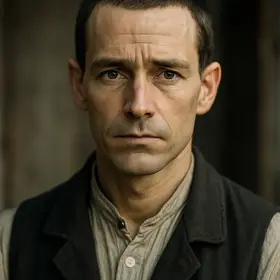 Starbuck
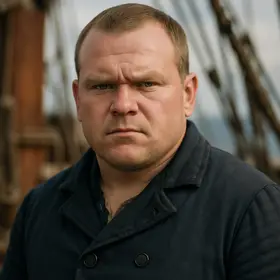 Flask
Flask Tashtego
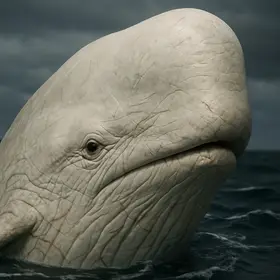 Moby Dick
All chapter summaries ›Characters ›
Read Moby-Dick illustrated
Every scene in these notes comes from the Book2Life reader, where the full public-domain text is illustrated as you read, with character portraits and narration. Free in your browser and on iPhone.
