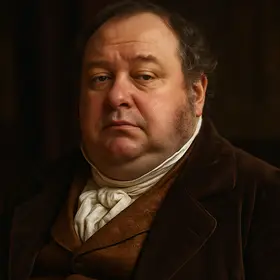
Mr. Hurst in Pride and Prejudice
Minor character
An idle, pleasure-seeking husband to Mrs. Hurst and brother-in-law to Mr. Bingley; a social accessory in the Netherfield circle.
Who is Mr. Hurst?
Mr. Hurst is a minor figure who appears as part of the Netherfield party that visits Meryton and entertains the Bennets. He wants ease, good company, and polite diversion rather than responsibility or moral engagement. In the narrative he mostly occupies himself at card tables and in comfortable conversation: at Netherfield he plays piquet with Mr. Bingley, lounges through dinners and drawing-room scenes, and fills the role of a fashionable, unenterprising gentleman. He provides social weight to his wife’s and sister’s snobbery by participating in their dismissive remarks about the Bennets’ manners and connections, yet he contributes little to conversation or action beyond predictable indolence. His presence helps establish the social atmosphere that contrasts with the Bennet household’s liveliness and underlines the ease of the landed few who expect deference and leisure.
In the book: Mr. Hurst is the idle, pleasure-seeking husband of Louisa Hurst (Caroline Bingley’s sister) and thus Charles Bingley’s brother-in-law. A minor figure, he serves as a social accessory to his wife’s fashionable circle, embodying upper-class idleness and mild snobbery; his chief functions are to play cards, dine well, and reinforce the atmosphere of indifference surrounding that set.
Personality
- Idle
- At Netherfield he is repeatedly described as uninterested and chiefly occupied with playing cards and seeking ease rather than active engagement.
- Pleasure-seeking
- He spends his time playing piquet with Mr. Bingley and enjoying comfortable dinners and drawing-room amusements.
- Snobbish
- He supports Mrs. Hurst and Miss Bingley’s dismissive commentary about the Bennets’ social standing and manners at Netherfield.
- Passive
- He contributes little to the discussions about Jane’s illness or the household’s concerns, preferring to remain a background figure.
Character arc
Mr. Hurst shows almost no development across his appearances. From his first presence at the Meryton assembly he functions as a polite, immobile complement to the more active characters; he arrives with Bingley’s party and conforms to the expectations of genteel leisure. During Jane’s forced stay at Netherfield he remains largely on the periphery—playing cards, sitting through meals, and allowing his wife’s and sister’s conversations to dominate. He neither intervenes in the household’s dramas nor alters his priorities when scorn and gossip about the Bennets occur; instead he consistently reinforces the static, comfortable life of his social set. By the later narrative moments in which his circle disperses or converses about marriages and movements, he still represents the same languid, unambitious presence, ultimately unchanged and serving only to underscore the contrast between active moral agency and complacent privilege.
Mr. Hurst in pictures

Relationships
- Mrs. Hurst His wife and social partner who shares and amplifies fashionable judgments and snobbery.
- Mr. Bingley Brother-in-law and frequent card opponent, sharing leisure activities and the Netherfield household.
- Caroline Bingley Sister-in-law whose social ambitions and criticisms he passively supports.
- Mr. Darcy Acquaintance within the same visiting circle who attracts the ladies’ attention while Hurst remains disengaged.
- Miss Bingley Another relation in the Netherfield set whose conversational maneuvers he tolerates without active involvement.
Quotes by Mr. Hurst
“From all that I can collect by your manner of talking, you must be two of the silliest girls in the country.”
Chapter 7Mr. Bennet teases Kitty and Lydia for their breathless gossip about officers, exposing his ironic attitude toward their frivolity.
“They all paint tables, cover screens, and net purses.”
Chapter 8Bingley lists the commonplace accomplishments of young ladies, which sparks Darcy and Miss Bingley’s debate about what being "accomplished" truly means.
“I cannot boast of knowing more than half-a-dozen in the whole range of my acquaintance that are really accomplished.”
Chapter 8Darcy narrows the definition of accomplishment to deeper cultural and intellectual refinement, distancing himself from fashionable flattery.
“This walk is not wide enough for our party. We had better go into the avenue.”
Chapter 10Darcy notices the rudeness of allowing Elizabeth to be left out and proposes moving, signaling his sensitivity to manners even as others behave discourteously.
“I have faults enough, but they are not, I hope, of understanding. My temper I dare not vouch for. It is, I believe, too little yielding; certainly too little for the convenience of the world.”
Chapter 11Darcy admits personal defects in a candid moment, revealing pride and a tendency to hold grudges and shaping how others view him.
“My good opinion once lost is lost for ever.”
Chapter 11A concise statement of Darcy's implacable nature that Elizabeth highlights as a pronounced failing during their exchange.
Why Mr. Hurst matters
Mr. Hurst functions as a stock figure of leisure and complacency: he helps dramatize the contrast between idle, status-conscious society and the more animated, morally engaged Bennet family. His indifference and support for his wife’s snobbery underscore themes of social class, the hollow comforts of rank, and how marriage and station can promote stagnation rather than virtue. By remaining unchanged and peripheral, he highlights the novel’s critique of a social order that prizes ease and appearances over responsibility and sincere feeling.
Chapters with Mr. Hurst
More Pride and Prejudice characters
 Elizabeth BennetProtagonist
 Jane BennetMajor character
 Mr. BingleyMajor character
 Mr. DarcyMajor character
 Mrs. BennetMajor character
 Mr. BennetMajor character
 Lydia BennetMinor character
 Mr. CollinsMajor character
All chapter summaries ›Characters ›
Read Pride and Prejudice illustrated
Every scene in these notes comes from the Book2Life reader, where the full public-domain text is illustrated as you read, with character portraits and narration. Free in your browser and on iPhone.
