
Mr. Bennet in Pride and Prejudice
Major character
The sardonic, bookish patriarch of Longbourn who watches family follies with ironic detachment and intermittent responsibility.
Who is Mr. Bennet?
Mr. Bennet is the sarcastic, intellectually disposed owner of the Longbourn estate and father of five daughters. He values wit and private amusement, often retreating to his study and answering domestic anxieties with irony rather than action. Throughout the novel he negotiates household crises from a distance: he teases his wife about the arrival of Mr. Bingley, quietly rejoices when Jane and Elizabeth return from Netherfield, tolerates Mr. Collins’s pomposity, and initially refuses to forbid Lydia’s reckless schemes. When Lydia elopes, Mr. Bennet travels to London to pursue the runaways and later expresses self-reproach for his earlier negligence; he insists on some paternal discipline (forbidding Lydia from Longbourn until married) while also worrying practically about debts and settlements. He ultimately gives reluctant but genuine consent to Elizabeth’s marriage to Darcy after learning Darcy’s role in resolving Lydia’s scandal. Mr. Bennet’s blend of wit, aloofness, and occasional moral seriousness shapes the family’s fortunes and provides a steady, if flawed, center to the household’s drama.
In the book: Mr. Bennet is the wry, intellectually inclined patriarch of the Bennet family and father to five daughters. From his study, he observes household dramas with amused detachment, often answering folly with irony. His indifference to practical management contrasts with his wife’s anxious scheming, highlighting the family’s precarious social and financial position. As decisions about suitors and propriety arise, his temperament and choices quietly shape the stakes for his daughters and underscore themes of judgment, responsibility, and marital compatibility.
Personality
- ironically amused
- In Chapter 1 he answers Mrs. Bennet’s frantic insistence about Mr. Bingley with teasing sarcasm and deliberate provocation.
- indolent
- Across the household scenes he often withdraws to his study and refrains from managing domestic affairs, prompting Elizabeth’s reflections on his indolent marriage (Chapter 42).
- practical when pressed
- After Lydia’s elopement he goes to London to search for her and later discusses repayment arrangements with Mr. Gardiner, showing concern for concrete consequences (Chapters 46–50).
- wryly moral
- He reproves Lydia by forbidding her to Longbourn until after the wedding and expresses self-reproach for his earlier failures (Chapters 50 and 49).
- affectionate reserve
- When Jane and Elizabeth return from Netherfield he quietly shows pleasure at their homecoming despite his usual ironic manner (Chapter 12 and Chapter 39).
Character arc
Mr. Bennet begins the story as a detached, amused observer of his family’s matrimonial fretting, using irony to deflect his wife’s urgencies and entertaining himself with the household’s follies (Chapters 1–3). His distance intensifies the family’s vulnerability—especially given the entail that makes Mr. Collins heir—and his light-handed management allows imprudence (notably Lydia’s flirtations) to flourish (Chapters 13–24, 41). Lydia’s elopement provokes a notable shift: Mr. Bennet travels to London to search for the couple and returns visibly chastened and self-reproachful, recognizing the consequences of his negligence (Chapters 46–49). He adopts firmer, practical measures—demanding discipline, forbidding Lydia’s presence at Longbourn until marriage, negotiating who will pay for settlements, and engaging with Mr. Gardiner’s interventions (Chapters 49–50). By the end he remains characteristically ironic but demonstrates a deeper paternal responsibility and genuine, if understated, pleasure in his daughters’ secure matches, offering reluctant but sincere approval of Elizabeth’s marriage to Darcy (Chapters 59–61).
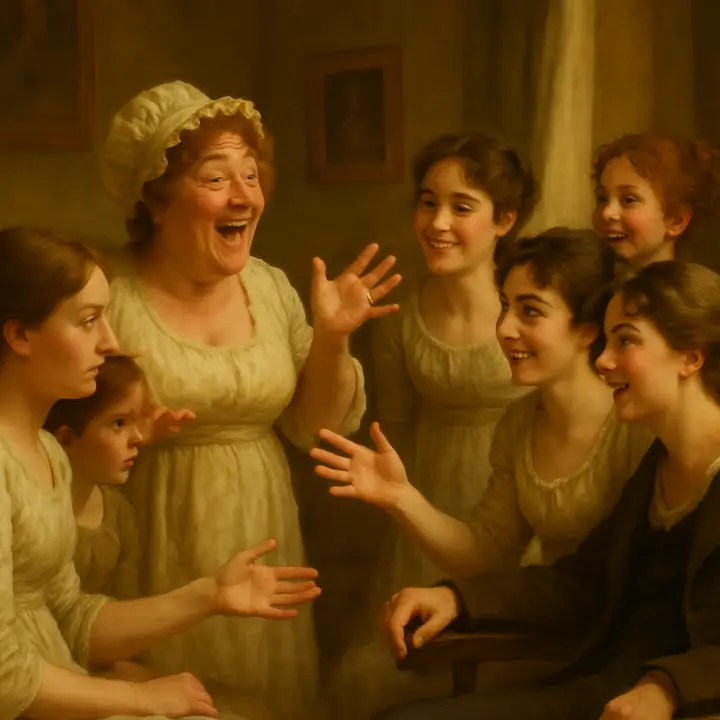
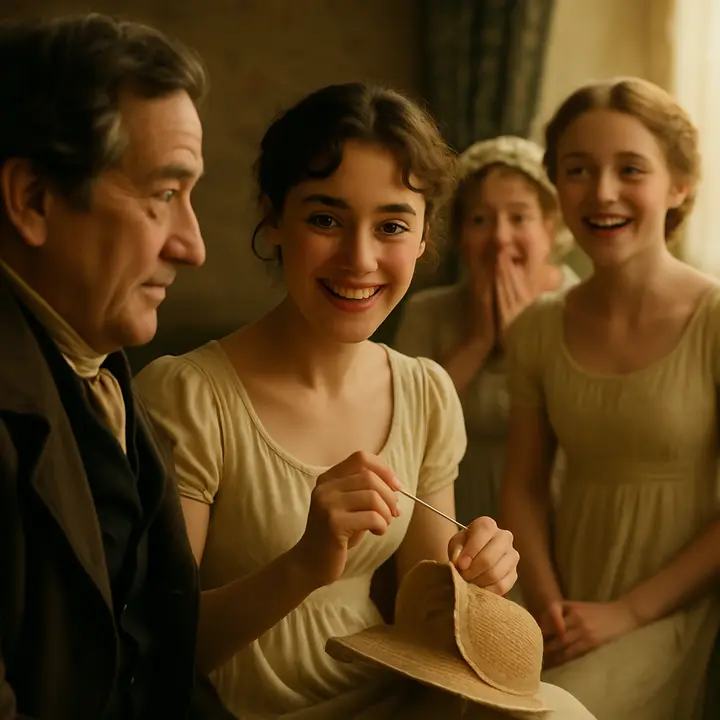
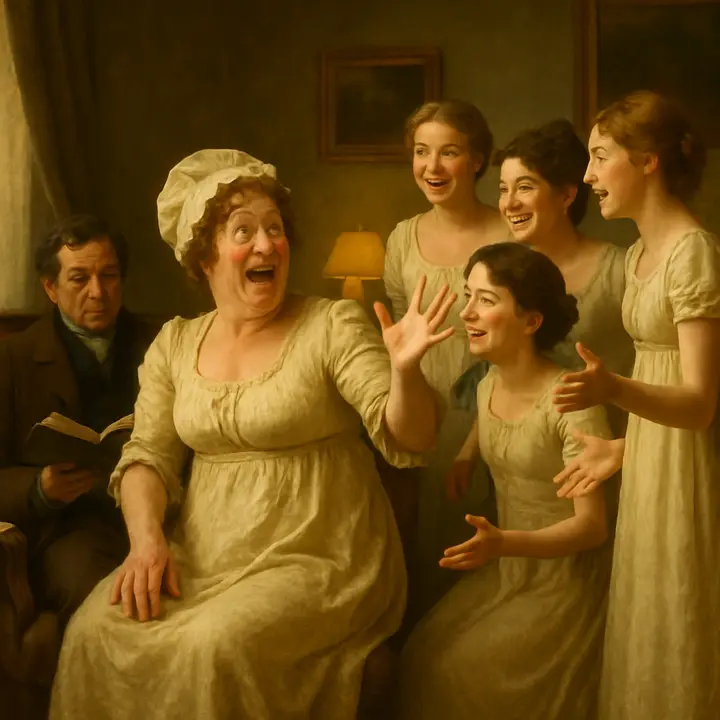
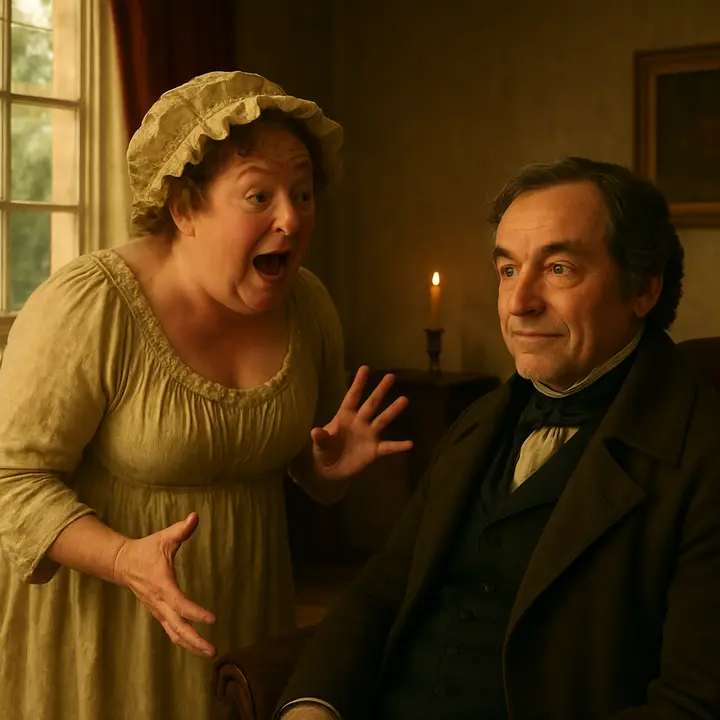
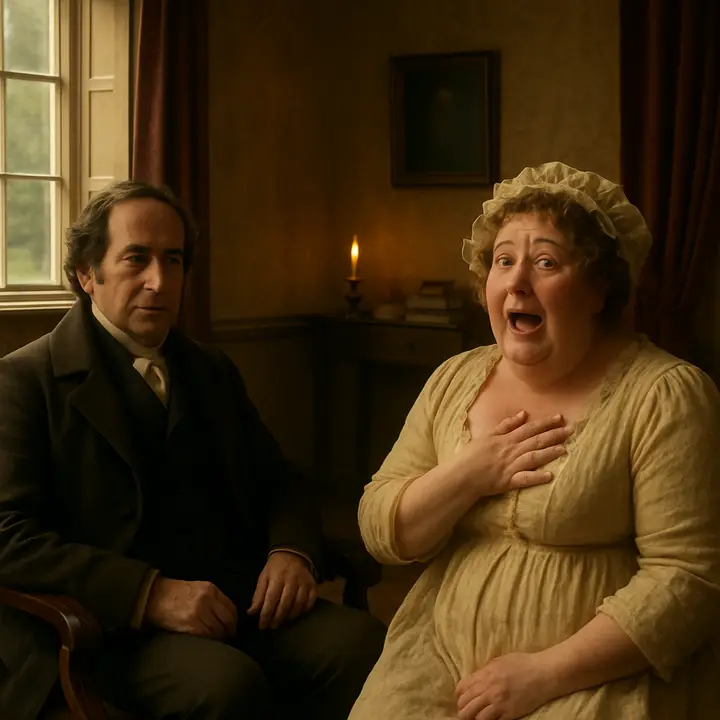
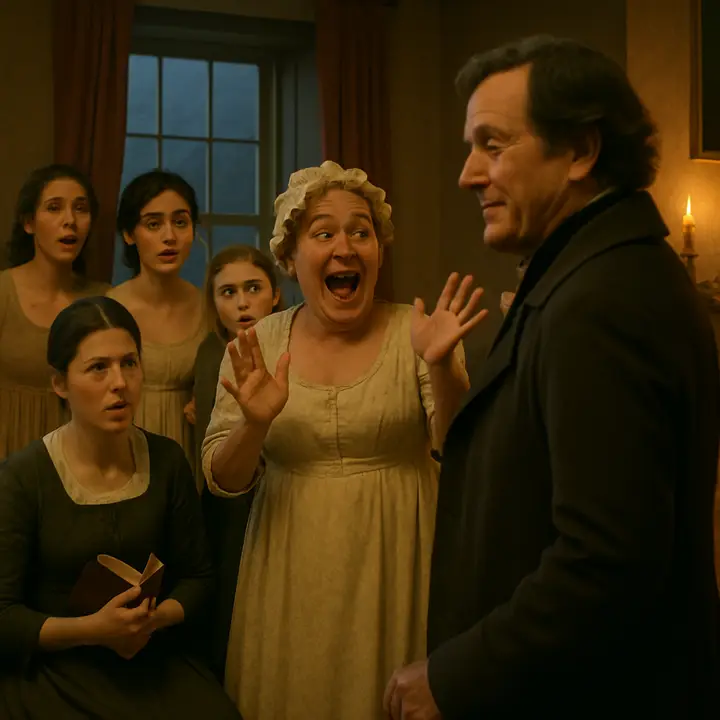
Mr. Bennet in pictures
Relationships
- Mrs. Bennet His wife; their marriage is marked by his ironic distance and her anxious matchmaking, producing constant domestic sparring.
- Elizabeth Bennet His second daughter; he teases and trusts her wit, shows particular private affection, and ultimately gives reluctant consent to her marriage to Darcy.
- Jane Bennet His eldest and gentle daughter; he supports her quietly and rejoices at her eventual engagement to Mr. Bingley with dry good humor.
- Lydia Bennet His youngest, reckless daughter whose elopement provokes his shame, a trip to London, and later disciplinary restrictions.
- Mr. Collins His pompous cousin and heir by entail; Mr. Bennet amuses himself at Collins’s expense and plays a teasing, ironic role in Collins’s courtship scenes.
- Mr. Gardiner The practical relative (uncle by marriage) whose financial intervention in Lydia’s crisis Mr. Bennet must reckon with and whose help he acknowledges with gratitude and plans for repayment.
Quotes by Mr. Bennet
“Depend upon it, my dear, that when there are twenty, I will visit them all.”
Chapter 1Mr. Bennet's dry, teasing promise exposes his sarcastic humor and his way of deflating his wife's urgency.
“I hope Mr. Bingley will like it, Lizzy.”
Chapter 2Mr. Bennet teases Elizabeth while revealing he has already visited Mr. Bingley, immediately setting a playful tone.
“A fortnight’s acquaintance is certainly very little. One cannot know what a man really is by the end of a fortnight.”
Chapter 2He mockingly comments on the social convention of quick judgments and introductions, undercutting his wife's eagerness.
“Now, Kitty, you may cough as much as you choose,”
Chapter 2After Mrs. Bennet's excitement, Mr. Bennet dismisses her anxieties and leaves the room, showing his amused detachment.
“From all that I can collect by your manner of talking, you must be two of the silliest girls in the country.”
Chapter 7Mr. Bennet teases Kitty and Lydia for their breathless gossip about officers, exposing his ironic attitude toward their frivolity.
“There is a mixture of servility and self-importance in his letter which promises well.”
Chapter 13Mr. Bennet's ironic judgment captures Collins's defining character—obsequious yet pompous—and signals the family's amusement and skepticism.
Why Mr. Bennet matters
Mr. Bennet embodies the novel’s tensions between judgment and responsibility: his keen wit highlights folly and social pretension, but his habitual disengagement exposes the family to practical danger. His ironic perspective invites readers to question both mockery and moral duty; his later willingness to act—traveling to London, enforcing limits on Lydia, and accepting Darcy’s solution—demonstrates that reflection without responsibility is insufficient. Through him Austen probes marital compatibility (contrasting his temperament with his wife’s), the limits of private superiority, and the ethical demands of parenthood within a precarious social economy.
Chapters with Mr. Bennet
- Chapter 1
- Chapter 2
- Chapter 3
- Chapter 7
- Chapter 12
- Chapter 13
- Chapter 14
- Chapter 15
- Chapter 18
- Chapter 19
- Chapter 20
- Chapter 21
- Chapter 22
- Chapter 23
- Chapter 24
- Chapter 26
- Chapter 33
- Chapter 36
- Chapter 37
- Chapter 39
- Chapter 41
- Chapter 42
- Chapter 44
- Chapter 46
- Chapter 47
- Chapter 48
- Chapter 49
- Chapter 50
- Chapter 51
- Chapter 53
- Chapter 55
- Chapter 57
- Chapter 59
- Chapter 60
- Chapter 61
More Pride and Prejudice characters
 Elizabeth BennetProtagonist
 Jane BennetMajor character
 Mr. BingleyMajor character
 Mr. DarcyMajor character
 Mrs. BennetMajor character
 Lydia BennetMinor character
 Mr. CollinsMajor character
 Mr. WickhamMajor character
All chapter summaries ›Characters ›
Read Pride and Prejudice illustrated
Every scene in these notes comes from the Book2Life reader, where the full public-domain text is illustrated as you read, with character portraits and narration. Free in your browser and on iPhone.
