
Dallas Archer in The Age of Innocence
Minor character
A breezy, modern-minded young New Yorker whose easy warmth and frankness prompt older society figures to speak more openly.
Who is Dallas Archer?
Dallas Archer is a bright, well-mannered member of a younger generation who appears in Newland Archer’s social orbit. He travels between cities (Chicago, Paris) and moves easily through fashionable circles, bringing a more open, curious tone to conversations. Dallas’s casual directness surfaces in moments such as announcing engagements, urging travel plans, and conveying news; he calls Newland from Chicago to announce his own engagement to Fanny Beaufort and presses Newland to sail to Europe. In Paris he is the one who goes up to Countess Olenska’s apartment when they arrange to visit, while Newland hangs back, illustrating Dallas’s comfort with social initiative. His presence highlights generational contrasts and acts as a catalyst for movement in the plot—prompting journeys, introductions, and encounters—though he himself does not drive the novel’s central conflicts.
In the book: When we meet him, he’s a bright, well-mannered young New Yorker from an old family, breezy and curious in a way that feels more modern than the rooms he walks into. He matters because his frank questions and easy warmth coax the older crowd to say what they usually leave unsaid.
Personality
- breezy
- He calls Newland from Chicago to report his engagement and casually urges Newland to sail with him to Europe.
- socially assured
- In Paris he goes up to the Countess Olenska’s apartment without hesitation while Newland remains hesitant on the street.
- modern-minded
- He embodies a more relaxed, acquiring attitude when he announces engagement and expects life to yield what he wants.
- catalytic
- His invitations and news prompt Newland to travel—first to Europe and later to the Countess’s apartment—setting scenes in motion.
Character arc
Dallas remains largely consistent across his appearances: he is a forward, congenial younger man whose ease with social initiative contrasts with Newland’s hesitation. Early instances show him as an energetic presence who reports personal news from a distance and encourages travel; his phone call from Chicago about his engagement both updates Newland and prods him toward Europe. In Paris Dallas is the active visitor who climbs to the Countess’s flat, embodying the practical, go-ahead temperament of his generation. He does not undergo a dramatic transformation or reveal hidden depths in the episodes provided; rather, he serves as a steady exemplar of youthful self-assurance. By the last scene recorded, his role is the same: an agent of movement and social contact while Newland remains inward, reflective, and ultimately restrained. Dallas’s constancy emphasizes the generational and temperamental gap between him and Newland.
Relationships
- Newland Archer A friend and social companion who relies on Dallas’s invitations and updates; Dallas presses him to travel and accompanies him to Paris.
- Fanny Beaufort Dallas is engaged to Fanny Beaufort, a fact he announces from Chicago and which signals his forward life-course.
- Julius Beaufort Connected by engagement ties through Fanny Beaufort and present in the same social circles affected by scandal and gossip.
- Countess Ellen Olenska A social contact whom Dallas visits assertively in Paris, going up to her apartment while Newland holds back.
- Mrs. Manson Mingott Part of the shared social network that shapes invitations and movements; Dallas’s news and movements intersect with Mrs. Mingott’s household events.
Why Dallas Archer matters
Dallas represents the emergent younger generation whose breezy confidence and practical appetites contrast with New York’s older, more self-conscious codes. He functions less as a plot engine than as a foil: his ease of action highlights Newland’s paralysis and the novel’s exploration of restraint, social expectation, and missed possibility. Through Dallas’s matter-of-fact behavior—engagements, travel, social initiative—the book underlines changing attitudes toward marriage, movement, and personal assertion, amplifying the theme of generational difference without altering the central social dilemmas faced by the protagonists.
Chapters with Dallas Archer
More The Age of Innocence characters
 Newland ArcherProtagonist
 May WellandMajor character
 Countess Ellen OlenskaMajor character
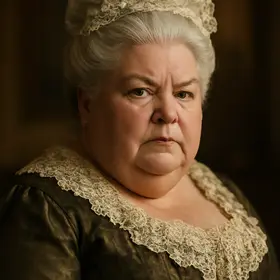 Mrs. Manson MingottMajor character
 Mrs. WellandMajor character
 Julius BeaufortMajor character
 Lawrence LeffertsMinor character
 Mr. WellandMinor character
All chapter summaries ›Characters ›
Read The Age of Innocence illustrated
Every scene in these notes comes from the Book2Life reader, where the full public-domain text is illustrated as you read, with character portraits and narration. Free in your browser and on iPhone.
Read The Age of Innocence free
