Mr. Sillerton Jackson in The Age of Innocence
Minor character
A social veteran and conversationalist who supplies historical allusions and commentary at elite gatherings.
Who is Mr. Sillerton Jackson?
Mr. Sillerton Jackson is a familiar figure in New York society who appears at key social events: the Beaufort ball, the van der Luydens' drawing-room, and a small dinner before the opera. He functions as a conversationalist and commentator, attentive to appearances and the mechanics of social ritual. At the Beaufort ball he is part of the scene that frames gossip and performance; in the van der Luydens' house he listens to and participates in the cautious, ritualized management of a social breach; at the post-dinner gathering he supplies a characteristic historical allusion to the laxities of the Tuileries court. Jackson does not drive plot action but shapes the atmosphere: his remarks and presence help articulate how society processes scandal and propriety. He moves among established families and provides a tone of knowing approval or amusement, reinforcing the rules and shared references by which the community judges behavior and preserves order.
Personality
- Observant
- He is present at the Beaufort ball and the van der Luydens' dinner, taking in the details of ritual, gossip, and demeanors that structure each scene.
- Talkative
- At the van der Luydens' dinner he supplies his favourite historical allusion to the Tuileries court, contributing to the conversational management of the scandal.
- Socially attuned
- He moves comfortably among the Beauforts, the van der Luydens, and the Archers, signaling his ease within the networks that enforce propriety.
- Amused cynic
- His historical allusion and demeanor at the dinner suggest a wry, slightly detached amusement at the community's preoccupations.
Character arc
Across the scenes in which he appears, Mr. Sillerton Jackson remains essentially constant: he functions as a steady social presence rather than a changing agent. From the Beaufort ball through the van der Luydens' dinner and the evening at the opera, Jackson's role is to observe, to supply measured commentary, and to participate in the ritualized conversation that frames scandal and propriety. He does not attempt to rescue, condemn, or transform the parties involved; instead he helps the group to narrate and place the Countess Olenska episode within familiar historical and cultural categories. Because his contributions are conversational and emblematic rather than decisive, his arc is one of sustained stance—he exemplifies the social self who interprets events through allusion and shared reference, reinforcing the community’s habits of judgment while remaining personally untroubled and unchanged by the tensions around him.
Relationships
- Newland Archer A fellow attendee and conversational companion at the van der Luydens' dinner and the opera box, occupying the same social circle.
- May Welland Present in the social events he attends; he witnesses her composure at the opera and in the domestic aftermath without intruding on the private moment.
- Julius Beaufort An object of the society gossip that Jackson observes at the Beaufort ball, where Mr. Beaufort’s household spectacle frames Jackson’s awareness of performance.
- Henry van der Luyden A host whose dining-room Jackson attends; they share the ritualized, cautious handling of a social difficulty.
- Louisa van der Luyden She presides over the drawing-room where Jackson hears and responds to accounts of the scandal involving the Countess Olenska.
- Mrs. Archer A participant in the same dinner and drawing-room conversations; Jackson is part of the mixed company that processes the gossip she recounts.
Quotes by Mr. Sillerton Jackson
“It is the principle that I dislike," said Mr. van der Luyden.”
VII.He frames the issue as a matter of principle, emphasizing the van der Luydens' concern for social rules and family backing.
“If Louisa's health allowed her to dine out—I wish you would say to Mrs. Lovell Mingott—she and I would have been happy to—er—fill the places of the Lawrence Leffertses at her dinner.”
VII.A courteous, ironic offer that publicly restores the Countess by including her among the van der Luydens' guests, thereby countering the slight.
“"At the court of the Tuileries," said Mr. Sillerton Jackson with his reminiscent smile, "such things were pretty openly tolerated."”
Book 2, Chapter 32Introduces social comparison that frames the dinner's gossip about Madame Olenska and Beaufort, showing how historical allusion polices contemporary manners.
Why Mr. Sillerton Jackson matters
Mr. Sillerton Jackson functions as a social interpreter whose presence highlights the novel’s themes of appearance, ritual, and communal judgment. By supplying allusions and taking part in formal conversation, he demonstrates how the elite translates personal breaches into manageable cultural narratives. He helps show that the community cares less for individual truth than for the maintenance of shared references and ceremonies, and his steady, amused stance underscores the social mechanics that preserve conformity and suppress disruptive intimacies.
Chapters with Mr. Sillerton Jackson
More The Age of Innocence characters
 Newland ArcherProtagonist
 May WellandMajor character
 Countess Ellen OlenskaMajor character
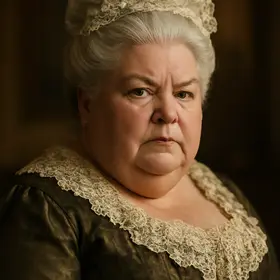 Mrs. Manson MingottMajor character
 Mrs. WellandMajor character
 Julius BeaufortMajor character
 Lawrence LeffertsMinor character
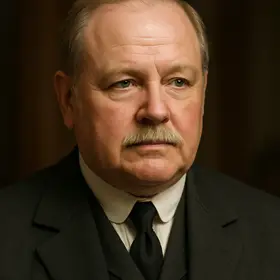 Mr. WellandMinor character
All chapter summaries ›Characters ›
Read The Age of Innocence illustrated
Every scene in these notes comes from the Book2Life reader, where the full public-domain text is illustrated as you read, with character portraits and narration. Free in your browser and on iPhone.
Read The Age of Innocence free
