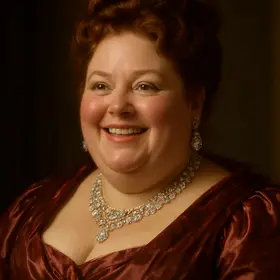
Mrs. Lemuel Struthers in The Age of Innocence
Minor character
A showy, newly rich hostess whose fashionable musical salons tempt curiosity and scandalize old New York.
Who is Mrs. Lemuel Struthers?
Mrs. Lemuel Struthers appears as one of the conspicuous embodiments of new wealth just outside the genteel Mingott–van der Luyden circle. Gossip about her Sunday musical evenings and her presence at fashionable entertainments recurs in the household talk that frames Newland Archer's social world. She is explicitly mentioned in the Mingott visit as a novelty the Beauforts dared to invite, and she later appears as an ostentatious figure introduced at the Countess Ellen Olenska's drawing-room, where she invites Ellen to a concert. Though she does not drive any plot decisions, her salon and public visibility function as a test of who in polite society will cross the invisible boundary toward looser, more cosmopolitan entertainments. Other characters use her as a shorthand for vulgarity or social daring; references to her name often prompt judgment or worry among the old New Yorkers who police propriety.
In the book: When we first hear of her, she’s the flashy, newly rich hostess everyone gossips about—wife of a shoe-polish magnate—whose Sunday musical evenings tempt curious guests but scandalize old New York. She matters because her salon sits just outside the “acceptable” circle, testing who dares to cross that invisible line.
Personality
- flashy
- Mrs. Mingott's anecdote in the betrothal visit mocks the Beauforts' choice of inviting Mrs. Struthers to their ball as a social novelty.
- sociable
- She runs Sunday musical evenings that draw curious guests and are repeatedly discussed as events people attend or talk about.
- provocative
- Her public invitation to the Countess at Ellen's house—announced by the Duke of St. Austrey—creates irritation among conservative acquaintances.
- outsider
- Contemporary characters place her 'just outside' the acceptable circle, using her as an example of new money beyond old New York's polite bounds.
Character arc
Mrs. Struthers remains essentially the same figure from her first mention through later episodes: a conspicuous, newly wealthy hostess who populates the edges of respectable society. In the early Mingott visit she is invoked as a comic example of novelty and vulgarity when the Beauforts are criticized for inviting her. Later, her actual arrival at the Countess's small drawing-room confirms the gossip: she is showy, publicly sociable and willing to mingle with more cosmopolitan guests. She never becomes intimate with the central characters nor experiences a revealed inner life; instead, she persists as a social marker. Over the course of the chapters she does not change or repent—her presence continues to provoke judgment and to delineate the line between old-fashioned propriety and the more ostentatious, modern entertainments that tempt certain members of New York society. Her role is static but functionally significant: she remains a test of social boundaries rather than a figure who transforms those around her.
Relationships
- Countess Ellen Olenska Mrs. Struthers invites the Countess to a concert and appears in Ellen's drawing-room, signaling a social link that alarms conservative observers.
- Duke of St. Austrey The Duke introduces the showy Mrs. Struthers when he arrives at the Countess's house, marking her as part of the more worldly crowd.
- Julius Beaufort Mrs. Mingott mentions that the Beauforts once invited Mrs. Struthers, using that invitation as evidence of their taste for novelties.
- Mrs. Manson Mingott Mrs. Mingott cites Mrs. Struthers in conversation as an amusing example of modern social habits when teasing about entertainments.
- Newland Archer Archer hears and registers gossip about Mrs. Struthers; her presence at Ellen's party contributes to his irritation with the social complications surrounding Ellen.
- Mrs. Archer Mrs. Archer references Mrs. Struthers in household conversations as part of the catalogue of social changes that disturbs the older circle.
Quotes by Mrs. Lemuel Struthers
“Know each other? Fiddlesticks! Everybody in New York has always known everybody.”
IV.Mrs. Mingott dismisses the idea of giving the engaged couple time, arguing New Yorkers already know one another and urging a swift wedding.
“I may catch pneumonia any winter now, and I want to give the wedding-breakfast.”
IV.Mrs. Mingott insists on an early wedding so she can host the wedding-breakfast while she is still able, revealing her blunt practicality and desire for social involvement.
Why Mrs. Lemuel Struthers matters
Mrs. Struthers functions less as an individual and more as a social symbol: the visible frontier of nouveau riche taste that tests the boundaries of old New York propriety. Her salons and public appearances force characters to reveal priorities and prejudices about respectability, and her association with the Countess intensifies fears about reputation and influence. By occupying the liminal space between acceptance and exclusion, she helps dramatize the novel's themes of social convention, the policing of female behavior, and the delicate choreography by which a closed society preserves itself.
Chapters with Mrs. Lemuel Struthers
More The Age of Innocence characters
 Newland ArcherProtagonist
 May WellandMajor character
 Countess Ellen OlenskaMajor character
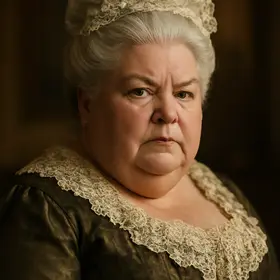 Mrs. Manson MingottMajor character
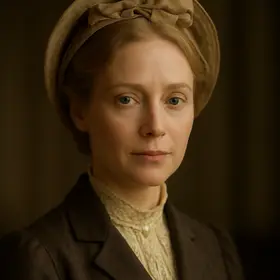 Mrs. WellandMajor character
 Julius BeaufortMajor character
 Lawrence LeffertsMinor character
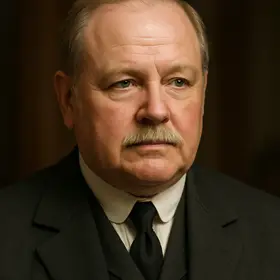 Mr. WellandMinor character
All chapter summaries ›Characters ›
Read The Age of Innocence illustrated
Every scene in these notes comes from the Book2Life reader, where the full public-domain text is illustrated as you read, with character portraits and narration. Free in your browser and on iPhone.
Read The Age of Innocence free
