Nastasia in The Age of Innocence
Minor character
The Countess Olenska's Russian attendant and household servant who accompanies or is notably absent during key private moments.
Who is Nastasia?
Nastasia is the Countess Ellen Olenska's attendant and practical household companion. She performs domestic duties and provides the Countess with a modest measure of continuity and privacy in a life divided between scandal, exile, and society. In the West Twenty-third Street visit she is implied among the servants who lay out the room and serve tea; later passages stress her absence—Madame Olenska is "alone without Nastasia" in Boston—so Nastasia's presence (or lack of it) shapes how the Countess negotiates solitude and public exposure. Nastasia does not speak for herself in these chapters but acts as an understated stabilizing force: when present she enables the Countess to receive visitors in a domestic setting; when absent, she highlights the Countess's vulnerability and increasing independence as Ellen meets Newland Archer away from the scrutiny of household routines and emissaries from her husband.
Personality
- Discreet
- Her role is suggested by the quiet domestic service that readies the Countess's room and tea without drawing attention during Archer's visit in Chapter IX.
- Reliable
- The Countess's remark that she is 'alone without Nastasia' in Boston implies Nastasia is usually present to oversee such travels and arrangements.
- Unobtrusive
- She does not appear in the conversational center of the scenes but performs background duties like fetching a lamp and tea-tray in the Countess's lodging.
- Anchoring
- Her absence in Boston creates a different tone for the Countess's outings, underlining how Nastasia's steadiness anchors Ellen's domestic life.
Character arc
Nastasia remains essentially constant across the scenes in which she figures: she is the quiet domestic presence who enables the Countess's private life and, by contrast, her absence marks moments when Ellen steps more openly into the world. At the Countess's rented house in West Twenty-third Street, servant activity—preparing lamps and tea—establishes a small, intimate household sphere in which Nastasia plays an implied role. Later, when Madame Olenska appears "alone without Nastasia" in Boston, that lack signals a shift: Ellen is less encumbered by household routine and more exposed to unsanctioned encounters with Newland Archer and to dealings with emissaries from her husband. Nastasia does not undergo a personal transformation or take central action; instead, the pattern of her presence and absence subtly shapes the Countess's ability to move between private retreat and public engagement, and so her constancy functions narratively as a measure of Ellen's changing circumstances rather than as a character change in its own right.
Relationships
- Countess Ellen Olenska Her attendant and domestic companion who provides household support and continuity.
- Newland Archer An outsider whose private meetings with the Countess are experienced differently depending on Nastasia's presence or absence.
- Count Olenski The husband whose emissary brings an offer the Countess refuses—an external pressure against which Nastasia helps maintain domestic normalcy.
- Julius Beaufort A man present with the Countess on the occasion Newland first visits; Nastasia is part of the household scene surrounding that meeting.
- Mrs. Manson Mingott Host at whose house the Countess speaks with Newland during a charged evening, a setting where Nastasia’s usual household role is less visible.
Why Nastasia matters
Nastasia functions as a subtle domestic counterpoint to the novel’s themes of privacy, social constraint, and exile. Her near-silence and background labor make the Countess's rented rooms feel like a private refuge, while her absence underscores Ellen's vulnerability and capacity for unsanctioned action. Through Nastasia, the text signals how ordinary, practical ties—service, household routine, an attendant's presence—both enable and constrain a woman's movement between public scandal and private autonomy.
Chapters with Nastasia
More The Age of Innocence characters
 Newland ArcherProtagonist
 May WellandMajor character
 Countess Ellen OlenskaMajor character
 Mrs. Manson MingottMajor character
 Mrs. WellandMajor character
 Julius BeaufortMajor character
 Lawrence LeffertsMinor character
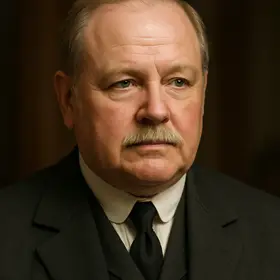 Mr. WellandMinor character
All chapter summaries ›Characters ›
Read The Age of Innocence illustrated
Every scene in these notes comes from the Book2Life reader, where the full public-domain text is illustrated as you read, with character portraits and narration. Free in your browser and on iPhone.
Read The Age of Innocence free
