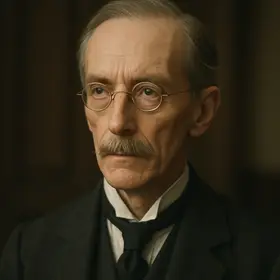
Sillerton Jackson in The Age of Innocence
Minor character
A seasoned New York social chronicler who remembers every connection and quietly supplies gossip and judgments.
Who is Sillerton Jackson?
Mr. Sillerton Jackson is the urbane, dryly witty insider whom New York society consults for the facts and nuances of reputation. He appears wherever the city's social seam is under stress—at the opera boxes, in drawing-rooms, and at the Archers' table—relating sightings, family lore, and the whispered calculations that shape social fate. Jackson does not engineer events; he records and circulates them, offering context and a memory that others trust. When Countess Ellen Olenska returns to America and her presence unsettles established families, Jackson supplies the details people want to know: who has been seen with her, the rumors of a secretary and divorce, and which houses decline the Mingotts' invitations. He speaks with a knowing irony that reassures some listeners and sharpens the anxieties of others. His role is primarily to interpret the social topography for characters like Newland and Mrs. Archer, and to make visible the consequences of scandal and charity in the closed world of fashionable New York.
In the book: We first meet Sillerton Jackson as one of the city’s seasoned insiders, the man who knows every family connection and every quiet scandal by heart. He chats drily about who’s “in” and who’s skating on thin ice, and people—Newland included—listen because his memory is a social map. He matters early on as the discreet oracle everyone consults when Ellen Olenska’s return rattles the room.
Personality
- Observant
- At the opera he names the Mingott box and notes the surprising presence of the striking woman, immediately signaling social impropriety.
- Gossipy
- At the Archers' dinner he recounts sightings and rumors about the Countess—her walks with Beaufort, a secretary, and talk of divorce—feeding family talk.
- Dry-witted
- He quips, 'I didn't think the Mingotts would have tried it on,' when the Countess appears in Mrs. Mingott's box, delivering social commentary with irony.
- Authoritative
- People, including Newland, listen to him because his memory serves as a social map and he supplies the anecdotal facts others lack.
- Conservative
- In conversations about changing trends he laments the erosion of traditional restraints alongside Mrs. Archer and Miss Sophy Jackson.
Character arc
Jackson's presence is steady rather than developmental: from his first appearance at the opera through later drawing-room and dinner scenes he remains the same reliable conduit of social knowledge. He introduces and repeats the details that orient other characters—who is present, who has erred, who has been seen together—and he continues to frame the Countess Olenska's situation in terms of sightings, family responses, and social consequences. He does not undergo a moral conversion or take a public stand; instead he consistently supplies information, wry comment, and the conservative framing that helps the circle decide how to act. By the time of the Archers' Thanksgiving and the farewells surrounding the Countess's departures, Jackson still performs the same communal function: remembering, advising tacitly, and reinforcing the norms that govern reputations. His refusal to change underscores the persistence of New York's social machinery even as individual characters feel turmoil.
Relationships
- Newland Archer An interlocutor and confidant whose curiosity and judgments Jackson informs with anecdotes and social context.
- Countess Ellen Olenska A frequent topic of Jackson's reports; he supplies sightings and rumours that shape public opinion about her.
- Mrs. Archer A dinner companion who summons him for the latest society gossip and listens to his anecdotal accounts.
- Mrs. Manson Mingott An important social figure whose household Jackson watches closely and whose hospitality to the Countess he remarks on.
- Julius Beaufort One of the names Jackson mentions in connection with the Countess's circle and with later rumours that trouble society.
- Regina Beaufort Part of the social set he observes and mentions when reporting the Countess's company and the mingling of households.
Quotes by Sillerton Jackson
“I didn't think the Mingotts would have tried it on.”
IJackson's remark signals social disapproval and introduces mystery around the new woman's presence in the Mingott box.
“No, she was not at the ball.”
5Jackson announces Olenska's absence from the Mingott ball, which prompts Mrs. Archer's approving response and shifts the table conversation.
“"I'm told she's looking for a house. She means to live here."”
5Jackson reports that Olenska plans to settle in New York, escalating the family's concern about her proximity and influence.
Why Sillerton Jackson matters
Jackson functions as the novel's social memory and interpretive voice within the world of manners. By cataloguing who is seen with whom and by offering dry, common-sense commentary, he reveals how reputations are constructed and policed. His steady, conservative perspective makes visible the mechanisms—gossip, sighting, refusal of invitations—that enforce conformity and isolate transgressors like the Countess. In doing so he helps dramatize the book's themes of social control, the weight of tradition, and the gap between private feeling and public judgment.
Chapters with Sillerton Jackson
More The Age of Innocence characters
 Newland ArcherProtagonist
 May WellandMajor character
 Countess Ellen OlenskaMajor character
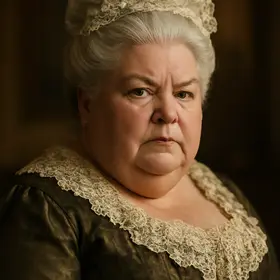 Mrs. Manson MingottMajor character
 Mrs. WellandMajor character
 Julius BeaufortMajor character
 Lawrence LeffertsMinor character
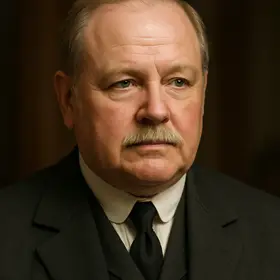 Mr. WellandMinor character
All chapter summaries ›Characters ›
Read The Age of Innocence illustrated
Every scene in these notes comes from the Book2Life reader, where the full public-domain text is illustrated as you read, with character portraits and narration. Free in your browser and on iPhone.
Read The Age of Innocence free
