
Daisy Buchanan in The Great Gatsby
Major character
Old-money East Egg socialite, Nick’s cousin and Tom’s wife, the object of Gatsby’s idealized longing and the pivot of tragic events.
Who is Daisy Buchanan?
Daisy Buchanan is Nick Carraway’s cousin and the married woman at the center of Jay Gatsby’s obsessive dream. Introduced as a glamorous, melodious figure of inherited wealth, she projects charm and emotional evasiveness; she is uneasy about her marriage and expresses a weary cynicism about women’s roles. Gatsby has built his life and fortune to recapture the past he shared with Daisy, and she becomes the axis around which his plan to recreate that past turns. Daisy visits Gatsby in secret and reacts with intense, confused emotion when confronted by his recreated world, yet she also recoils during the decisive confrontation in New York, where she cannot clearly assert love or choose courageously between Tom and Gatsby. After Myrtle’s death she withdraws from responsibility: she neither attends Gatsby’s funeral nor answers Nick’s attempts to reach her. Across the novel Daisy embodies both the attraction of wealth and the moral vacuity of the social class that protects itself by retreating from consequences.
In the book: Daisy is Nick Carraway’s cousin and Tom Buchanan’s wife, a dazzling figure of old-money privilege whose charm and evasiveness captivate those around her. She embodies the allure and moral vacancy of Jazz Age high society, becoming the focal point of Jay Gatsby’s idealized longing and the social tensions that drive the novel’s central conflicts.
Personality
- Charming
- At the first dinner in Chapter 1 she enchants the room with her voice and flirtatious remarks, captivating Nick and Jordan.
- Evasive
- During the heated confrontation in Chapter 7 she panics and wavers when Gatsby demands she declare she never loved Tom, unable to give a clear, decisive answer.
- Sentimental
- In Chapter 5 she bursts into tears over Gatsby’s shirts while touring his house, revealing a sudden emotional overwhelm at his displays.
- Privileged
- Her ease in social settings and apparent expectation that others will shield her appears in Chapter 9 when she sends no word and offers no help after Gatsby’s death.
- Resigned
- In Chapter 1 she muses that a girl’s best fate is to be a 'beautiful little fool,' signaling a weary acceptance of constrained female roles.
Character arc
Daisy arrives as an alluring emblem of the East Egg world Gatsby longs for: beautiful, wealthy, and elusive. Early scenes show her as flirtatious and melancholic, revealing both affection for Gatsby’s memory and a practical acceptance of Tom’s security. When Gatsby orchestrates their reunion in Chapter 5, Daisy briefly succumbs to nostalgia and intense feeling, responding to Gatsby’s spectacles of wealth with tears and absorbed attention. Yet as Gatsby pushes her to renounce her past in Chapter 7, Daisy cannot sustain the moral or emotional risk his dream requires; she panics, produces ambiguity about her feelings, and ultimately retreats. After the car accident that kills Myrtle, Daisy avoids accountability—she remains physically and socially insulated, leaving Gatsby to take the blame and fate. By the end she has reverted to a protected, passive position: present in name as Tom’s wife but absent in moral responsibility, failing to follow through on the ties and decisions that earlier scenes suggested might change her. Her essential temperament—charm mixed with evasiveness and resignation—remains intact rather than transformed.
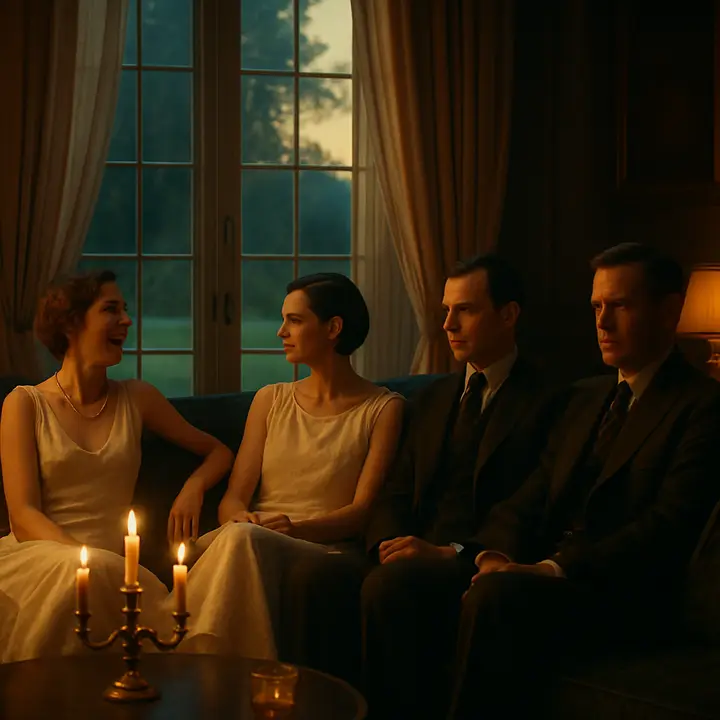
Daisy Buchanan in pictures



Relationships
- Nick Carraway Cousin and occasional confidant; Nick observes her closely, serves as her social bridge, and narrates her actions and failures.
- Tom Buchanan Husband; their marriage is marked by dominance, infidelity, and social alliance that ultimately shields Daisy from consequences.
- Jay Gatsby Former lover and the object of Gatsby’s idealized devotion; she is both the fulfillment and the undoing of his dream.
- Pammy Buchanan Her young daughter, mentioned as part of Daisy’s domestic life and symbolic of the life Daisy chose with Tom.
- Jordan Baker Friend and social companion who appears with her in social settings; Jordan helps connect Daisy to Nick and Gatsby’s plans.
- George Wilson Indirectly linked through Myrtle’s death; George’s grief and vengeance are set in motion by events that involve Daisy, though she remains absent afterward.
Quotes by Daisy Buchanan
“I’m p-paralysed with happiness.”
Chapter 1Daisy's affected, charming laughter that reveals her performative charm and surface gaiety during the dinner.
“"They’re such beautiful shirts," she sobbed, her voice muffled in the thick folds.”
Chapter 5Daisy bursts into tears amid Gatsby's display of his lavish shirts, a moment that mixes material luxury with emotional overwhelm and reveals the powerful, complicated effect Gatsby's wealth has on her.
Why Daisy Buchanan matters
Daisy functions as the symbolic center of the novel’s critique of wealth and moral carelessness: her beauty and social standing make her desirable, but her inability to act morally or decisively exposes the emptiness beneath the glamour. She embodies the American upper class’s capacity to retreat from responsibility—protecting itself through status while others suffer. Through Daisy, the book dramatizes themes of illusion versus reality, the corruption of the American dream by materialism, and the gendered limits placed on agency in the Jazz Age social order.
Chapters with Daisy Buchanan
More The Great Gatsby characters
 Nick CarrawayNarrator
 Tom BuchananAntagonist
 Jay GatsbyProtagonist
 Jordan BakerMajor character
 Dan CodyMinor character
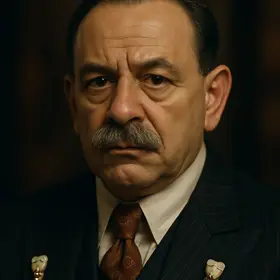 Meyer WolfsheimMinor character
 Ewing KlipspringerMinor character
 George WilsonMajor character
All chapter summaries ›Characters ›
Read The Great Gatsby illustrated
Every scene in these notes comes from the Book2Life reader, where the full public-domain text is illustrated as you read, with character portraits and narration. Free in your browser and on iPhone.
