The Great Gatsby IX Summary
Aftermath and Departure
Nick arranges Gatsby's funeral, few people attend, Gatsby's father arrives, and Nick returns West, reflecting on Gatsby and the American past.
Summary
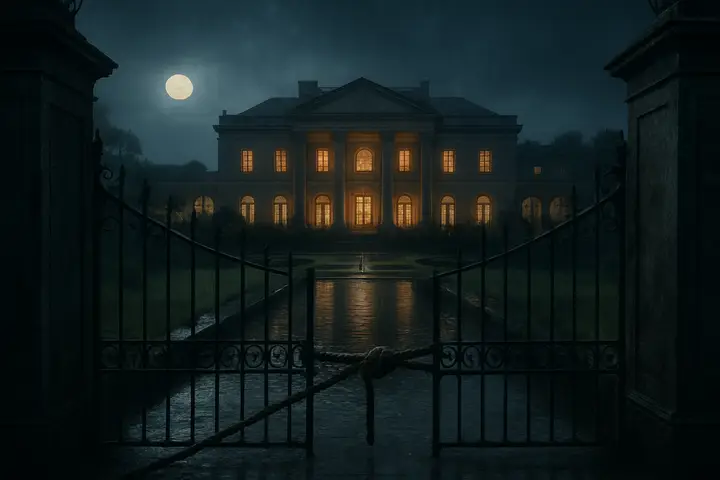
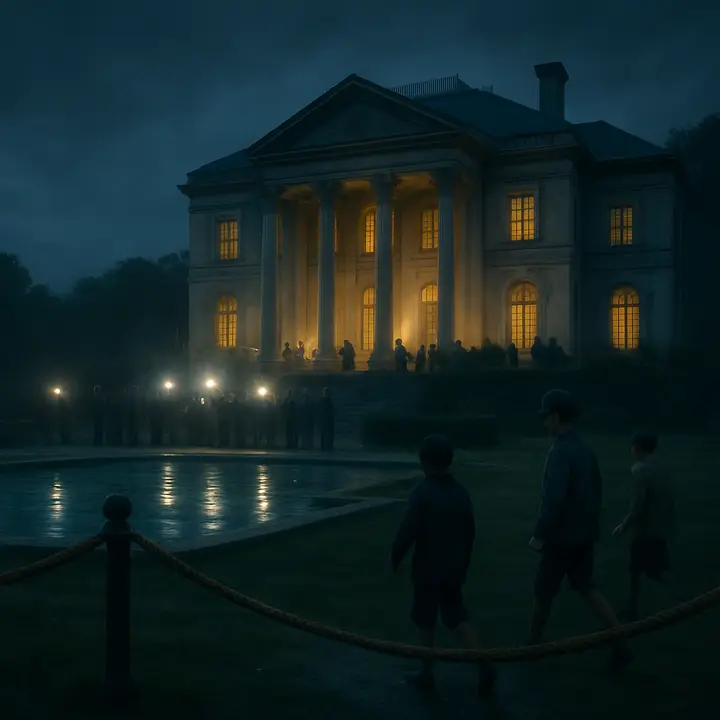
Nick describes the days after Gatsby's death as a blur of police, photographers, and newspapers converging on Gatsby’s house. Reporters mischaracterize Wilson and the situation; witnesses at the inquest—like Catherine—defend Myrtle and deny Gatsby’s involvement. Nick finds himself the only person taking personal responsibility for Gatsby. He tries to contact Daisy, Meyer Wolfsheim, and others to get help and information, but they are either unreachable or refuse to be involved. Wolfshiem sends a terse, evasive reply; most acquaintances refuse to attend or offer only weak condolences.
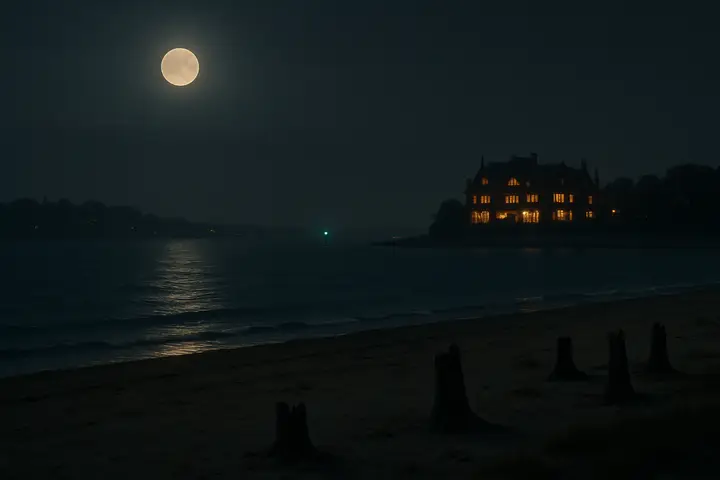
A telegram brings Gatsby’s father, Henry C. Gatz, from the Midwest. He is a solemn, proud, and bewildered old man who reveals cherished mementos—photographs and a youth schedule—that show Jimmy’s early ambitions and self-discipline. Despite Gatz’s evident pride, very few people come to the funeral: only the minister, a handful of servants, a postman, the owl-eyed man, and Nick. Klipspringer and Meyer Wolfshiem decline to be present. At the graveside the owl-eyed man sympathizes; Daisy sends nothing. Disillusioned by the East and its carelessness, Nick reconnects with his Midwestern identity, sees the story as a Western one, and decides to return home. He ties up loose ends with Jordan, sees Tom once more (confronting him about what he told Wilson), erases an obscene scrawl on Gatsby’s steps, and spends a final contemplative night on the beach, thinking about Gatsby’s dream—symbolized by the green light—and the persistence of longing as the novel closes.
Key events
- Police, reporters, and onlookers swarm Gatsby’s house after his death.
- Nick attempts to contact Daisy and Meyer Wolfsheim; both are absent or unhelpful.
- Henry Gatz arrives from Minnesota and reveals Gatsby’s youthful keepsakes.
- Most of Gatsby’s acquaintances refuse to attend the funeral; only a few mourners come.
- Nick confronts Tom about what he told Wilson; Tom claims he told the truth.
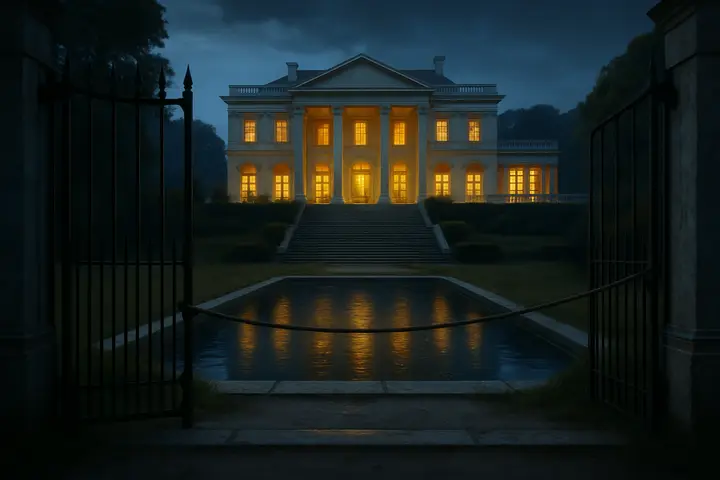
- Nick decides to leave the East, visits Jordan, then spends a last night reflecting on Gatsby at the beach.
IX in pictures
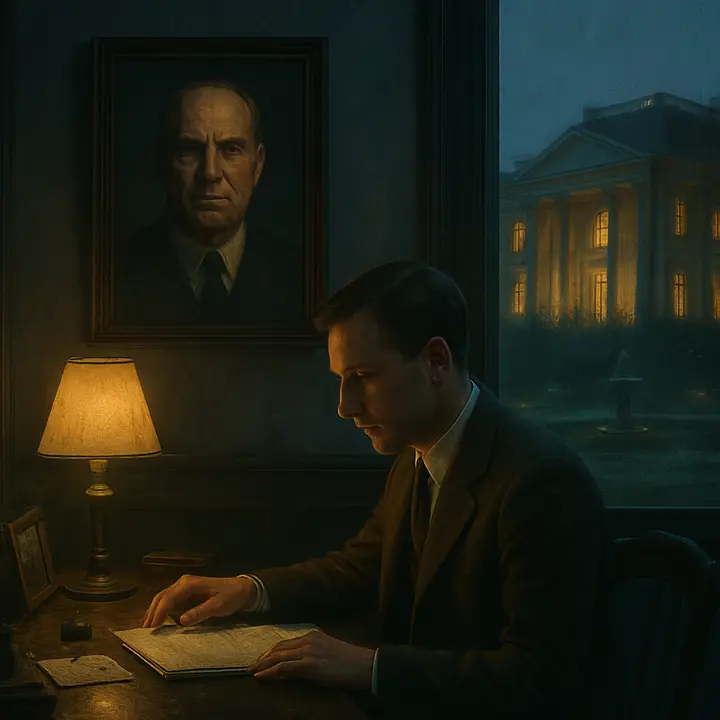
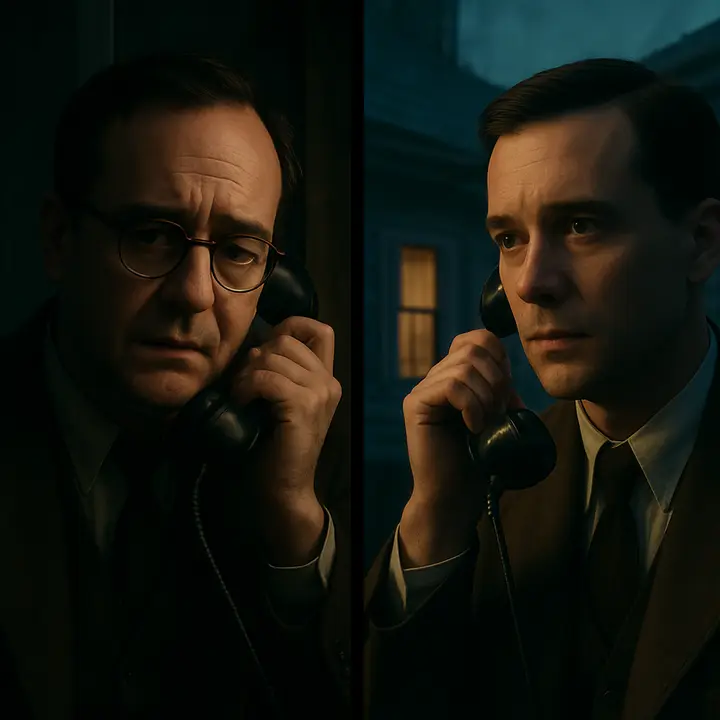
Analysis
This chapter functions as a denouement and moral reckoning: it strips away the glitter of Gatsby’s social world to reveal its emptiness. The sparse turnout at the funeral emphasizes the shallowness and selfishness of the social circle that once flocked to Gatsby’s parties; their absence underscores themes of isolation, loyalty, and the cost of self-invention. Nick’s role shifts from observer to executor of Gatsby’s final affairs, highlighting his growing moral seriousness and empathy. Henry Gatz provides a poignant contrast to Gatsby’s ostentatious present: the father’s pride and the boy’s early regimented resolves suggest a genuine aspiration underlying Gatsby’s constructed persona, complicating the reader’s judgment of him.
Symbolically, the chapter reprises the green light and the beach imagery, transforming them into elegiac motifs about dreams and the past; Nick’s final reflections tie Gatsby’s personal longing to a broader American impulse to push forward despite being pulled back by history. Fitzgerald uses sparse, elegiac prose and selective scenes—funeral, the small circle of mourners, the solitary vigil on the sand—to render the collapse of illusion. The narrative technique remains first-person retrospective, giving Nick authority to interpret events while exposing his own disillusionment and return to Midwestern values, completing the novel’s structural arc from fascination to sober judgment.
Important quotes
“I found myself on Gatsby’s side, and alone.”
NarratorNick states his personal allegiance to Gatsby amid the crowd's gossip and indifference after Gatsby’s death.
“He had come a long way to this blue lawn, and his dream must have seemed so close that he could hardly fail to grasp it.”
NarratorNick reflects on Gatsby’s lifelong pursuit of his dream, linking Gatsby’s persistence to the novel’s central idealism.
“So we beat on, boats against the current, borne back ceaselessly into the past.”
NarratorThe novel’s closing line frames human striving and the inescapable pull of the past as universal and tragic.
Characters in IX
All chapter summaries ›Characters ›
Read The Great Gatsby illustrated
Every scene in these notes comes from the Book2Life reader, where the full public-domain text is illustrated as you read, with character portraits and narration. Free in your browser and on iPhone.
