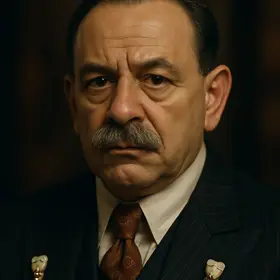
Meyer Wolfsheim in The Great Gatsby
Minor character
A shady, well‑connected gambler and business associate of Gatsby, reputed to have fixed the 1919 World Series.
Who is Meyer Wolfsheim?
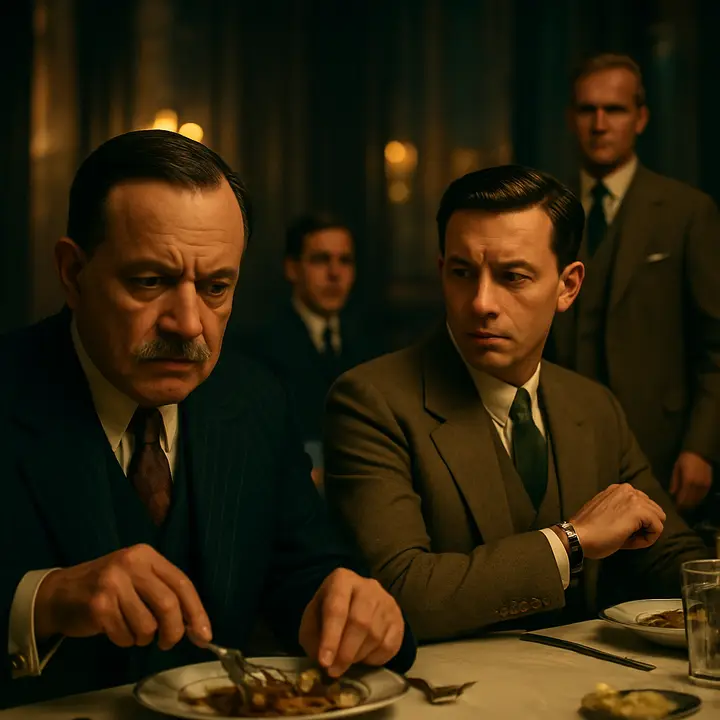
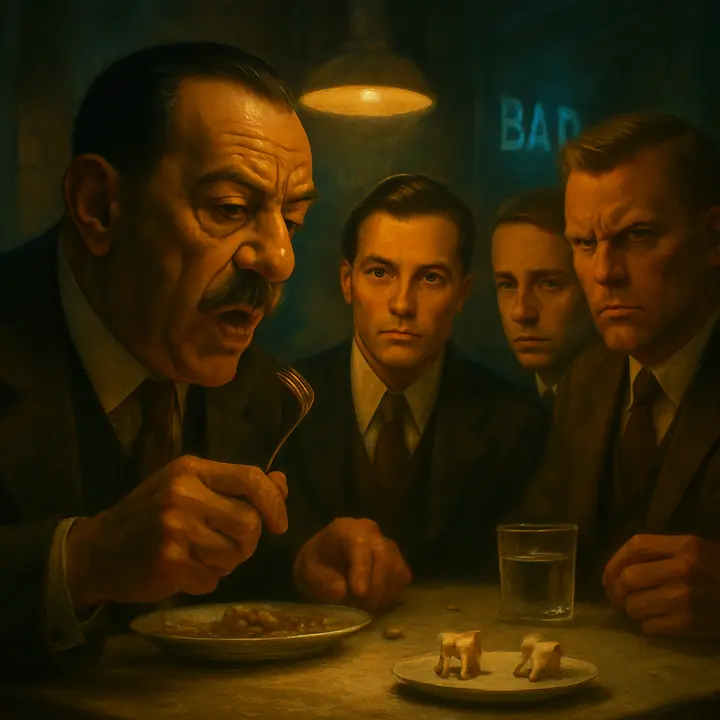
Meyer Wolfsheim is introduced at a New York lunch Gatsby takes Nick to, where he appears as an ominous, coarse figure from the criminal underworld and boasts of fixing the 1919 World Series. He functions as Gatsby’s visible tie to illicit business and city vice: his casual talk of gangland episodes complicates the glamorous surface of Gatsby’s life and suggests the means by which Gatsby amassed wealth. Wolfsheim refuses to participate in the personal aftermath of Myrtle’s death and later declines involvement in Gatsby’s funeral, answering Nick only tersely. Across his appearances, Wolfsheim does not pursue social intimacy or moral repair; he instead preserves his own security and distance, signaling the protective but self‑interested bonds that link Gatsby to the darker economy of the Jazz Age.
In the book: Meyer Wolfsheim is Gatsby’s well‑connected associate in New York’s criminal underworld, a famed gambler said to have fixed the 1919 World Series. His presence links Gatsby to illicit enterprises, illuminating the novel’s themes of corruption beneath Jazz Age glamour and the blurred line between respectability and crime, while also showcasing the influence of powerful, shadowy figures on the era’s social circles.
Personality
- Conniving
- At the lunch he boasts that he fixed the 1919 World Series, openly claiming corrupt influence in major affairs.
- Discreet
- When Nick seeks help after Gatsby’s death, Wolfsheim sends a terse, evasive reply and refuses to be involved or attend the funeral.
- Worldly
- He speaks casually about gangland episodes at the Forty‑second Street cellar lunch, implying deep knowledge of New York underworld networks.
- Protective
- His conduct toward Gatsby is quietly loyal in public settings—appearing with Gatsby at a revealing lunch—but he refuses personal risk after Gatsby’s death.
- Unsentimental
- He declines to attend Gatsby’s funeral, prioritizing his own safety and distance over mourning or public loyalty.
Character arc
Wolfsheim appears steadily consistent from his first scene to his last: he is introduced as the urbane, morally ambiguous fixer who lends legitimacy and menace to Gatsby’s social identity, and he remains committed to self‑preservation rather than emotional ties. In Chapter 4 his coarse reminiscences and boast about the World Series establish him as a practiced insider of corruption. In subsequent chapters he stays largely offstage: he does not surface at the emotional turning points—Myrtle’s death or the confrontation in New York—and by Chapter 9 his response to Gatsby’s murder is evasive and self‑protective. He does not soften, repent, or come forward; instead, his final gestures—declining to help with arrangements and refusing to attend the funeral—confirm that his loyalty is transactional and limited to the benefits he once received from Gatsby. Wolfsheim’s arc is therefore one of maintained distance: he marks Gatsby’s ties to organized vice but never crosses social or moral lines to bind himself to Gatsby’s personal fate.
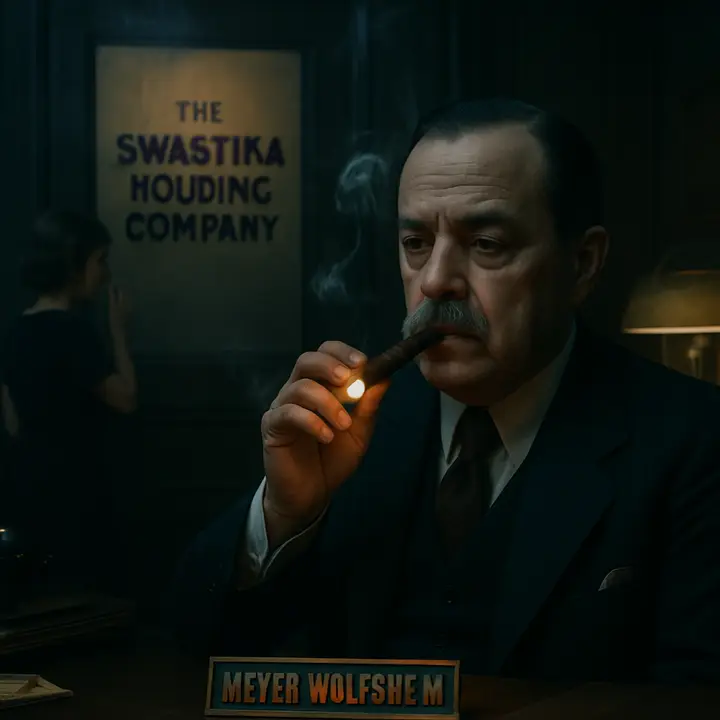
Meyer Wolfsheim in pictures
Relationships
- Jay Gatsby Gatsby’s long‑time associate and business contact whose criminal connections help explain Gatsby’s wealth; appears with him at the New York lunch.
- Nick Carraway Introduced to Nick by Gatsby at the lunch; later contacted by Nick after Gatsby’s death and responds tersely, refusing involvement.
- Ewing Klipspringer A social acquaintance of Gatsby’s who, like Wolfsheim, ultimately declines meaningful participation in Gatsby’s funeral and the aftermath.
- Tom Buchanan A figure from Gatsby’s social orbit by association—Tom and Wolfsheim occupy overlapping circles in New York’s power and gossip networks, though they do not directly interact in the chapters shown.
- Henry Gatz Gatsby’s father, whom Wolfsheim never meets at the funeral; Wolfsheim’s refusal to attend highlights the gulf between Gatsby’s blood relations and his criminal associates.
Why Meyer Wolfsheim matters
Wolfsheim embodies the novel’s indictment of the Jazz Age: a polished, influential figure whose admissions of corruption reveal the hidden machinery behind wealth and respectability. By tying Gatsby to organized crime and then refusing to stand by him, Wolfsheim exposes the fragility of relationships built on advantage rather than genuine loyalty. His presence underscores themes of moral decay beneath glittering surfaces, the commodification of people and dreams, and the ease with which social ties can be severed when danger or scandal arises. Wolfsheim thus helps define the moral geography of the East that ultimately isolates Gatsby.
Chapters with Meyer Wolfsheim
More The Great Gatsby characters
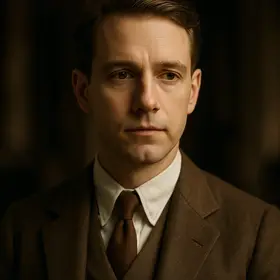 Nick CarrawayNarrator
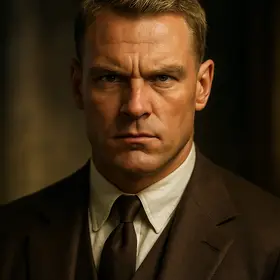 Tom BuchananAntagonist
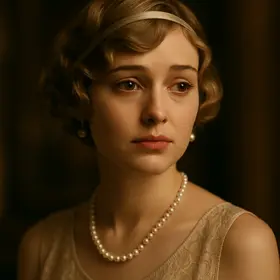 Daisy BuchananMajor character
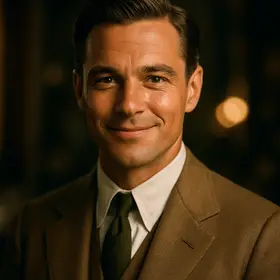 Jay GatsbyProtagonist
 Jordan BakerMajor character
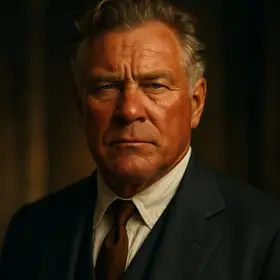 Dan CodyMinor character
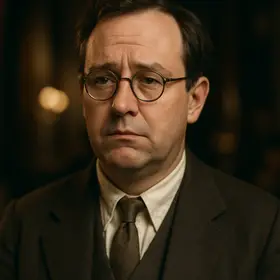 Ewing KlipspringerMinor character
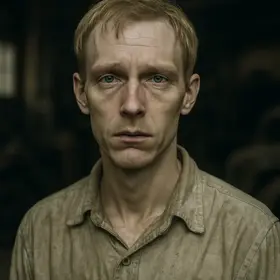 George WilsonMajor character
All chapter summaries ›Characters ›
Read The Great Gatsby illustrated
Every scene in these notes comes from the Book2Life reader, where the full public-domain text is illustrated as you read, with character portraits and narration. Free in your browser and on iPhone.
