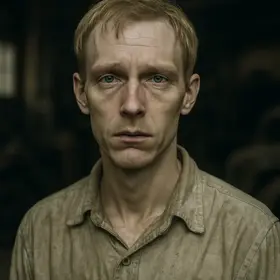
George Wilson in The Great Gatsby
Major character
Meek, exhausted garage owner in the valley of ashes; husband of Myrtle whose loss drives the story's violent climax.
Who is George Wilson?
George Wilson is the quiet, overworked proprietor of a dilapidated garage in the valley of ashes and the husband of Myrtle Wilson. He wants stability and to keep his failing business and marriage intact, but he is trapped by poverty and social impotence. When Tom Buchanan brings Nick to the garage in Chapter II, Wilson appears deferential and worn, a man largely defined by his bleak surroundings. After Myrtle’s death in Chapter VII he moves between stupor and sudden, obsessive conviction about who is responsible; he deserts Michaelis’s vigil at dawn and, guided by grief and a fevered certainty tied to the sight of Doctor T. J. Eckleburg’s billboard, seeks out the perceived culprit. In Chapter VIII he finds Gatsby at his pool and kills him before taking his own life, completing the tragic chain of consequences set in motion by wealthier characters. In the aftermath (Chapter IX) the public misreads and marginalizes him, and his death closes the novel’s moral and social reckoning.
In the book: George Wilson is the meek, overworked owner of a run-down garage in the desolate “valley of ashes,” and the husband of Myrtle Wilson. He embodies the novel’s themes of class, exhaustion, and the human cost of the American Dream’s glittering promises. Though quiet and deferential, his circumstances and relationships place him at a crucial crossroads in the story, where choices by wealthier characters reverberate through his life and drive key turns in the plot.
Personality
- Meek
- In Chapter II he speaks and behaves deferentially when Tom loudly claims ownership of Myrtle at the garage.
- Exhausted
- He is described as overworked and beaten by life in the valley of ashes, running a rundown garage beneath the billboard.
- Grieving
- After Myrtle’s death (Chapter VII) he moves between stupor and a sudden, fixated conviction that someone must be found.
- Obsessive
- In Chapter VIII he wanders away at dawn and later tracks down Gatsby, acting on a conviction linked to the billboard's eyes.
- Desperate
- Michaelis stays with him through the night because Wilson is unable to find solace or reason and becomes consumed by the tragedy.
Character arc
At first appearance (Chapter II) Wilson is passive and beaten down by his environment: a struggling mechanic in the valley of ashes whose marriage to Myrtle is strained and who submits to Tom’s domination. He mostly endures his life’s hardships without protest, embodying the exhausted lower class. The turning point comes after Myrtle’s death in Chapter VII, when grief shatters his passivity and produces a volatile mix of stupor and frantic determination; he fixates on finding the car and person responsible. By Chapter VIII his grief hardens into deadly action: driven by conviction and perhaps religious or moral interpretation of the billboard’s eyes, he leaves Michaelis’s vigil, seeks Gatsby at his mansion, murders Gatsby, and then kills himself. In death he completes a tragic reversal from quiet endurance to violent resolution, his personal collapse exposing the catastrophic human cost of the characters’ carelessness. In the aftermath (Chapter IX) his life and motives are misunderstood or trivialized by the press and socialites, and his death functions as a grim punctuation to the novel’s critique of wealth and irresponsibility.
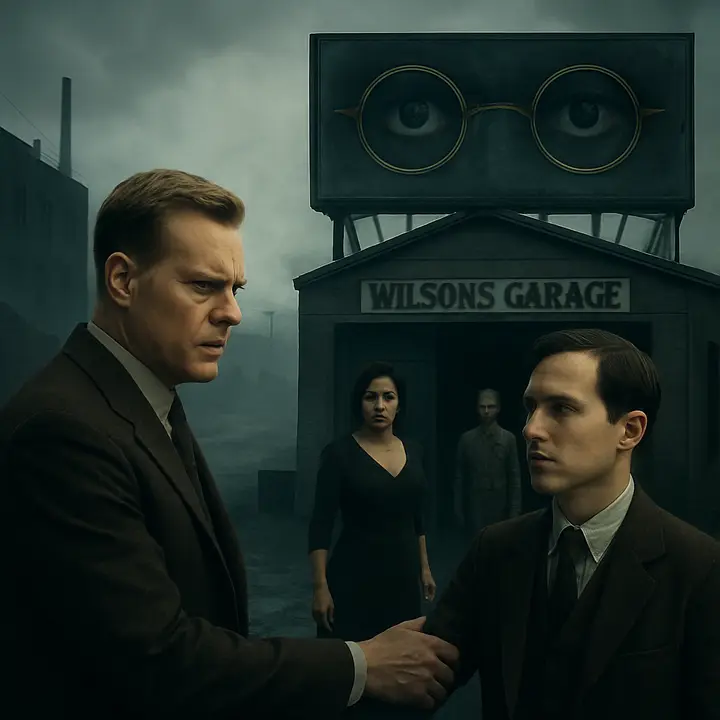
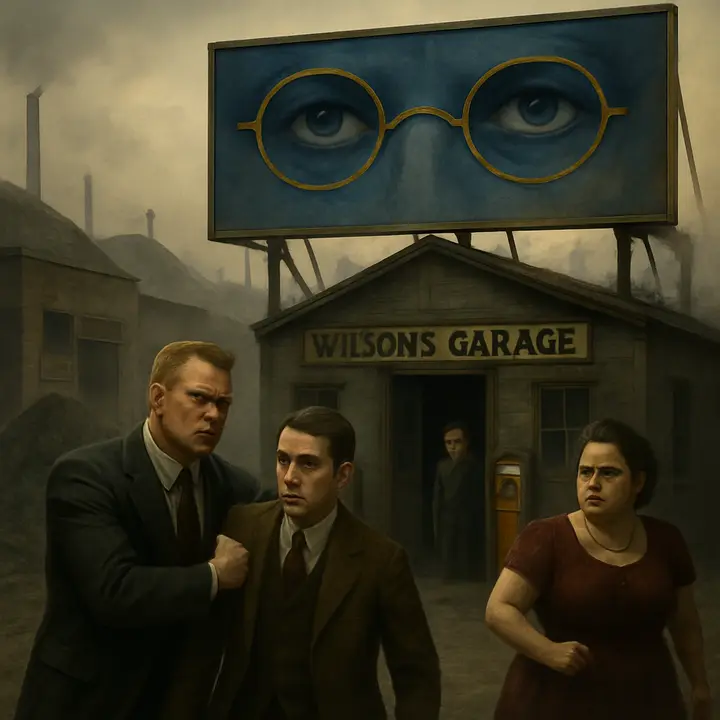
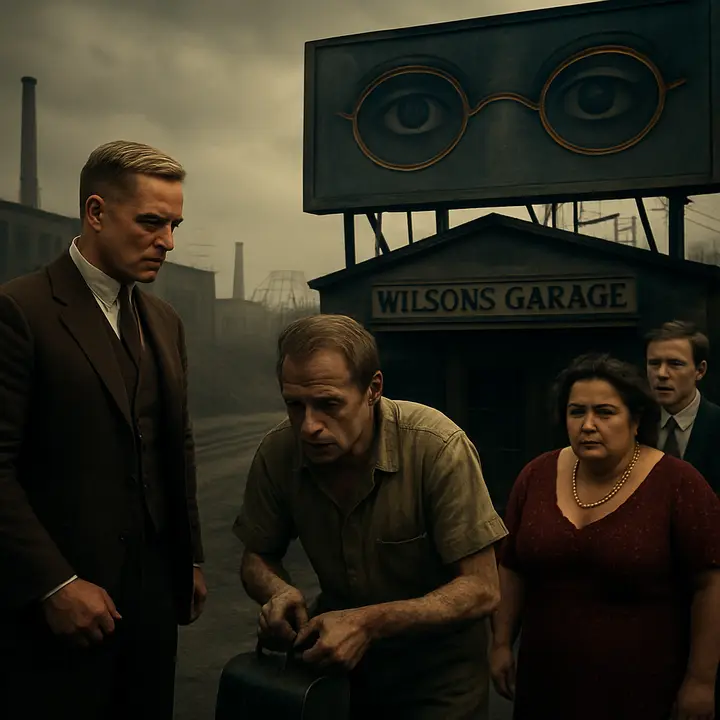
George Wilson in pictures
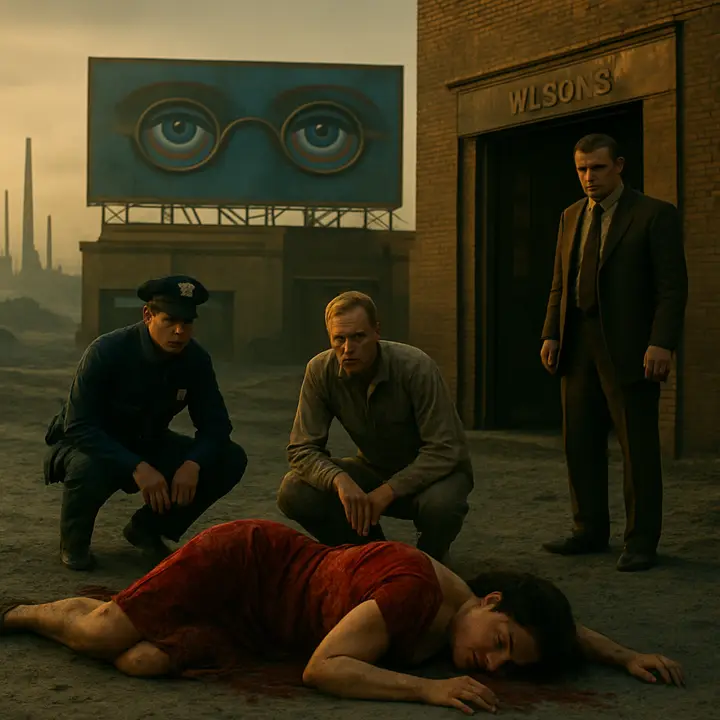
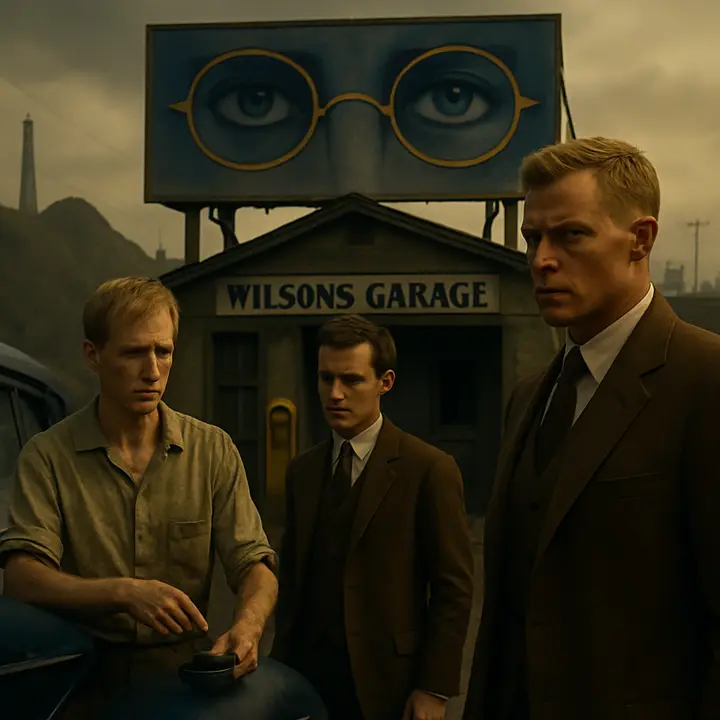
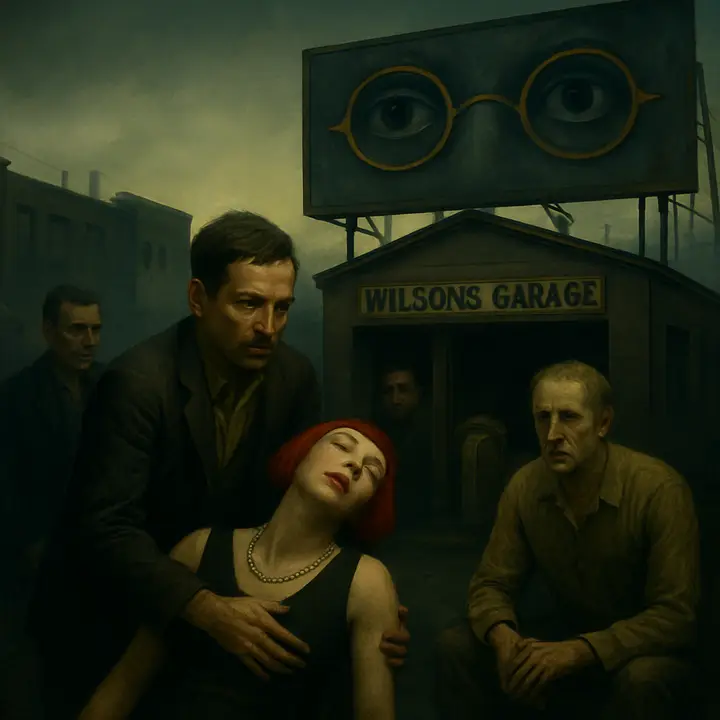
Relationships
- Myrtle Wilson His wife; their marriage is strained and her affair with Tom precipitates the events leading to her death.
- Tom Buchanan A domineering, wealthier figure who asserts power over Myrtle and later misdirects suspicion about the car to Wilson.
- Nick Carraway Observer and occasional interlocutor who witnesses Wilson’s grief and later recounts his actions in the aftermath.
- Michaelis A witness and neighbor who stays with Wilson through the night after Myrtle’s death and tries to calm him.
- Jay Gatsby The man Wilson ultimately murders, having been led by grief and conviction to believe Gatsby is responsible for Myrtle’s death.
- Doctor T. J. Eckleburg (billboard) Not a person but a symbolic presence whose eyes become, for Wilson, a moral witness that confirms his conviction about justice.
Quotes by George Wilson
““You may fool me, but you can’t fool God!””
VIIIWilson’s anguished declaration, spoken while staring at the eyes of T. J. Eckleburg, links moral judgment and the billboard’s watchful imagery.
Why George Wilson matters
George Wilson represents the human toll of the American Dream’s collapse and the moral blindness of the novel’s wealthy. His valley-of-ashes life contrasts sharply with the Buchanans’ affluence, showing how social and economic decay produce despair. His transformation from passive, exhausted mechanic to a man driven to violence by grief exposes the consequences of carelessness and deception by those above him. Wilson’s fate forces the novel’s moral reckoning: the privileged escape responsibility while the dispossessed carry the cost, and the eyes of Doctor T. J. Eckleburg become a bleak witness to this failure.
Chapters with George Wilson
More The Great Gatsby characters
 Nick CarrawayNarrator
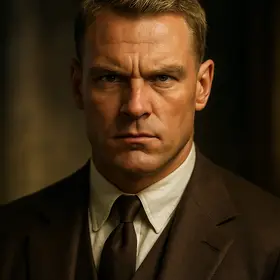 Tom BuchananAntagonist
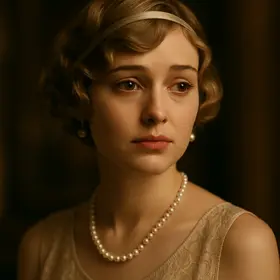 Daisy BuchananMajor character
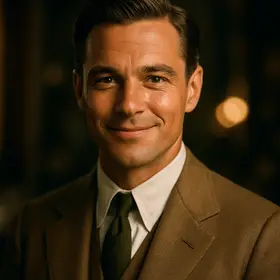 Jay GatsbyProtagonist
 Jordan BakerMajor character
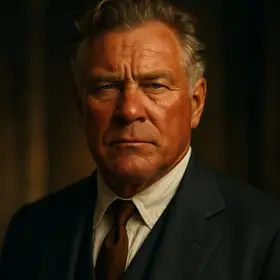 Dan CodyMinor character
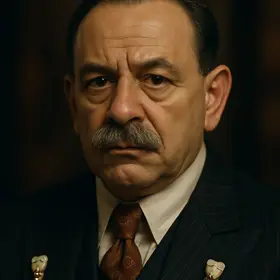 Meyer WolfsheimMinor character
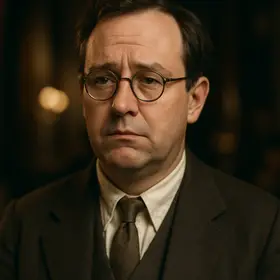 Ewing KlipspringerMinor character
All chapter summaries ›Characters ›
Read The Great Gatsby illustrated
Every scene in these notes comes from the Book2Life reader, where the full public-domain text is illustrated as you read, with character portraits and narration. Free in your browser and on iPhone.
