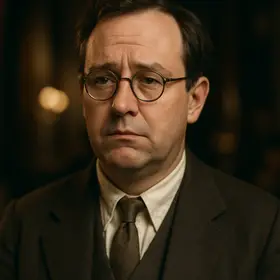
Ewing Klipspringer in The Great Gatsby
Minor character
A parasitic bohemian who effectively lives at Gatsby’s mansion, known as “the boarder,” and plays the piano during Gatsby’s gathering.
Who is Ewing Klipspringer?
Ewing Klipspringer is a resident hang‑about at Jay Gatsby’s West Egg house who drifts in and out of Gatsby’s life to enjoy comfort and amusement without commitment. In Chapter 5 he provides a domestic soundtrack to the tense reunion between Gatsby and Daisy by playing the piano while the lovers tour the rooms, quietly reinforcing the atmosphere of cultivated hospitality. After Gatsby’s murder, Klipspringer reappears only long enough to decline involvement in Gatsby’s funeral and to avoid personal responsibility, typifying the fair‑weather acquaintances who enjoyed Gatsby’s wealth but abandon him in death. He neither advances Gatsby’s plans nor confronts the consequences of Gatsby’s social experiments; instead he embodies the effortless absorption of luxury that the mansion affords. Klipspringer’s presence is small but pointed: he accentuates the social surface and emotional emptiness of Gatsby’s circle, revealing how the protagonist’s generosity is exploited and how little genuine loyalty the extravagant parties actually produce.
In the book: Ewing Klipspringer, nicknamed “the boarder,” is a social parasite who effectively lives at Jay Gatsby’s mansion, playing the piano and enjoying the opulence while giving little in return. He serves as a satirical emblem of the Jazz Age’s shallow opportunism, illustrating how fair‑weather acquaintances exploit wealth and status and then drift away when the thrill or advantage is gone.
Personality
- Parasitic
- He effectively lives at Gatsby’s house, enjoying his hospitality while giving little in return and later refusing to attend the funeral.
- Musical
- In Chapter 5 he plays the piano as Daisy and Gatsby are absorbed in one another, supplying the house’s cultivated ambiance.
- Unreliable
- When Gatsby dies, Klipspringer declines to come to the funeral, demonstrating his lack of loyalty or dependable attachment.
- Socially complacent
- He remains content to occupy Gatsby’s hospitality rather than take any action or show public grief after Gatsby’s death.
Character arc
Klipspringer’s trajectory is static and illustrative rather than developmental. He appears as part of Gatsby’s domestic tableau—comfortably lodged in the mansion and providing piano music during the crucial reunion between Gatsby and Daisy—helping to create the illusion of cultivated, effortless leisure that Gatsby cultivates. He never becomes intimate with Gatsby’s true aims nor does he act on Gatsby’s behalf; his role is to inhabit the surface splendor. After Gatsby’s murder he reverts to the pattern implicit in his nickname: he avoids responsibility and distance himself from consequences, declining to attend the funeral and leaving the practical burdens to Nick and Gatsby’s father. By the end of the novel he remains essentially unchanged—a convenient guest who enjoyed Gatsby’s wealth and then drifts away—thereby reinforcing the novel’s indictment of the era’s ephemeral, transactional social ties.
Ewing Klipspringer in pictures


Relationships
- Jay Gatsby Resident boarder and beneficiary of Gatsby’s hospitality who never reciprocates loyalty or support.
- Nick Carraway Peripheral acquaintance present at Gatsby’s house during the Daisy reunion and later one of the few who attempts to settle affairs after Gatsby’s death.
- Daisy Buchanan An object of the evening’s focus while Klipspringer provides piano music; he is otherwise detached from her drama.
- Meyer Wolfsheim Another Gatsby acquaintance who, like Klipspringer, ultimately avoids taking responsibility after Gatsby’s death.
- Henry Gatz Gatsby’s father, who attends the funeral; Klipspringer refuses involvement, highlighting the gulf between Gatz’s filial devotion and Gatsby’s social guests.
- Owl Eyes A rare sympathetic onlooker who attends the funeral; Klipspringer’s absence contrasts with Owl Eyes’s lingering concern.
Why Ewing Klipspringer matters
Klipspringer functions as a small but pointed symbol of the Jazz Age’s superficiality and moral carelessness. His comfortable presence in Gatsby’s household and his casual withdrawal after Gatsby’s death dramatize how wealth attracts parasitic acquaintances who consume spectacle without forming genuine bonds. By refusing to attend the funeral and contributing only to the house’s social veneer (through his piano playing), Klipspringer highlights central themes: the hollowness beneath glittering surfaces, the ease with which affection is commodified, and the social irresponsibility of an era obsessed with pleasure and status.
Chapters with Ewing Klipspringer
More The Great Gatsby characters
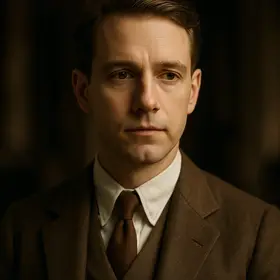 Nick CarrawayNarrator
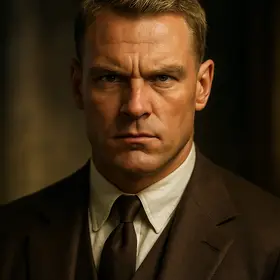 Tom BuchananAntagonist
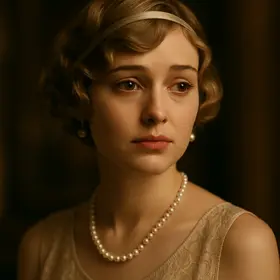 Daisy BuchananMajor character
 Jay GatsbyProtagonist
 Jordan BakerMajor character
 Dan CodyMinor character
 Meyer WolfsheimMinor character
 George WilsonMajor character
All chapter summaries ›Characters ›
Read The Great Gatsby illustrated
Every scene in these notes comes from the Book2Life reader, where the full public-domain text is illustrated as you read, with character portraits and narration. Free in your browser and on iPhone.
