
Jay Gatsby in The Great Gatsby
Protagonist
Enigmatic, self-made West Egg millionaire who throws lavish parties to reclaim a lost love, Daisy Buchanan.
Who is Jay Gatsby?
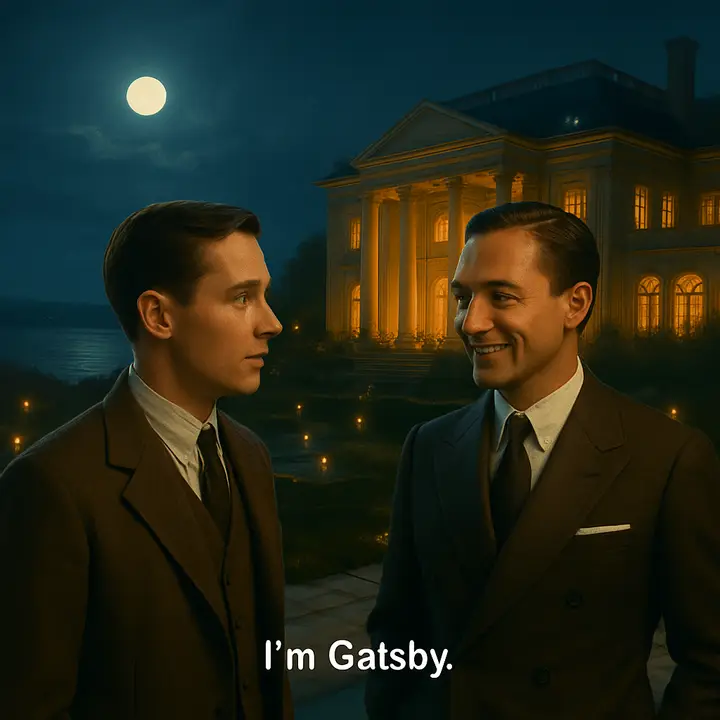
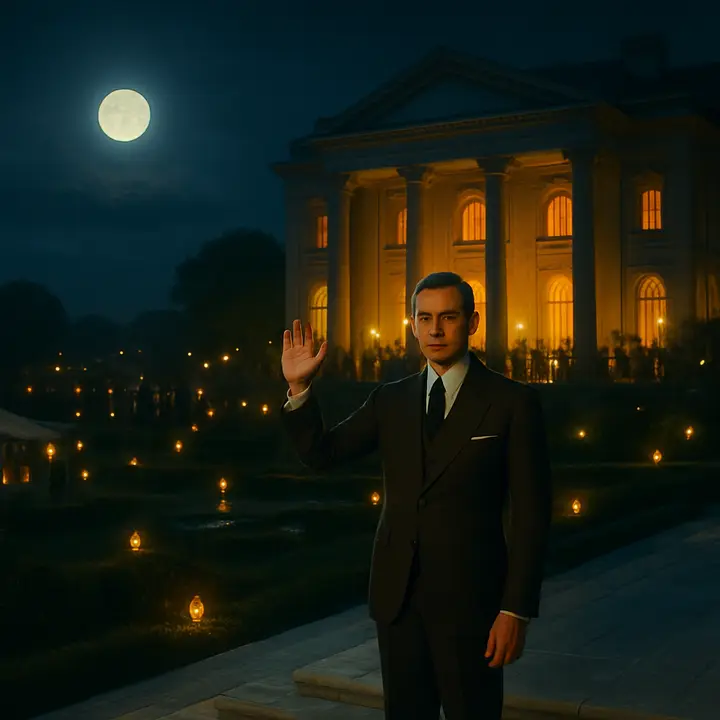
Jay Gatsby is a mysterious, newly wealthy resident of West Egg whose ostentatious mansion and nightly parties make him the center of rumor and fascination. Born James Gatz, he has reinvented himself and accumulated wealth and tastes that signal a carefully constructed identity. What he most wants is to reunite with Daisy Buchanan and restore their brief, intense prewar romance; his house directly faces hers and he cultivates an image meant to impress her. Over the summer he engineers a private meeting through Jordan and Nick Carraway, revealing both acute nervousness and ecstatic hope when Daisy tours his home. He cultivates alliances, notably with Meyer Wolfsheim, and maintains a guarded politeness even amid speculation about his past. When Daisy returns to him in the heat of a tense confrontation, tragedy follows: a hit-and-run death leads to Gatsby taking the blame for Daisy, waiting loyally outside the Buchanans’ house, and ultimately being murdered by George Wilson. Gatsby’s actions and losses crystallize his single-minded devotion and the costs of his dream.
In the book: Jay Gatsby is the enigmatic, self-made millionaire of West Egg whose opulent parties and carefully curated persona captivate New York’s Jazz Age elite. Through his charm, mystery, and unwavering idealism, he becomes the focal point of the narrator’s curiosity and the catalyst for exploring themes of class, ambition, reinvention, and the shimmering promises—and perils—of the American Dream.
Personality
- Idealistic
- He spends years and vast resources arranging a reunion with Daisy and persistently believes he can recreate their past (Chapters 4–6).
- Self-invented
- He transforms from James Gatz into Jay Gatsby after working for Dan Cody and deliberately cultivates a polished, wealthy persona (Chapter 6).
- Reserved
- At his own parties he often remains apart from the crowd, standing politely on the marble steps or watching from a distance (Chapter 3).
- Romantic
- Gatsby is overwhelmed with joy when Daisy tours his house and weeps over his shirts, showing that his devotion is intensely emotional (Chapter 5).
- Determined
- Even after the fatal accident and without public support, he waits through the night outside the Buchanans’ house and refuses Nick's suggestion to leave (Chapters 7–8).
Character arc
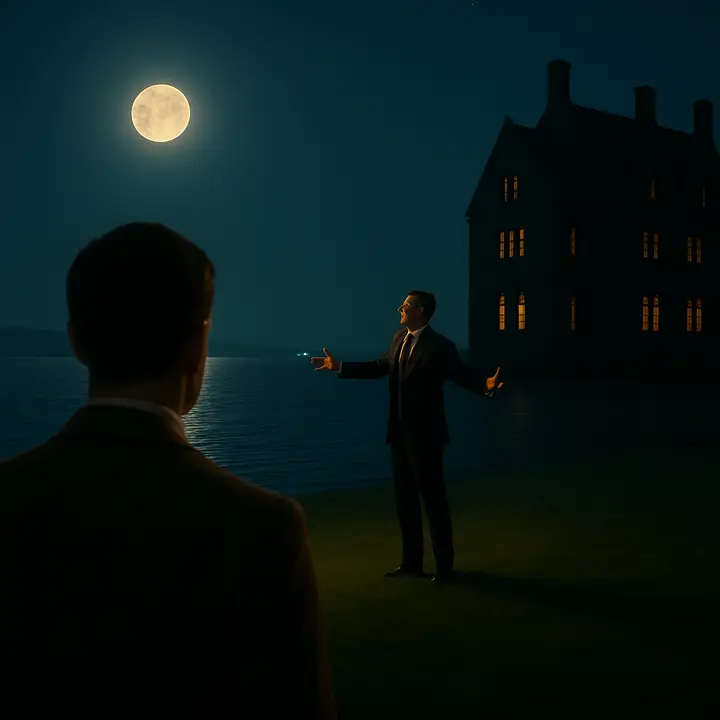
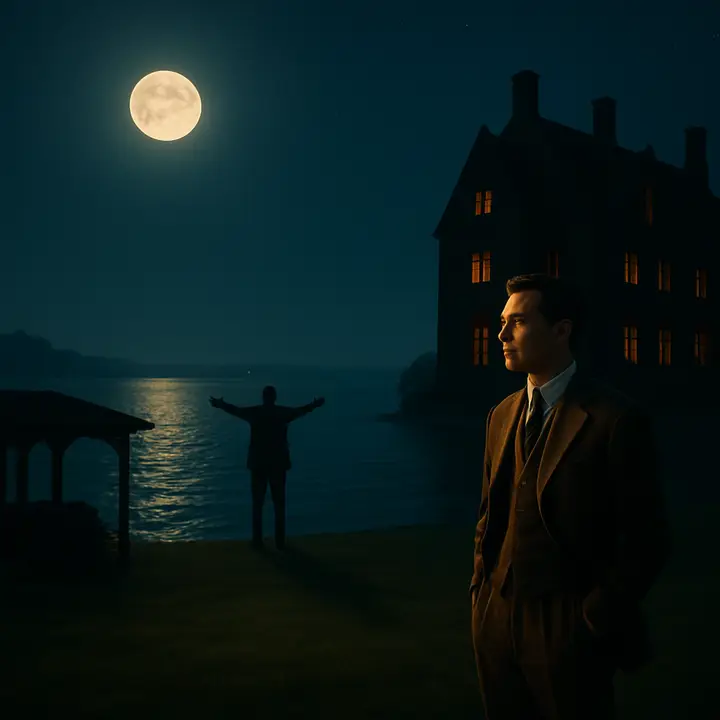
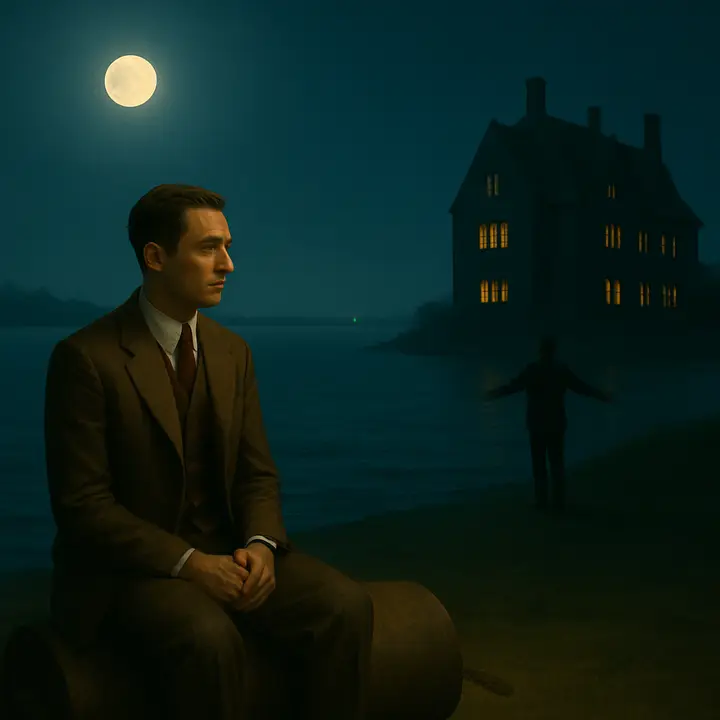
Gatsby appears first as an enigmatic figure stretching his arms toward a distant green light, a symbol of desire and distance (Chapter 1). As Nick begins to learn more, Gatsby reveals an elaborate, partially verified backstory and parades markers of authenticity to gain credibility (Chapter 4). His long project of reinvention culminates in the carefully managed reunion with Daisy, where his nervousness and euphoric hope are exposed as he shows her his house and possessions (Chapter 5). Buoyed by the reunion he grows bolder, hosting parties and pursuing Daisy until tensions erupt in the climactic confrontation in New York; there he insists Daisy once loved only him and departs with her, setting in motion events that lead to Myrtle's death (Chapter 7). In the aftermath Gatsby refuses to abandon his responsibility and his dream: he waits for Daisy, refuses to flee, and remains devoted even as Nick praises his worth (Chapter 8). The arc closes with Gatsby's death in the pool—his dream intact but fatal—transforming him from a living symbol of aspiration into a tragic casualty of his single-minded idealism.
Jay Gatsby in pictures

Relationships
- Daisy Buchanan The object of Gatsby's obsessive, long-standing romantic devotion and the motive for his reinvention and actions.
- Nick Carraway Gatsby's neighbor and confidant who arranges the reunion with Daisy and observes Gatsby's behavior closely.
- Tom Buchanan Daisy's husband and Gatsby's rival whose interrogation and accusations culminate in the New York confrontation.
- Meyer Wolfsheim A shadowy associate met in New York who connects Gatsby to murky business dealings and gangster lore.
- Henry Gatz Gatsby's father who appears after Gatsby's death and confirms the young man’s original identity as James Gatz.
- Ewing Klipspringer A hanger-on who performs at Gatsby's house and exemplifies the freeloading guests drawn to Gatsby's hospitality.
Quotes by Jay Gatsby
“"I want you and Daisy to come over to my house," he said, "I’d like to show her around."”
Chapter 5Gatsby's eager invitation that shifts the meeting from Nick's modest home to the stage of his own carefully curated world, underscoring his desire to impress Daisy with his recreated identity.
“Can’t repeat the past?" he cried incredulously. "Why of course you can!”
VIGatsby’s fierce insistence on recovering former love and circumstances reveals his refusal to accept time’s irreversibility.
Why Jay Gatsby matters
Gatsby embodies the American Dream's promise and peril: his self-made success, dazzling display, and relentless chase after an idealized past highlight ambition, reinvention, and the desire for social acceptance. Yet his downfall—rooted in illusion, misplaced loyalty, and the social barriers represented by old money—reveals the dream's fragility and moral cost. Through Gatsby the novel probes class, identity, and the tragic consequences when yearning overrides reality.
Chapters with Jay Gatsby
More The Great Gatsby characters
 Nick CarrawayNarrator
 Tom BuchananAntagonist
 Daisy BuchananMajor character
 Jordan BakerMajor character
 Dan CodyMinor character
 Meyer WolfsheimMinor character
 Ewing KlipspringerMinor character
 George WilsonMajor character
All chapter summaries ›Characters ›
Read The Great Gatsby illustrated
Every scene in these notes comes from the Book2Life reader, where the full public-domain text is illustrated as you read, with character portraits and narration. Free in your browser and on iPhone.
