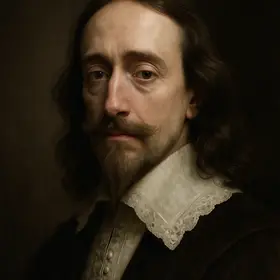
Charles I in Twenty Years After
Major character
The embattled King of England whose dignity and fate during the Civil War draw the musketeers into risky loyalty and rescue attempts.
Who is Charles I?
Charles I appears as the dignified, imperiled monarch around whom the English episodes revolve. Facing defeat in civil war, he becomes the object of desperate appeals from his queen and the spur for daring plans by Athos, Aramis, d’Artagnan and their friends. He writes from Naseby about contingency plans (Chapter 36), inspires Henrietta Maria’s supplications to Mazarin (Chapters 38–39), and is rescued from immediate mortal danger at Newcastle by Athos, Aramis and Lord de Winter (Chapters 55–56). Captured and taken to London, he endures a public trial (Chapters 62–63) but refuses to acknowledge the tribunal’s legitimacy. The musketeers mount a complex nighttime rescue—disguises, a drilled escape through the king’s chamber and a waiting boat—but political maneuvers and a substitute executioner thwart the plan (Chapters 64–65). Charles meets death with composure, giving final instructions and invoking the word “Remember!” before his beheading, an event witnessed indirectly by Athos and his friends (Chapter 66). Throughout he functions as a moral and political fulcrum whose suffering catalyzes the protagonists’ loyalties and actions.
In the book: The embattled King of England whose fate during the civil war draws the Musketeers into international intrigue, Charles I serves as the moral and political fulcrum of the novel’s English episodes. His dignity under pressure and the loyalties he inspires test the heroes’ convictions and propel key missions that intertwine courtly honor with turbulent history.
Personality
- Dignified
- He behaves calmly and proudly at his trial, refusing to recognize the court’s authority and maintaining composure before his sentencing (Chapter 63).
- Resignedly pious
- He requests spiritual comfort, confesses and prepares to die with prayer and the presence of Juxon before execution (Chapters 64–66).
- Honor-bound
- He breaks his sword rather than yield formally when captured after the melee, valuing personal honor even in defeat (Chapter 56).
- Inspiring
- His plight moves Henrietta Maria to plead for aid and prompts Athos and Aramis to accept a perilous mission to England (Chapters 36–42).
- Trusting
- He places himself in the hands of supposed allies—Scots and others—only to be betrayed, shocking him at Newcastle (Chapter 55).
Character arc
Charles I’s trajectory in the chapters provided moves from beleaguered sovereign hoping for aid to a symbol of defiant royal dignity at the point of execution. Early on, he is the subject of strategic correspondence and intercession: his letter from Naseby prompts Henrietta Maria’s desperate appeals to Mazarin and the recruitment of French help (Chapter 36–39). At Newcastle he is suddenly confronted with treachery by supposed allies; the immediate rescue by Athos, Aramis and Lord de Winter temporarily restores agency but results in capture after a bloody skirmish (Chapters 55–56). In London he endures the humiliation of a politicized trial yet refuses to abet its legitimacy, asserting monarchical principle even as it isolates him (Chapters 62–63). The musketeers’ elaborate rescue plan brings hope but is foiled by political countermeasures and timing (Chapters 64–65). Ultimately, Charles accepts his fate with religious composure; his final utterance, “Remember!”, transforms him from a living political actor into a moral emblem whose death galvanizes grief and duty among his friends (Chapters 66–67). His personal qualities—steadfastness, piety, and honor—remain constant; the arc is less a change in character than a movement from active ruler to martyrlike symbol.
Relationships
- Henrietta Maria His wife, who pleads for French aid and travels to seek refuge and support on his behalf (Chapters 36, 38–39).
- Lord de Winter A loyal English noble who carries the king’s letters, aids in planning, and fights alongside the king at Newcastle (Chapters 36, 55–56).
- Athos A devoted rescuer and representative of the musketeers whose courage and proximity to the king culminate in witnessing and bearing evidence of the execution (Chapters 55–57, 66–67).
- Aramis One of the king’s clandestine protectors who infiltrates Whitehall as a false Juxon and helps coordinate the escape attempt (Chapters 42, 64–65).
- D'Artagnan A catalyst for rescue operations who helps organize the plan and later tracks leads related to the executioner (Chapters 62–65, 67–68).
- Mordaunt An agent of betrayal and violence whose role as executioner and associate of Cromwell links directly to the king’s death (Chapters 56–57, 67–68).
Quotes by Charles I
““Dear Wife,—We have now reached the moment of decision. I have concentrated here at Naseby camp all the resources Heaven has left me, and I write to you in haste from thence.””
Chapter 36The king’s letter compresses military urgency and sets the immediate political stakes for the chapter.
“I am lost," said he.”
Chapter 56Charles expresses despair at the desperate situation, opening the planning sequence among his loyal companions.
“Kings cannot yield; the man alone submits to force.”
Chapter 56Charles refuses to formally surrender his kingship even as he breaks his sword and accepts captivity under superior force.
“Ah! the axe, an ingenious device, and well worthy of those who know not what a gentleman is; you frighten me not, executioner’s axe,”
Chapter 63As he passes the executioner's axe, Charles mocks the court's instrument of punishment, demonstrating calm contempt in the face of imminent danger.
“Comte de la Fère, are you there?”
Chapter 66Kneeling to pray before execution, the king seeks Athos's presence and then entrusts him with knowledge of buried gold.
Why Charles I matters
Charles I functions as the moral and political axis around which the English episodes turn: his personal dignity and tragic end expose the costs of factionalism, the limits of honor in modern politics, and the human consequences of power struggles. His composed piety and insistence on principle contrast with the cynical calculations of figures like Cromwell and Mazarin, forcing the novel’s heroes to confront where loyalty and honor should be placed. As both a man and symbol, his fate intensifies the book’s exploration of friendship, sacrifice and the tension between private fidelity and public power.
Chapters with Charles I
More Twenty Years After characters
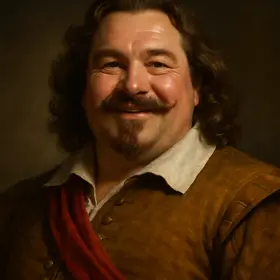 PorthosMajor character
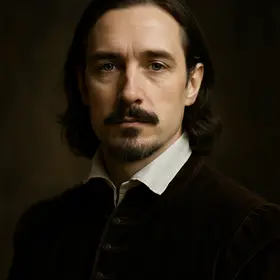 AthosMajor character
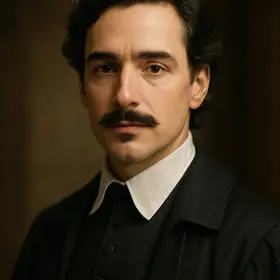 AramisMajor character
 Cardinal MazarinAntagonist
 GrimaudMajor character
 MordauntAntagonist
 MousquetonMinor character
 PlanchetMajor character
All chapter summaries ›Characters ›
Read Twenty Years After illustrated
Every scene in these notes comes from the Book2Life reader, where the full public-domain text is illustrated as you read, with character portraits and narration. Free in your browser and on iPhone.
