Lucy in Uncle Tom's Cabin
Minor character
A young enslaved mulatto woman at Legree's plantation who suffers abuse and briefly appears as a figure of vulnerability.
Who is Lucy?
Lucy appears first as a distraught mother on the La Belle Riviere—her infant is sold from under her and she apparently throws herself overboard in despair. Later, at Simon Legree’s plantation, she survives as one of the broken hands: frail, mulatto, and subject to cruel treatment by drivers and overseers. Tom notices her repeatedly and covertly helps her by shifting cotton into her basket to spare her punishment; she is singled out for violence and provocation by Legree’s deputies. Lucy’s presence sharpens the contrast between the plantation’s brutality and Tom’s quiet compassion, and she serves as an immediate, human example of the physical and psychological damage slavery inflicts on women and mothers. She does little by way of agency in the chapters in which she appears, but her suffering prompts protective acts from Tom and emphasizes the oppressive atmosphere Legree cultivates among his hands.
Personality
- vulnerable
- On the steamboat she collapses into stunned despair after her child is sold and apparently escapes by jumping overboard.
- physically frail
- At Legree’s plantation she is described as a frail mulatto woman who receives cruel treatment from a driver.
- passive/enduring
- She largely endures abuse and accepts Tom’s discreet help rather than resisting, as when Tom slips cotton into her basket to prevent punishment.
- symbolic
- Her early loss of a child and later suffering on the plantation make her a living example of slavery’s cruelty in scenes observed by other characters.
Character arc
Lucy’s arc is limited but telling across the chapters she inhabits. In Volume 1 she is introduced at a moment of acute crisis: her infant is sold and she collapses into profound grief, an event that ends with her apparent suicide attempt by jumping overboard. This opening moment establishes her as a person shattered by the commodification of family. After the forced march to Legree’s estate in Volume 2, she reappears not as a figure who has recovered but as a frail, broken woman who bears the marks of ongoing abuse. Rather than showing recovery or resistance, Lucy remains a passive sufferer: Legree’s deputies single her out for cruelty, and she must rely on small, secretive acts of mercy from others—most notably Tom—just to avoid corporal punishment. Her trajectory, therefore, is one from acute maternal devastation to continued subjugation; she does not experience a redemptive turnaround in the chapters provided, but her continued presence deepens the narrative’s indictment of slavery’s persistent violence.
Relationships
- Uncle Tom Tom repeatedly notices Lucy’s suffering and helps her discreetly by transferring cotton into her basket to spare her punishment.
- Simon Legree Legree presides over the plantation where Lucy is cruelly treated and where the system of intimidation subjects her to abuse.
- Sambo Sambo is one of Legree’s principal hands and a figure of intimidation in the compound that contributes to Lucy’s harsh conditions.
- Quimbo Quimbo, alongside Sambo, acts as a deputy tyrant whose brutality helps enforce the oppression Lucy endures.
- Cassy Cassy is another enslaved woman at Legree’s who observes conditions and at one point supplements Tom’s aid, sharing the community of sufferers of which Lucy is part.
- Mr. Haley Haley is the trader who, earlier on the steamboat, sells Lucy’s infant and precipitates her initial despair.
Quotes by Lucy
““I don’t believe it,—I won’t believe it!””
Volume 1, Chapter 12Lucy’s initial, disbelieving reaction when she learns from others that she has been sold, revealing her shock and the deceit used against her.
Why Lucy matters
Lucy functions as a concentrated example of slavery’s dehumanizing effects—especially on women and mothers. Her loss of a child and later physical debilitation make visible the economic logic that treats human beings as property and the emotional wreckage that follows. By attracting Tom’s compassion and drawing the attention of readers and other characters, Lucy also helps dramatize the moral contrast between Christian charity and the plantation’s brutality. Her limited agency underscores a theme pervasive in the chapters she appears in: slavery not only enslaves bodies but erodes the capacity for resistance, family, and hope.
Chapters with Lucy
More Uncle Tom's Cabin characters
 Uncle TomProtagonist
 Augustine St. ClareMajor character
 EmmelineMinor character
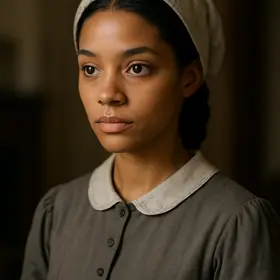 Eliza HarrisMajor character
 Little EvaMajor character
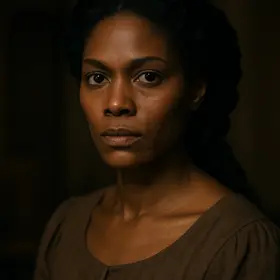 CassyMajor character
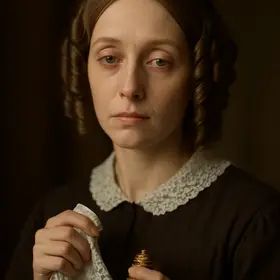 Marie St. ClareMajor character
 Mr. ShelbyMajor character
All chapter summaries ›Characters ›
Read Uncle Tom's Cabin illustrated
Every scene in these notes comes from the Book2Life reader, where the full public-domain text is illustrated as you read, with character portraits and narration. Free in your browser and on iPhone.
