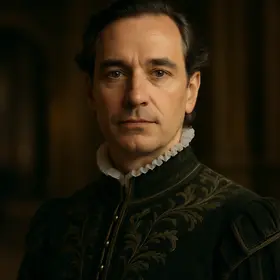
Philostrate in A Midsummer Night's Dream
Minor character
Master of the Revels in Theseus’s court who arranges entertainment and presents the mechanicals to the duke.
Who is Philostrate?
Philostrate is Theseus’s Master of the Revels, charged with arranging entertainments for the duke’s wedding festivities and advising which performances are fit for the court. He appears first when Theseus instructs him to prepare festivities for the wedding, marking him as the official who frames the public spectacle around the central celebration. In Act 5 he presents a roster of entertainments and ushers the amateur actors — the mechanicals — before the court, performing his duty of selecting and introducing the evening’s diversion. He acts as a courteous, pragmatic functionary: attentive to courtly taste, deferential to authority, and focused on maintaining decorum. Though he does not drive any major plotlines, his work structures key public moments in the play, providing the formal setting in which the comic play-within-a-play unfolds and the final blessings occur. He thereby reinforces the festival atmosphere and the play’s concern with performance and appropriate spectacle.
In the book: Philostrate serves as Master of the Revels in Theseus’s court, organizing entertainments and advising on which performances are suitable for the Duke and his guests. As a courteous functionary, he helps frame the festive atmosphere and underscores themes of order, taste, and spectacle within the larger comedy, while remaining a minor yet telling presence at court.
Personality
- dutiful
- Theseus instructs Philostrate to prepare festivities in Act 1, and he dutifully presents the evening entertainments in Act 5.
- courteous
- He addresses the duke and duchess in a deferential manner while arranging the court’s amusements before the wedding.
- practical
- He assesses and recommends entertainments for the court, bringing forward the mechanicals as a suitable diversion in Act 5.
- ceremonial
- He organizes the formal portion of the wedding festivities and introduces the players who perform for the duke and duchess.
Character arc
Philostrate’s role remains essentially consistent from his first appearance to his last: he appears as a stable court official whose primary concern is the successful orchestration of public entertainments. In Act 1 he receives Theseus’s instruction to prepare the wedding festivities, establishing his administrative responsibility and his position within the ducal household. He does not intervene in the private dispute between Egeus, Hermia, and Lysander; instead, he stays within his remit of ceremonial preparation. By Act 5 he executes that remit by presenting a list of entertainments and ushering the mechanicals before the court, managing the transition from formal palace life to comic spectacle. He does not undergo a dramatic personal transformation or moral reckoning; rather, his consistent presence and steady fulfillment of duty underscore the social order and ceremonial smoothness that frame the play’s comic events. His arc is one of professional continuity: he begins as the organizer of spectacle and ends by successfully delivering the entertainment that helps close the play on a festive note.
Relationships
- Theseus Philostrate serves as Theseus’s Master of the Revels and carries out the duke’s instructions about wedding entertainments.
- Hippolyta He arranges courtly diversions for Hippolyta as part of the ducal household preparing for the marriage.
- Nick Bottom Philostrate brings Bottom and the other mechanicals before the court to perform their play as the chosen entertainment.
- Peter Quince As the leader of the mechanicals, Quince coordinates with Philostrate when presenting the amateur performance to the duke.
- Francis Flute Flute appears among the mechanicals Philostrate introduces, representing the amateur troupe he must present to court.
- Snug Snug is one of the players Philostrate brings before the audience as part of the arranged entertainment.
Why Philostrate matters
Philostrate, though minor, embodies the play’s concern with ceremony, taste, and the public framing of private drama. By organizing entertainments and mediating which spectacles reach the duke, he highlights how social order and aesthetic judgment shape communal experience. His presence also creates the formal space for the mechanicals’ comic Pyramus and Thisbe, allowing Shakespeare to stage a play about performance within the larger play — a metatheatrical moment that interrogates artifice and sincerity. Philostrate’s administrative steadiness contrasts with the chaos of the forest, reinforcing the play’s balance between civic order and fairy-driven disorder.
Chapters with Philostrate
More A Midsummer Night's Dream characters
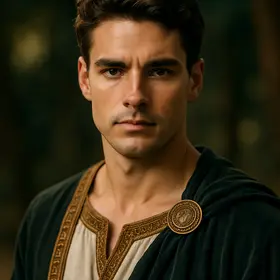 DemetriusMajor character
 HelenaMajor character
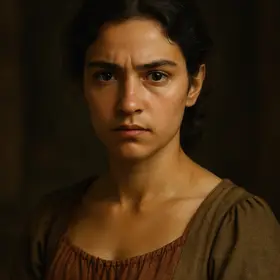 HermiaMajor character
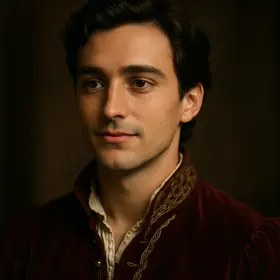 LysanderMajor character
 PuckMajor character
 OberonMajor character
 Peter QuinceMajor character
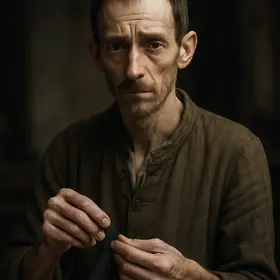 Robin StarvelingMinor character
All chapter summaries ›Characters ›
Read A Midsummer Night's Dream illustrated
Every scene in these notes comes from the Book2Life reader, where the full public-domain text is illustrated as you read, with character portraits and narration. Free in your browser and on iPhone.
Read A Midsummer Night's Dream free
