
Margaret Walton Saville in Frankenstein
Narrator
Robert Walton’s sister and the addressee of his Arctic letters who frames the novel as the reader’s moral witness.
Who is Margaret Walton Saville?
Margaret Walton Saville is Robert Walton’s sister and the private recipient of the letters that open and close the novel. She functions as the absent but intimate confidante whose name on the envelope makes Walton’s intimate tones plausible: his hopes, fears, and the account of Victor Frankenstein arrive addressed to her. Margaret wants to know of her brother’s safety and to preserve the family bond that sustained him; in turn Walton depends on her correspondence for emotional steadiness. She does not appear in person in the chapters summarized, but her presence structures the narrative: Walton’s four letters to her establish his ambitions, loneliness, the rescue of Victor, and the final reports of Victor’s pursuit and death. Because Walton writes for Margaret, he records Victor’s long confession and the concluding events with a moral urgency that treats her as a reader and conscience. Margaret’s role is passive in action but active in narrative function—she is the named anchor that lets Walton confide, preserves a family frame, and makes the tale a testimony rather than a mere adventure.
In the book: Robert Walton’s sister and the addressee of his Arctic letters, Margaret functions as the unseen confidante whose presence frames the entire narrative. Through Walton’s correspondence to her, readers receive the account that encloses Victor Frankenstein’s story, grounding the tale in familial concern and highlighting themes of ambition, isolation, and empathy.
Personality
- Supportive
- Walton repeatedly addresses her with affection and concern, begging her prayers and promising to repay her kindness in Letter 1.
- Confidenced receptor
- Walton explicitly directs his detailed reports and Victor’s story to her, resolving to record the stranger’s history 'for my sister' in Letter 4.
- Symbolic anchor
- Her name and relationship ground Walton’s ambitious and often romantic proclamations, making his grand plans feel accountable to a private moral witness in Letter 2.
- Absent yet present
- She never appears in person in the supplied chapters, yet Walton’s appeals to her sustain his admissions of loneliness and doubt throughout the voyage (Letters 1–3).
Character arc
Margaret’s apparent condition does not change in the chapters provided; she remains an unseen correspondent whose very absence produces narrative movement. At the start Walton writes to her from St. Petersburg and Archangel, asking for her prayers and offering affectionate reports of preparations and ambition. As his loneliness deepens he explicitly asks her to continue writing, showing that she functions as his emotional safety valve. When Walton’s ship rescues Victor, he promises to relate the stranger’s tale to Margaret, and from then on the bulk of Victor’s confession and Walton’s concluding letters are framed as reports for her. By the end Walton is the figure who conveys Victor’s death and the Creature’s final departure to Margaret; she is the repository of the whole tragedy. Margaret herself does not learn, react, or change within the primary text we have—her role is static—but the importance of her steady presence grows: without her named address the moral and testimonial shape of the narrative would be weaker. She thus moves from implicit domestic confidante to the novel’s formal witness, even while she remains physically absent.
Margaret Walton Saville in pictures
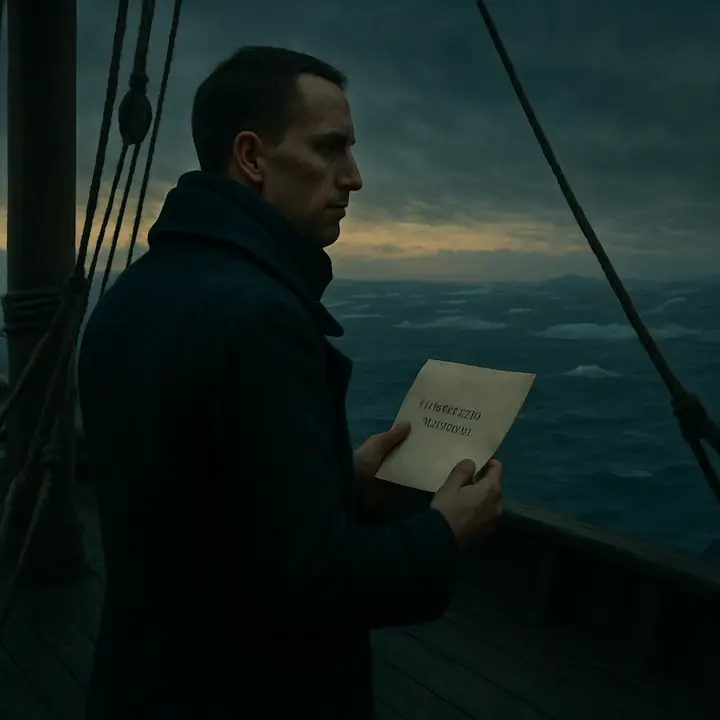
Relationships
- Robert Walton Her brother and correspondent; the letters he writes to her frame the entire narrative.
- Victor Frankenstein An intermediate relationship: Walton transmits Victor’s spoken confession and final events to Margaret, making her his intended audience.
- The Creature Indirectly connected: the Creature’s actions and final fate are reported to Margaret via Walton’s letters.
- Elizabeth Lavenza Part of the family story Walton recounts for Margaret; Elizabeth’s suffering and losses are relayed in Walton’s narrative for her.
- Justine Moritz A victim in the household tragedy whose trial and execution are reported to Margaret through Walton’s record of Victor’s narrative.
Why Margaret Walton Saville matters
Margaret functions as the moral and domestic anchor of the novel’s frame: a named, sympathetic recipient who turns Walton’s private log into testimony. Her presence emphasizes themes of ambition and isolation by providing the domestic counterpoint to Walton’s daring and Victor’s hubris. Because the story is told in letters addressed to her, the reader is invited to treat the tale as a cautionary report meant for a loved one, heightening the novel’s concerns about responsibility, empathy, and the social costs of solitary striving. Margaret’s steady, absent role highlights how human connection—and the lack of it—shapes the fates related in the narrative.
Chapters with Margaret Walton Saville
More Frankenstein characters
 Victor FrankensteinProtagonist
 The CreatureMajor character
 Elizabeth LavenzaMajor character
 Alphonse FrankensteinMajor character
 Henry ClervalMajor character
 William FrankensteinMinor character
 Justine MoritzMinor character
 De LaceyMinor character
All chapter summaries ›Characters ›
Read Frankenstein illustrated
Every scene in these notes comes from the Book2Life reader, where the full public-domain text is illustrated as you read, with character portraits and narration. Free in your browser and on iPhone.
