Flavius in Julius Caesar
Minor character
A Roman tribune who enforces republican order, opposes Caesar’s cult of personality, and later fights with Brutus’s side.
Who is Flavius?
Flavius is one of the two tribunes who opens the play by challenging the public’s celebration of Caesar. He publicly rebukes the workmen for abandoning their trades to honor Caesar and supports Marullus in stripping celebratory decorations from Caesar’s statues to humble the general. His actions mark him as an outspoken defender of traditional republican norms and an opponent of Caesar’s growing power. After being punished along with Marullus for removing the ornaments, Flavius later appears among Brutus’s circle on the battlefield, fighting alongside republican forces. Throughout the play he wants to check popular enthusiasm for a single leader and preserve Rome’s liberties; he acts directly—shaming citizens, ordering the removal of honors, and later taking up arms—rather than remaining a bystander.
Personality
- outspoken
- He angrily rebukes the workmen and citizens for celebrating Caesar instead of working.
- zealous republican
- He urges Marullus to take down decorations and public honors to humble Caesar and protect the republic.
- authoritative
- He inspects the Carpenter and the Cobbler and commands the crowd to disperse from the street.
- resolute
- After being punished for removing scarves, he nonetheless appears later among Brutus’s forces on the battlefield.
Character arc
Flavius first appears as an active, public official policing civic behavior: he chastises citizens for honoring Caesar and collaborates with Marullus to remove the ornaments celebrating Caesar. That early scene establishes him as a defender of republican custom who prefers public corrective action to private complaint. When news arrives that he and Marullus are punished for their actions, Flavius’s formal authority is shown to have limits against the tide of Caesar’s popularity and the powers that protect him. He does not disappear after that humiliation; in the final acts he reappears on the battlefield among Brutus’s supporters, indicating a shift from civic policing to direct military engagement. While he does not undergo a major personal transformation—he remains committed to resisting Caesar’s dominance—his role moves from public tribune enforcing civic norms to soldier defending a political cause, showing escalation from words and civic ritual to armed resistance.
Relationships
- Marullus Fellow tribune and collaborator who helps him rebuke the citizens and remove Caesar’s decorations.
- Citizens Subjects of his rebuke; he scolds and disperses them for abandoning work to celebrate Caesar.
- Caesar The figure whose honors and rising power Flavius actively opposes and whose popularity constrains his authority.
- Brutus Political ally by the end, appearing on the battlefield among Brutus’s forces as a supporter of the republican cause.
- Messala Comrade on the field; they appear together among the troops during the battle scenes.
- Lucilius Fellow soldier on Brutus’s side present in the same late battle scenes.
Quotes by Flavius
“Hence! home, you idle creatures, get you home.”
Act 1, Scene 1Flavius opens the scene by driving the crowd away and reproving them for celebrating on a work day.
“These growing feathers pluck’d from Caesar’s wing Will make him fly an ordinary pitch, Who else would soar above the view of men, And keep us all in servile fearfulness.”
Act 1, Scene 1Flavius explains why he intends to remove the honors from Caesar: to limit Caesar’s ambition and curb the fear his power could inspire.
Why Flavius matters
Flavius embodies the play’s concern with civic duty, public opinion, and the fragile checks on ambitious rulers. His initial attempt to humiliate Caesar’s honors dramatizes the tension between popular spectacle and republican restraint. The punishment he suffers foreshadows how institutional voices can be silenced when a single leader accumulates mass support. His presence among the battlefield ranks ties the moral and rhetorical opposition of the opening to the later, violent struggle for Rome’s future, reinforcing themes about the costs of political conflict and the escalation from civic protest to armed resistance.
Chapters with Flavius
More Julius Caesar characters
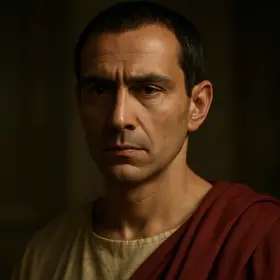 BrutusProtagonist
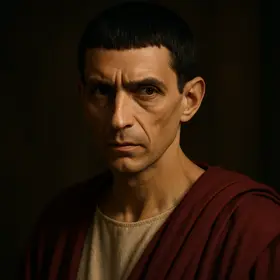 CassiusAntagonist
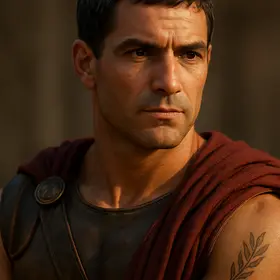 Mark AntonyAntagonist
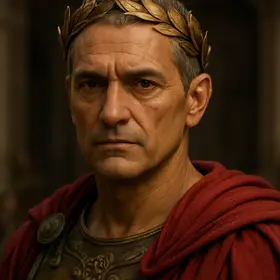 Julius CaesarProtagonist
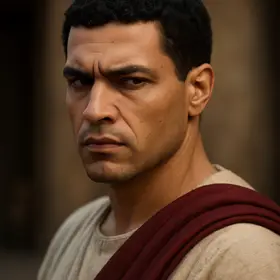 CascaMajor character
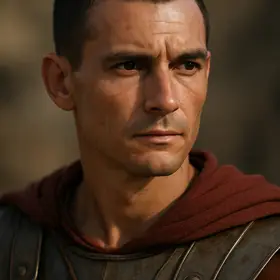 LuciliusMajor character
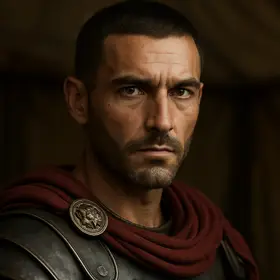 TitiniusMajor character
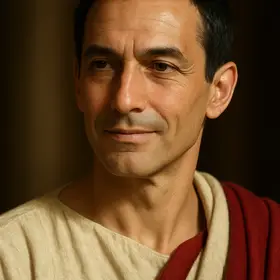 Decius BrutusMajor character
All chapter summaries ›Characters ›
Read Julius Caesar illustrated
Every scene in these notes comes from the Book2Life reader, where the full public-domain text is illustrated as you read, with character portraits and narration. Free in your browser and on iPhone.
