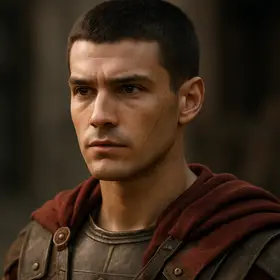
Young Cato in Julius Caesar
Minor character
A brave young noble fighting for Brutus who loudly declares his Cato lineage and charges the enemy at Philippi.
Who is Young Cato?
Young Cato is a youthful Roman nobleman who fights on Brutus’s side during the final battle at Philippi. He is proud of his family name and uses that lineage to stiffen the courage of fellow soldiers, proclaiming himself a son of Marcus Cato and an opponent of tyranny. On the field he charges the enemy with loud declaration and bold action; his single-minded eagerness leads him directly into combat where he is overpowered and killed. His death is noticed by comrades—Lucilius mourns him briefly and compares his bravery to other fallen men—so his fall becomes one more mourned loss among Brutus’s supporters. Though he appears for a short span in the action, his presence signals the youth and personal loyalty present among Brutus’s ranks and contributes to the immediate emotional weight of the battle scenes.
In the book: When we first meet him, he’s a brave young Roman noble fighting on Brutus’s side, proud of his family name and eager to prove his courage. He talks boldly and moves quickly toward danger, the kind of loyal comrade who tries to stiffen everyone’s resolve before the clash.
Personality
- brave
- He charges the enemy on the plain, declaring himself the son of Marcus Cato and an opponent of tyranny (Act 5, Scene 4).
- loyal
- He fights in Brutus’s camp alongside Lucilius and others rather than abandoning the cause (Act 5, Scene 4).
- proud
- He proclaims his lineage — 'son of Marcus Cato' — to inspire troops before rushing into battle (Act 5, Scene 4).
- impetuous
- He moves quickly toward danger and is overpowered and falls in the clash of battle (Act 5, Scene 4).
Character arc
Young Cato’s arc is short and direct: he appears amid the final fighting at Philippi as a spirited, proud young soldier and dies in that same engagement. He does not undergo reflection or change; instead his role is static and emblematic. He begins the scene loudly asserting his family’s legacy and opposing tyranny, aiming to encourage comrades and to prove himself in combat. Immediately after that public declaration he charges the enemy, is overwhelmed, and falls on the field. His death prompts a brief lament from Lucilius, who compares Cato’s bravery to other recent losses, and his fall is quickly folded into the larger sequence of defeats and captures that afflict Brutus’s side. Cato’s trajectory remains fixed from bold pronouncement to sacrificial death, serving as a momentary rallying symbol and as one more addition to the mounting cost of the conflict without any personal transformation.
Relationships
- Brutus Ally and commander; Cato fights on Brutus’s side in the final battle at Philippi.
- Lucilius Comrade-in-arms; Lucilius mourns Cato after his fall and compares his bravery to other fallen men.
- Messala Fellow soldier on Brutus’s side who appears in the same battle context and witnesses the losses of the camp.
- Mark Antony Enemy commander whose forces engage Cato; Antony receives reports of captive noblemen after the fighting.
- Titinius Fellow soldier whose death is compared to Cato’s bravery by Lucilius; both deaths contribute to the tragic toll.
- Flavius One of the soldiers present with Cato on the field during the clash.
Why Young Cato matters
Young Cato represents youthful loyalty, honor-based identity, and the personal cost of civil war. His public invocation of his family name and immediate death highlight how individual pride and commitment fuel the republican cause yet also produce tragic, wasted sacrifice. As a brief, emblematic figure, he sharpens the play’s themes of honor versus pragmatism and the human toll exacted by political violence—his fall underscores the mounting losses that make Brutus’s cause both noble and doomed.
Chapters with Young Cato
More Julius Caesar characters
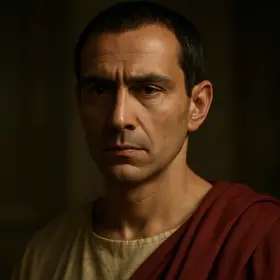 BrutusProtagonist
 CassiusAntagonist
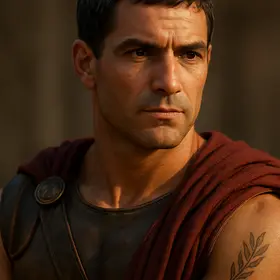 Mark AntonyAntagonist
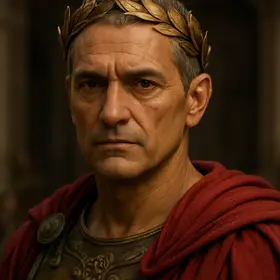 Julius CaesarProtagonist
 CascaMajor character
 LuciliusMajor character
 TitiniusMajor character
 Decius BrutusMajor character
All chapter summaries ›Characters ›
Read Julius Caesar illustrated
Every scene in these notes comes from the Book2Life reader, where the full public-domain text is illustrated as you read, with character portraits and narration. Free in your browser and on iPhone.
