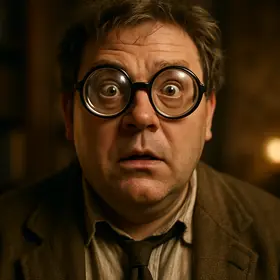
Owl Eyes in The Great Gatsby
Minor character
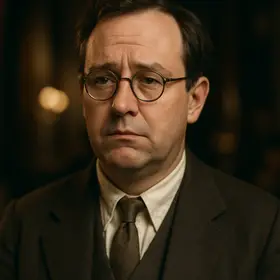
A tipsy, spectacled observer at Gatsby’s parties who sees through façades and later attends Gatsby’s sparse funeral.
Who is Owl Eyes?
Owl Eyes is a minor but memorable figure who first appears among the party crowds at Gatsby’s mansion. Intoxicated and comic in manner, he astonishes Nick by discovering that Gatsby’s library contains real books, a moment that exposes the tension between surface glamour and underlying reality. He functions as an outsider-witness: amused by the spectacle, attentive to odd details, and able to perceive what most guests miss. After Gatsby’s death, Owl Eyes returns as one of the few people who physically attend the funeral, lending a modest human sympathy to an otherwise abandoned corpse of a dream. He neither intervenes in the central plot nor alters its outcomes; instead, he refracts the novel’s concerns about illusion, authenticity, and the sparse loyalties of that society by bearing silent testimony to both Gatsby’s constructed splendor and his lonely end.
In the book: Owl Eyes is a minor yet striking observer who turns up at Gatsby’s parties, most memorably in the mansion’s library where he marvels that the books are real. Comic and tipsy but unusually perceptive, he functions as a chorus-like witness who sees through surfaces, highlighting the novel’s preoccupation with authenticity versus illusion and sharpening its commentary on how people misread one another.
Personality
- Perceptive
- At Gatsby’s library he marvels that the books are real, signaling his ability to see past outward show (Chapter III).
- Tipsy
- Nick describes him as a ‘‘tipsy bibliophile’’ among the revelers at Gatsby’s party, comic but acute (Chapter III).
- Witness
- He is one of the very few to appear at Gatsby’s funeral, giving physical testimony to Gatsby’s death (Chapter IX).
- Sympathetic
- At the graveside he expresses sympathy for Gatsby, standing with Nick and Henry Gatz against the crowd’s indifference (Chapter IX).
Character arc
Owl Eyes’s role is static but significant: he opens as an amused, slightly drunken observer amid the frivolity of Gatsby’s parties and closes as a solemn, almost lonely mourner at Gatsby’s funeral. In Chapter III he draws attention to the odd authenticity of Gatsby’s props—the real books on the shelves—suggesting he grasps the difference between genuine substance and theatrical display in a world of illusion. He remains marginal and does not intervene in the lives of the principals; his presence primarily frames and comments on events. After Gatsby’s murder, Owl Eyes reappears in Chapter IX, now soberly present at the graveside among the very few who attend. That reprise converts him from a comic appreciator of curious details into a small moral witness: though he cannot save Gatsby, his decision to come underscores the novel’s critique of social abandonment and confirms the existence of at least a slender, humane response to Gatsby’s lonely end.
Owl Eyes in pictures


Relationships
- Nick Carraway A conversational companion and fellow witness; Nick notices Owl Eyes at the party and later counts him among the few at the funeral.
- Jay Gatsby Host and the subject of Owl Eyes’s scrutiny—he admires Gatsby’s assembled world but remains external to it.
- Henry Gatz Fellow mourner at Gatsby’s funeral, sharing a moment of sympathy despite social distance.
- Daisy Buchanan A figure whose social world Owl Eyes observes from the periphery; he notes the society that surrounds and ultimately abandons Gatsby.
- Ewing Klipspringer Representative of the fair-weather guests Owl Eyes observes—Klipspringer later declines to attend the funeral, highlighting the contrast with Owl Eyes’s attendance.
Why Owl Eyes matters
Owl Eyes functions as a small but crucial moral and thematic instrument: he both detects and testifies to the difference between appearance and reality. His amazement at real books in a manicured fake world highlights Fitzgerald’s concern with constructed identities and the artifice of wealth. By showing up at the funeral, he provides one of the few human responses to Gatsby’s fate, underscoring themes of social abandonment, hollow spectacle, and the sparse, fragile instances of decency that persist amid decadence.
Chapters with Owl Eyes
More The Great Gatsby characters
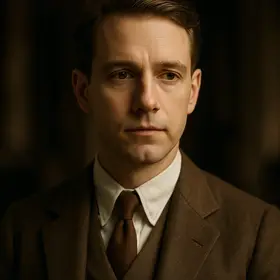 Nick CarrawayNarrator
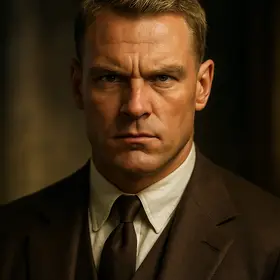 Tom BuchananAntagonist
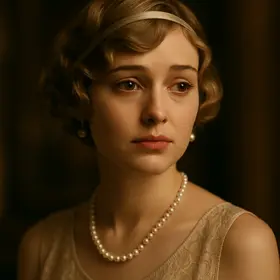 Daisy BuchananMajor character
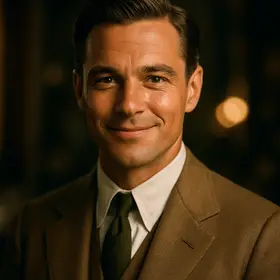 Jay GatsbyProtagonist
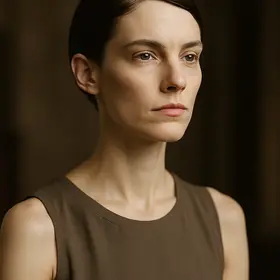 Jordan BakerMajor character
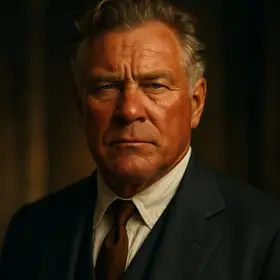 Dan CodyMinor character
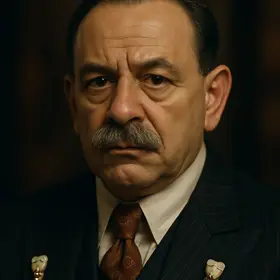 Meyer WolfsheimMinor character
 Ewing KlipspringerMinor character
All chapter summaries ›Characters ›
Read The Great Gatsby illustrated
Every scene in these notes comes from the Book2Life reader, where the full public-domain text is illustrated as you read, with character portraits and narration. Free in your browser and on iPhone.
