
Oliver Cromwell in Twenty Years After
Antagonist
Leader of the Parliamentary forces whose pragmatic power plays threaten Charles I and complicate the musketeers' mission.
Who is Oliver Cromwell?
Oliver Cromwell appears as the stern, calculating Puritan general whose military and political moves shape the English crisis the musketeers confront. He sends dispatches and envoys (notably via Mordaunt) to keep France neutral and to secure his victory over Charles I. On campaign he negotiates with the Scots, orchestrates the king’s capture at Holdenby, and immediately assumes command over prisoners and the conduct of the English cause. Cromwell is shown brooding in his tent, weighing rewards and obligations, granting Mordaunt favors without full inquiry, and later appearing—unexpectedly, in the company of the masked executioner—at the small house where the musketeers stake out the man who executed Charles. Throughout the chapters in which he appears, Cromwell acts as a decisive, lonely figure whose relentless pursuit of state aims collides with the musketeers’ loyalties and the personal honor that drives their attempts to save Charles.
In the book: In Twenty Years After, Oliver Cromwell appears as the formidable Puritan general and rising political force whose maneuvers in England form the backdrop to the musketeers’ mission. Shrewd, pragmatic, and unsentimental, he tests and bargains with those around him, embodying the hard, decisive energy that shifts the balance of power and complicates the heroes’ path.
Personality
- Pragmatic
- In his letter read by Mazarin (Chapter 37) Cromwell frames keeping France neutral as a mutual, practical interest rather than an ideological plea.
- Decisive
- At Newcastle (Chapter 56) his forces' seizure of Charles and the swift orders that the king be conveyed to Holdenby show Cromwell’s rapid, forceful command.
- Brooding
- In his tent after the capture (Chapter 57) Cromwell sits alone, muses on the cost of service and reflects bitterly that he has friends but none like the king’s.
- Trusting in subordinates
- He grants Mordaunt custody of prisoners without asking their names (Chapter 57), revealing a readiness to reward loyal service.
- Unsentimental
- His confidential letter to Mazarin (Chapter 37) treats the king’s fate as a matter of state interest to be managed, not a personal tragedy.
Character arc
Cromwell enters the narrative as a remote but forceful presence communicated through a formal letter urging French neutrality (Chapter 37). That letter establishes him as a calculating strategist who sees political advantage in stability and is already shaping international responses to Charles’s plight. His power becomes immediate at Newcastle, where the military reality he commands leads to the king’s capture and quick conveyance to Holdenby (Chapters 55–56). Cromwell then appears in person in his tent, where his private reflections reveal a leader confident enough to reward subordinates (granting Mordaunt custody) yet conscious of the loneliness of high command (Chapter 57). By the time the musketeers track the masked executioner, Cromwell’s public authority and private reserve converge: he is found in the small house with the executioner (Chapter 67), linking him directly to the machinery that ends the king. Across these scenes he moves from distant strategist to proximate arbiter of England’s fate, remaining consistently pragmatic and unsentimental while revealing personal solitude and the burdens of wielding power.
Relationships
- Mordaunt A trusted subordinate: Cromwell receives reports from him, rewards him with custody of prisoners, and admits him to his private tent (Chapters 37, 57).
- Charles I Principal adversary: Cromwell’s military action leads to Charles’s capture and transfer to Holdenby, and Cromwell contemplates the king’s fate as a political necessity (Chapters 55–56, 64).
- Cardinal Mazarin International interlocutor: Cromwell writes to Mazarin urging French neutrality and frames cooperation as mutually beneficial (Chapter 37).
- The English/Scottish forces (represented by Lord Leven) Instruments and bargaining partners: Cromwell’s operations intersect with Scottish maneuvers that influence Charles’s capture (Chapter 55–56).
- D’Artagnan Indirect adversary: D’Artagnan and the musketeers oppose Cromwell’s plans and later discover Cromwell with the masked executioner (Chapters 64, 67).
Quotes by Oliver Cromwell
“I have wished, monseigneur, to learn your intentions relating to the existing state of affairs in England.”
Chapter 37Cromwell states the purpose of his confidential communication: to ascertain whether France will shelter or oppose King Charles I.
“I was much more really so two hours ago.”
Chapter 57Cromwell says England needed him most before the capture; he reflects on timing and the meaning of his authority.
Why Oliver Cromwell matters
Cromwell stands for the impersonal logic of state power in the novel: his decisions are strategic, unsentimental, and aimed at securing political order, even when they crush individual loyalties and royal dignity. By contrasting his pragmatic calculations with the musketeers’ personal codes of honor and the king’s dignity, the book explores themes of political necessity versus personal fidelity, the loneliness of authority, and the moral costs of victory. Cromwell’s presence forces the heroes to confront that courage and loyalty may be inadequate against organized, bureaucratic force.
Chapters with Oliver Cromwell
More Twenty Years After characters
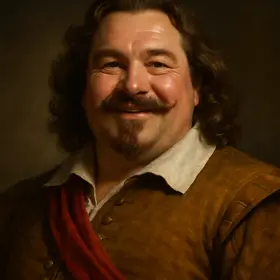 PorthosMajor character
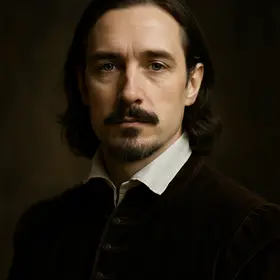 AthosMajor character
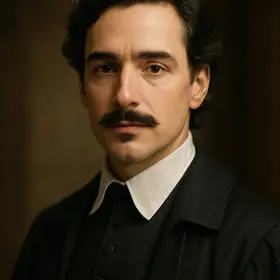 AramisMajor character
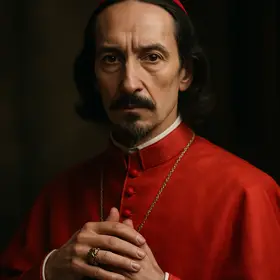 Cardinal MazarinAntagonist
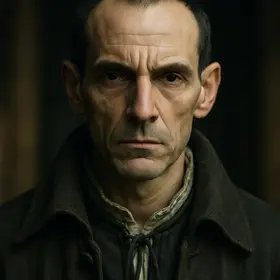 GrimaudMajor character
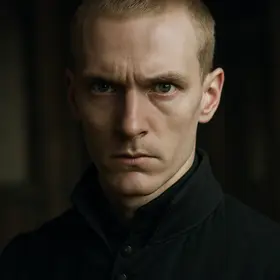 MordauntAntagonist
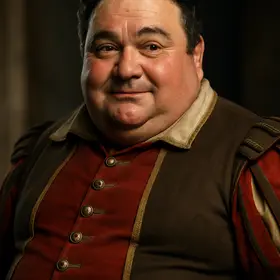 MousquetonMinor character
 PlanchetMajor character
All chapter summaries ›Characters ›
Read Twenty Years After illustrated
Every scene in these notes comes from the Book2Life reader, where the full public-domain text is illustrated as you read, with character portraits and narration. Free in your browser and on iPhone.
