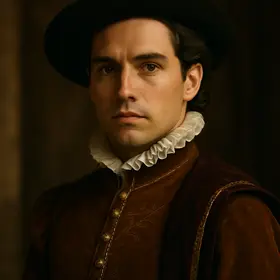
Don Fernando in Don Quixote
Major character
A wealthy young aristocrat whose errant desires and subsequent promises entangle several lovers and help resolve conflicts at the inn.
Who is Don Fernando?
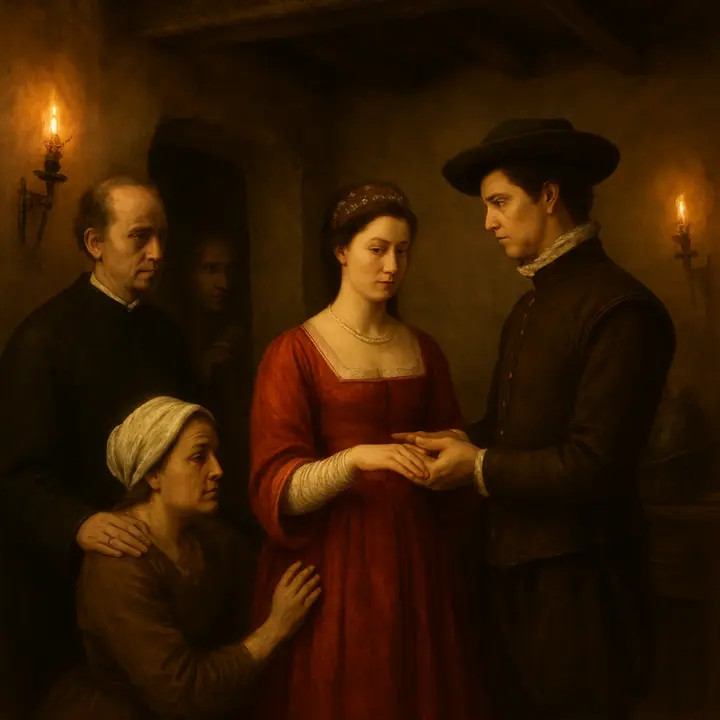
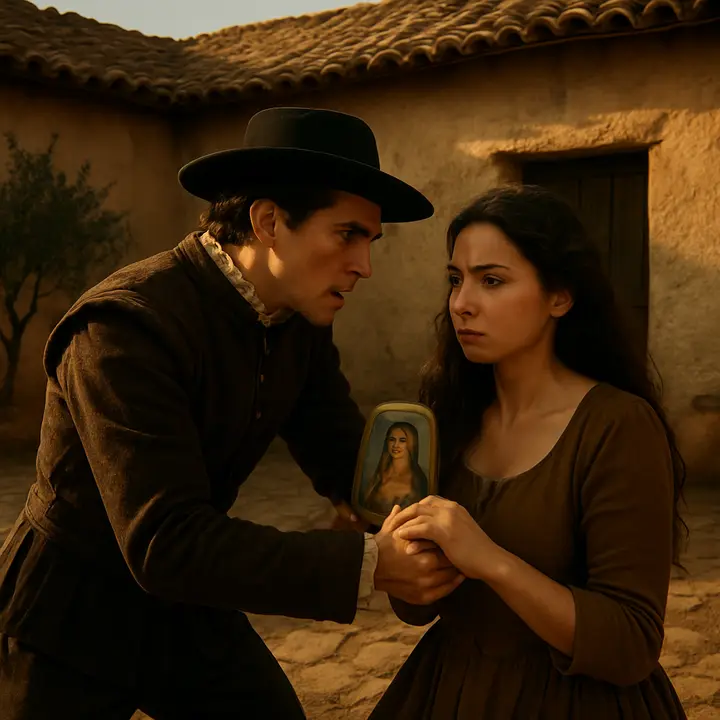
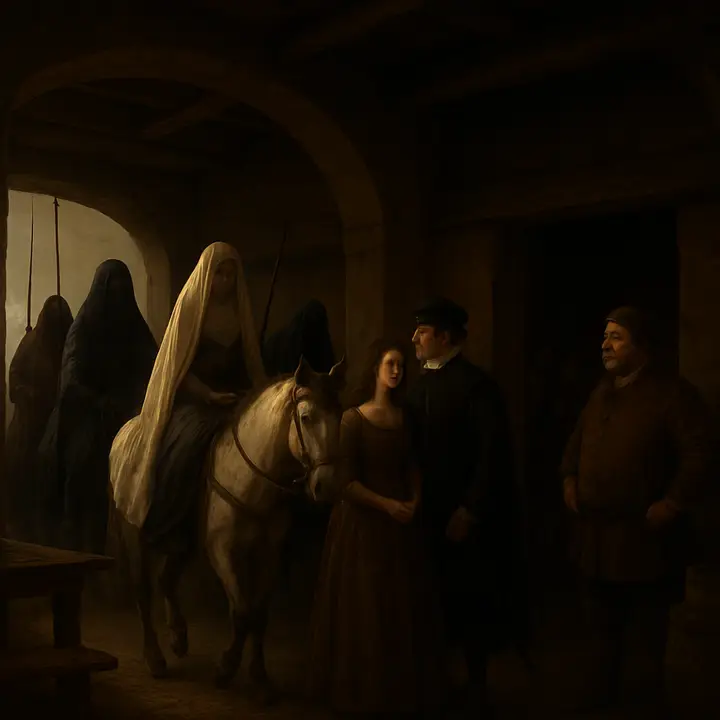
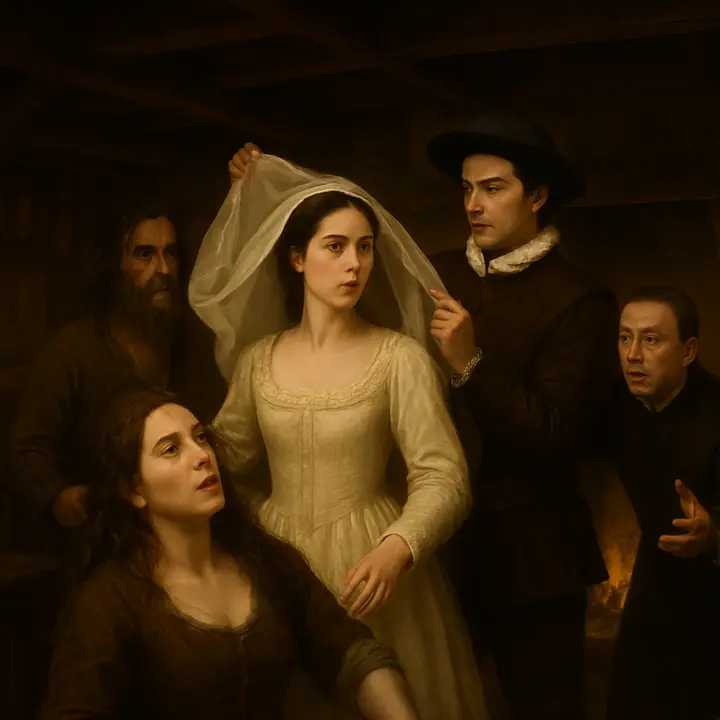
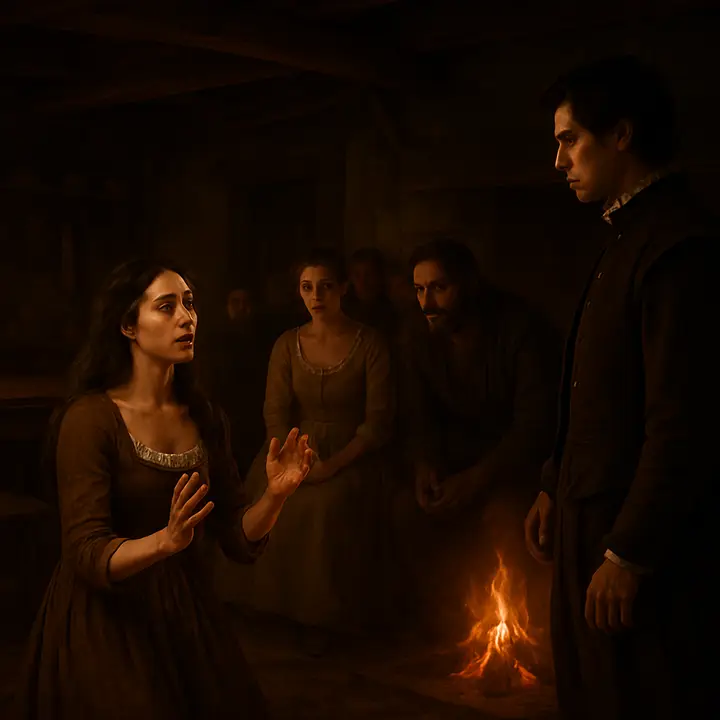
Don Fernando appears as a privileged, impulsive nobleman whose attractions and broken promises catalyze several plotlines. He pursues a peasant girl (Dorotea) with intense courtship—gifts, songs, and a ring—only to vanish and later publicly attach himself to Luscinda, provoking Cardenio’s despair. Don Fernando reappears at the inn escorting Luscinda and is confronted with Dorotea’s story and Cardenio’s claim; moved by testimony and counsel, he relents, accepts Dorotea, and promises to marry her. In the inn scenes he plays an active social role: he organizes votes declaring a barber’s basin a helmet to placate Don Quixote, breaks up fights, helps defuse the Brotherhood confrontation, contributes to paying for disputed items, and joins the escort that transports Don Quixote in a cage. Though not the protagonist, his choices—seduction, shame, public abduction of Luscinda from a convent, and final public acceptance of Dorotea—drive reconciliations among several characters and illuminate questions of honor, social rank, and responsibility.
In the book: Don Fernando is a wealthy young aristocrat whose impulsive desires and broken promises entangle him with other characters, setting off a chain of conflicts about love, honor, and social standing. His actions draw together several storylines at a country inn, where his presence helps illuminate the novel’s themes of reputation, class, and moral responsibility without centering him as the protagonist.
Personality
- Impulsive
- He rapidly shifts his affections from a peasant girl to Luscinda and arranges Luscinda’s betrothal, provoking Cardenio’s rage (Chapters 24, 27).
- Contrite / honorable
- After Dorotea and others confront him at the inn, he publicly accepts Dorotea and vows to honor his earlier pledge (Chapter 36).
- Influential
- He organizes private votes to declare the barber’s basin a helmet and helps separate combatants during the brawl, directing events at the inn (Chapters 45–46).
- Decisive organizer
- He arranges the escort and participates in carrying Don Quixote bound in a cage, helping execute the group’s plan (Chapter 47).
- Generous / practical
- He helps pay the barber for the disputed basin and contributes to settling debts after the Brotherhood incident (Chapter 46).
Character arc
Don Fernando’s arc moves from provocateur to public restitutor. In Cardenio’s telling he first appears as the dangerous rival whose reading of Cardenio’s letters and sudden marriage plots precipitate heartbreak and Cardenio’s flight (Chapters 24, 27). In Dorotea’s mountain confession his past seduction of a peasant girl and abandonment is revealed, complicating his character with an instance of personal betrayal (Chapter 28). His arrival at the inn with Luscinda escalates tensions, but when confronted by Dorotea, Cardenio, the curate, and the barber he shifts course: he explains his motives, expresses shame, and ultimately relinquishes Luscinda in favor of honoring Dorotea, publicly promising to marry her (Chapter 36). Thereafter he plays a steadying social role—resolving disputes, organizing votes to humor Don Quixote, intervening in the brawl, and contributing to settlements—showing a turn toward responsibility and conciliation (Chapters 45–46). By the end he escorts and aids the party as they carry out their ruse and travel, having moved from the source of several misfortunes to a mediator who helps restore social order (Chapter 47).
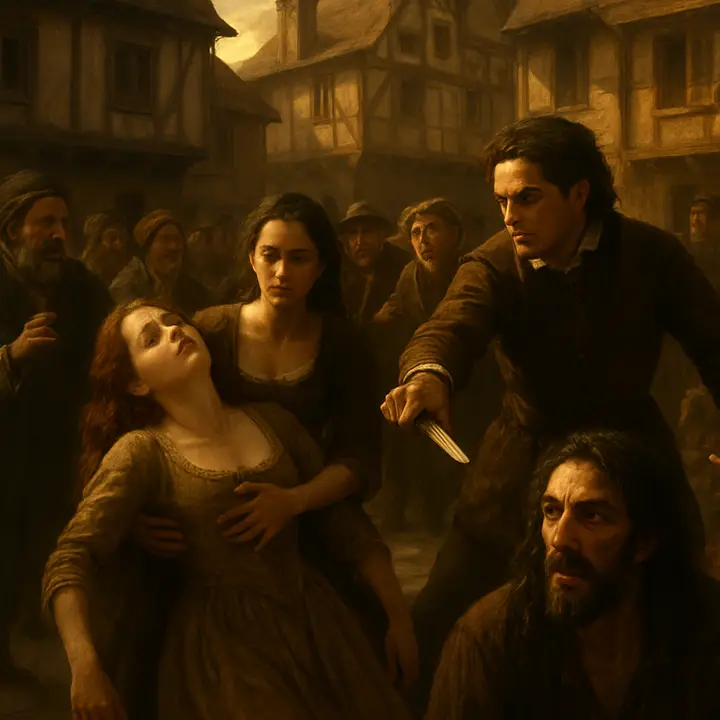
Don Fernando in pictures
Relationships
- Cardenio Rival turned reconciled: his earlier treachery causes Cardenio’s despair but they are reunited when Don Fernando accepts Dorotea and the lovers reconcile.
- Luscinda Object of a passionate suit and abduction; she rejects him at the inn, precipitating the public confrontation that leads to resolution.
- Dorotea A former victim of his seduction whom he ultimately accepts and publicly promises to marry, restoring her honor.
- The Curate Ally and moral adviser who helps orchestrate the confrontations and counsels reconciliation at the inn.
- The Barber Companion in the inn’s social maneuvers: the barber participates in disguises and later receives payment from Don Fernando to settle a dispute.
- Don Quixote Associate within the inn’s events: Don Fernando helps manage the commotion around Don Quixote and joins the escort that transports him.
Quotes by Don Fernando
“Had your worship told me at the beginning of your story that the Lady Luscinda was fond of books of chivalry, no other laudation would have been requisite to impress upon me the superiority of her understanding”
Chapter 24Don Quixote interrupts enthusiastically to equate Luscinda’s taste for chivalric books with intellectual and moral worth, revealing his bias.
“Let us be gone in the name of God to bring aid to this great lady.”
Chapter 29Don Quixote immediately accepts the fabricated princess’s plea and sets out, showing how readily chivalric rhetoric compels him to action.
“Thou hast conquered, fair Dorothea, thou hast conquered, for it is impossible to have the heart to deny the united force of so many truths.”
Chapter 36After hearing Dorothea’s pleading and the counsel of others, Don Fernando admits he cannot refuse and yields to her, embracing her openly.
“I have had the most prodigious and stupendous battle with the giant that I ever remember having had all the days of my life; and with one back-stroke—swish!—I brought his head tumbling to the ground, and so much blood gushed forth from him that it ran in rivulets over the earth like water.”
Chapter 37Don Quixote insists on the reality of his combat despite Sancho's account that the "giant" was only wine-skins.
“As we began in the student’s case with poverty and its accompaniments, let us see now if the soldier is richer, and we shall find that in poverty itself there is no one poorer; for he is dependent on his miserable pay, which comes late or never, or else on what he can plunder, seriously imperilling his life and conscience;”
Chapter 38Opening of Don Quixote’s argument contrasting the material conditions of soldiers with men of letters; establishes his central claim about the greater hardships of arms.
“Your worship may with confidence enter and take your ease in this castle; for though the accommodation be scanty and poor, there are no quarters so cramped or inconvenient that they cannot make room for arms and letters; above all if arms and letters have beauty for a guide and leader, as letters represented by your worship have in this fair maiden, to whom not only ought castles to throw themselv”
Chapter 42Don Quixote greets the Judge and his daughter with hyperbolic chivalric praise, underscoring his comic idealism and the novel’s contrast of romance language with everyday reality.
Why Don Fernando matters
Don Fernando embodies themes of honor, class, and moral responsibility. His actions illustrate how aristocratic privilege enables both harm (seduction, abduction, broken promises) and repair (public restitution, payment of debts, peacemaking). By moving from impulse to contrition and by participating in the communal arbitration at the inn, he shows how reputation and social standing can be restored through public acknowledgement and responsibility. His role also highlights the novel’s interest in the social mechanisms—counsel, ceremony, and restitution—that mediate personal grievances and reintegrate individuals into community life.
Chapters with Don Fernando
More Don Quixote characters
 Don QuixoteProtagonist
 Sancho PanzaMajor character
 Dulcinea del TobosoMinor character
- RRocinanteMajor character
 The DukeMajor character
- DDappleMinor character
 The BarberMajor character
 Cide Hamete BenengeliNarrator
All chapter summaries ›Characters ›
Read Don Quixote illustrated
Every scene in these notes comes from the Book2Life reader, where the full public-domain text is illustrated as you read, with character portraits and narration. Free in your browser and on iPhone.
