
Luscinda in Don Quixote
Major character
Noblewoman loved by Cardenio whose constancy and integrity anchor a tangled subplot of betrayal, abduction, and reconciliation.
Who is Luscinda?
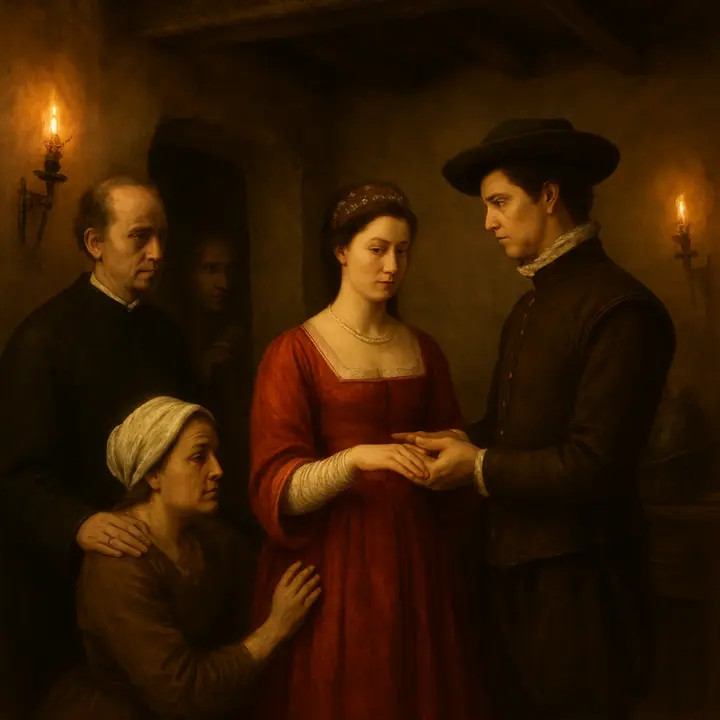
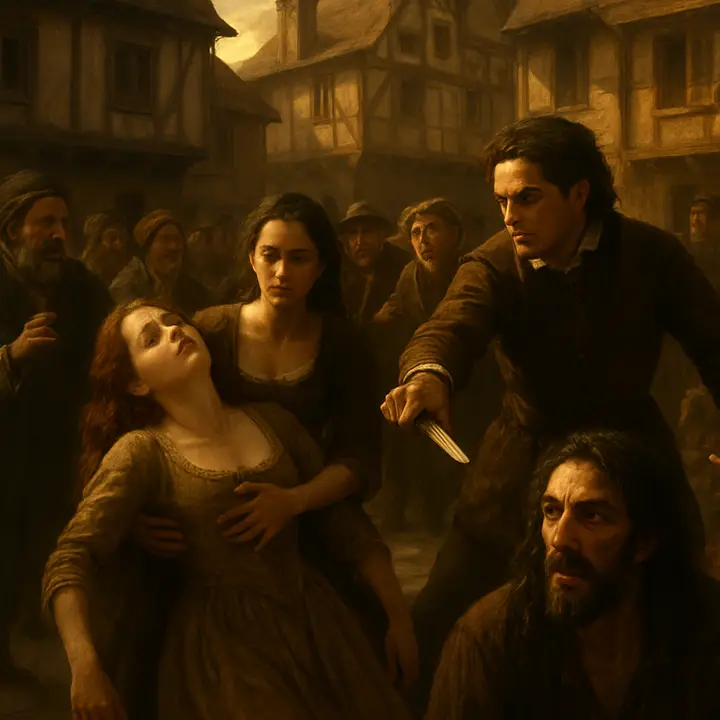
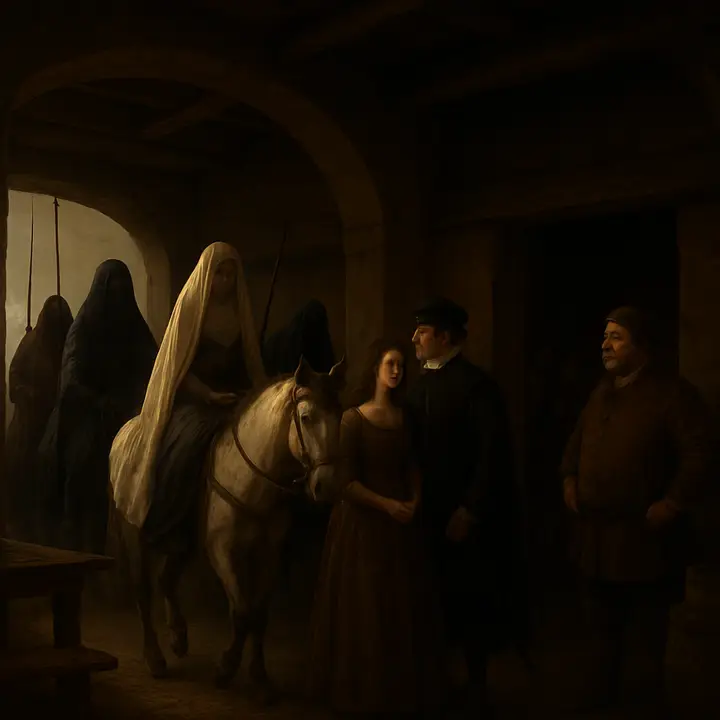
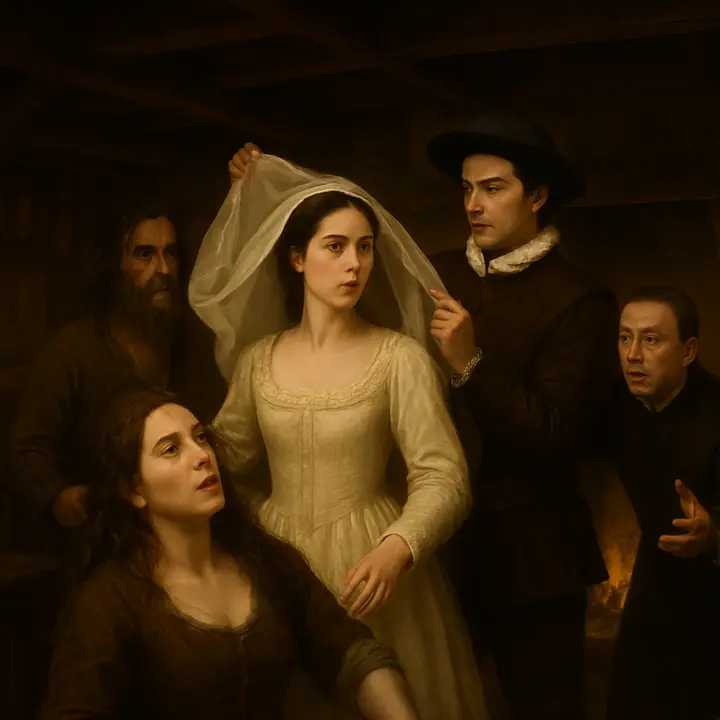
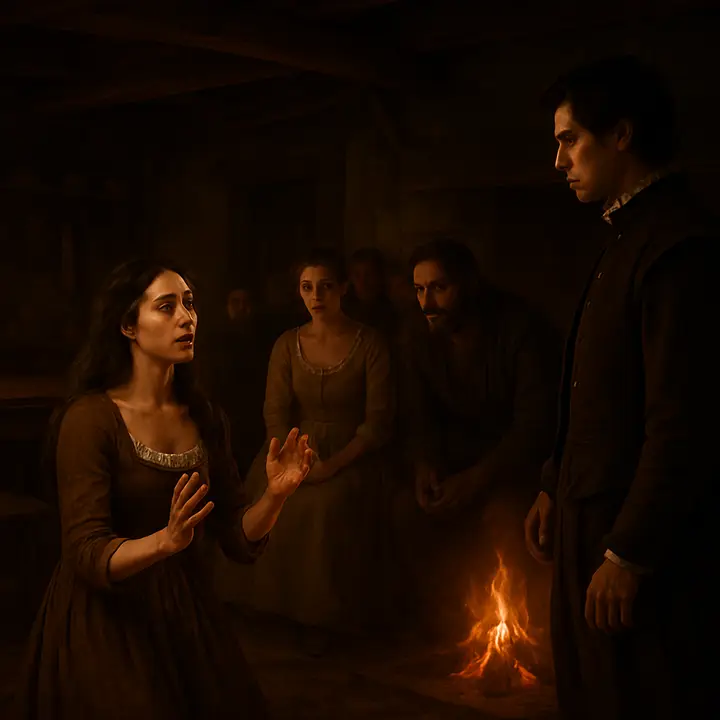
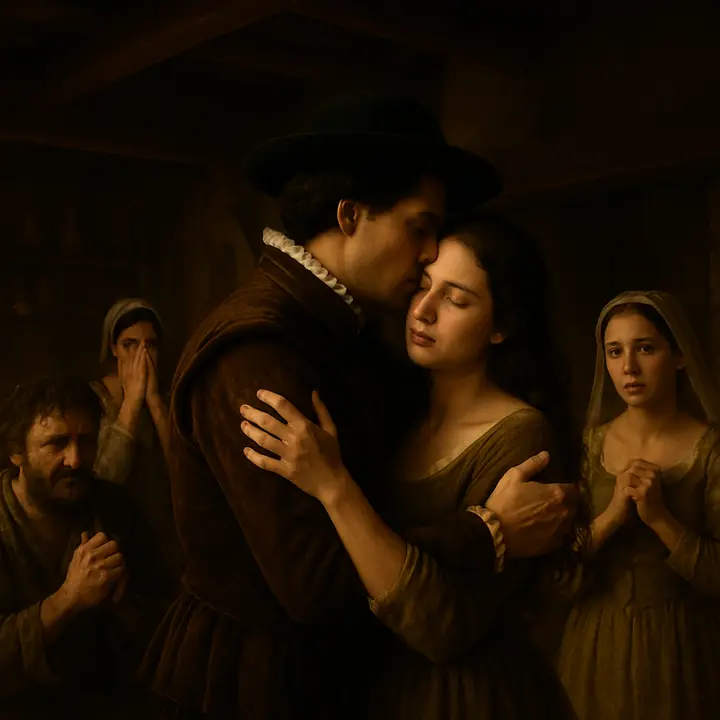
Luscinda is a noble Andalusian woman promised in childhood to Cardenio. In the chapters she appears, her beauty and reputation catalyze the crisis: Don Fernando reads Cardenio’s letters, engineers a betrothal to himself, and later abducts Luscinda from a convent. Luscinda’s steadfast fidelity to Cardenio and her moral clarity surface when she is brought to the inn veiled and under guard; there she publicly rejects Don Fernando’s advances, proclaims her faithfulness, and collapses in the emotional reunion that precedes reconciliation. Her presence drives Cardenio’s descent into despair and madness and then his recovery when she reaffirms their bond. Though she speaks little in the narrated scenes, her actions—fainting, declaring fidelity, and allowing the truth of the tangled relationships to be revealed—resolve the subplot: Don Fernando accepts responsibility and turns to Dorothea, while Cardenio and Luscinda are reunited. Throughout these events she functions as the moral center whose constancy raises the stakes for honor, loyalty, and the social expectations of noble love.
In the book: Luscinda is the beloved of Cardenio and the moral center of a major subplot that entwines with Don Quixote’s adventures. Her constancy and integrity set the stakes of the narrative around her, as a rival nobleman’s pursuit of her triggers misunderstandings, betrayals, and reckonings that draw multiple characters together. Through her steadfastness, she embodies the themes of honor, loyalty, and true love that counterpoint the book’s satire of romance and chivalry.
Personality
- Constant
- At the inn she proclaims her fidelity to Cardenio and rejects Don Fernando’s suit despite being brought there under guard (Chapter 36).
- Measured
- She responds calmly to the charged reunion—declaring fidelity and allowing others to speak—rather than exploding into accusation (Chapter 36).
- Respected
- Her voice and presence immediately draw Cardenio from hiding and move the assembled company to tears and counsel (Chapter 36).
- Moral center
- Her constancy and clear statement of loyalty force Don Fernando to relent and to accept Dorothea, resolving competing claims (Chapter 36).
Character arc
Luscinda appears initially only through Cardenio’s account as the woman whose beauty and promised marriage precipitate his ruin; the narrative describes how Don Fernando’s treachery and a falsified betrothal separate her from Cardenio and plunge him into the mountains. When she physically appears at the inn, veiled and escorted by Don Fernando, the story shifts from accusation and confusion to moral reckoning. In that charged scene she refuses Don Fernando’s suit and publicly avows her loyalty to Cardenio; her testimony and demeanor catalyze Don Fernando’s confession and willingness to acknowledge Dorothea’s prior wrongs. Luscinda does not undergo a dramatic psychological transformation—she remains steady and honorable from first mention to last—but her visible presence effects change in others: Cardenio moves from despair toward reunion, Don Fernando from deceit to repentance, and the group toward reconciliation. Thus her arc is not one of personal change but of being the agent whose constancy restores order and resolves the subplot’s tangled promises.
Luscinda in pictures
Relationships
- Cardenio Her childhood promised husband and true beloved whose madness and sorrow stem from the loss of her hand.
- Don Fernando The rival nobleman who reads Cardenio’s letters, engineers a betrothal to himself, and later abducts and delivers Luscinda to the inn.
- Dorotea A fellow wronged woman whose presence and testimony help expose the truth and lead Don Fernando to accept responsibility to Dorotea.
- The Priest (the curate) One of the moral authorities who counsels the parties and facilitates the public reckoning that vindicates Luscinda’s constancy.
- The Barber A practical ally among the company who participates in events at the inn where Luscinda’s fidelity is affirmed.
Quotes by Luscinda
“I have never told a lie,” was the immediate reply of her who had been silent until now; “on the contrary, it is because I am so truthful and so ignorant of lying devices that I am now in this miserable condition; and this I call you yourself to witness, for it is my unstained truth that has made you false and a liar.”
Chapter 36Luscinda answers the gentleman who warned Dorothea not to expect thanks, asserting her truthfulness and accusing him (Don Fernando) of betraying her.
Why Luscinda matters
Luscinda embodies honor, loyalty, and the ideal of steadfast love that Cervantes contrasts with deceit, passion, and the comic distortions of chivalric romance. Her constancy provides moral gravity to the subplot: while other characters are swayed by ambition or shame, she remains the standard by which truth and reconciliation are measured. By refusing Don Fernando and publicly affirming her bond with Cardenio, she forces a confrontation that unmasks treachery and restores social order, underscoring the novel’s concerns with honor, authenticity, and the social consequences of broken promises.
Chapters with Luscinda
More Don Quixote characters
 Don QuixoteProtagonist
 Sancho PanzaMajor character
 Dulcinea del TobosoMinor character
- RRocinanteMajor character
 The DukeMajor character
- DDappleMinor character
 The BarberMajor character
 Cide Hamete BenengeliNarrator
All chapter summaries ›Characters ›
Read Don Quixote illustrated
Every scene in these notes comes from the Book2Life reader, where the full public-domain text is illustrated as you read, with character portraits and narration. Free in your browser and on iPhone.
