
Louisa van der Luyden in The Age of Innocence
Major character
The solemn, ceremonious grande dame of old New York whose quiet authority shapes society's response to scandal.
Who is Louisa van der Luyden?
Louisa van der Luyden is the austere matriarch at the apex of New York's old aristocracy. She lives in an atmosphere of preserved formality and exerts influence not by ostentation but by measured, ritualized judgment: a word from her can restore or withhold social standing. When the Countess Olenska's return threatens family reputations and Mingott's position, Louisa and her husband deliberate and decide to interpose themselves—inviting the Countess to dinners and sheltering her—to signal social support and to regulate the situation. In her drawing-room, with shrouded furniture and portraiture that emphasize lineage and continuity, she listens, defers to her husband in practiced mutual hesitancy, and then acts with the gravity of a guardian of custom. Her home provides the stage for important encounters (the van der Luyden dinner where Ellen sits beside Archer, the small formal gatherings that rehabilitate Ellen) and her decisions steer how society treats the Countess and the Beaufort scandal. She prefers corrective, ceremonial remedies that aim to absorb deviation back into propriety rather than to punish loudly.
In the book: When we first meet Louisa van der Luyden, she’s the quietly commanding grande dame of old New York, living in serene seclusion with her husband. Archer and May turn to her because her approval can open the doors of society—or keep them firmly shut—so even her soft-spoken word matters a great deal.
Personality
- Solemn
- Her Madison Avenue drawing-room, with shrouded furniture and portraits, reinforces her air of preserved authority when Mrs. Archer recounts the scandal.
- Discreet
- She chooses to invite the Countess to a small dinner to signal private social support rather than make a public declaration.
- Influential
- Mrs. Archer goes to see Louisa because her approval can open society’s doors and the van der Luydens' interposition quickly becomes known across the circle.
- Conservative
- Her decisions aim to restore propriety—bringing the Countess into their circle to manage the situation rather than endorsing radical change.
- Ceremonial
- She and her husband consult each other with practiced hesitancy and then enact formal remedies such as inviting the Countess to state dinners.
Character arc
Louisa appears consistently as a guardian of social order from her first scenes to later gatherings. At the outset she is the dignified recluse whose soft-spoken word carries weight; Mrs. Archer and other families solicit her counsel because she embodies the van der Luyden standard. Faced with the Mingott/Olenska scandal she initially listens in solemn reserve, then, after conferring with her husband, acts: she sends an invitation to the Countess and hosts a small dinner that publicly signals family protection. Throughout subsequent episodes she presides over formal entertainments that both introduce Ellen into the inner circle and help to smooth over improprieties raised by Beaufort's associations. Louisa does not undergo a dramatic personal transformation; rather, her role clarifies: she upholds continuity, using ritualized hospitality to absorb rupture back into the social fabric. By the farewell dinner for the Countess and the arrangements for the Archers' stay at the van der Luydens' house, Louisa's steady, conservative stewardship is affirmed—she remains the immutable centre of ceremonious respectability that shapes outcomes without revealing emotional tumult.
Relationships
- Henry van der Luyden Her husband and practiced counterpart; they consult each other gravely and act in mutual hesitancy.
- Countess Ellen Olenska The relative whose social rehabilitation Louisa engineers by inviting and protecting her within the circle.
- Mrs. Archer An ally whom Louisa receives and whom Mrs. Archer asks to intercede on the Countess's behalf.
- Newland Archer An acquaintance whose interactions with the Countess Louisa's gatherings frame and influence.
- Mr. Sillerton Jackson A fellow member of society who attends van der Luyden dinners and participates in the polite management of scandal.
- May Welland A guest and younger member of society whose arrival at van der Luyden events underscores the household's role as arbiter of propriety.
Why Louisa van der Luyden matters
Louisa embodies the novel's theme of social order maintained through ritual, lineage and quiet authority. She demonstrates how the highest circles of New York police morality not by spectacle but by courteous, controlled intervention—absorbing deviations through invitation and hospitality. Her actions show that reputations are less the product of law or passion than of sanctioned gestures; her decision to shelter and dine the Countess reframes scandal as a family matter to be managed. In doing so Louisa exposes the novel’s tension between individual desire and communal preservation: she preserves continuity, making personal transgression legible only within the terms of society’s ceremonial forgiveness.
Chapters with Louisa van der Luyden
More The Age of Innocence characters
 Newland ArcherProtagonist
 May WellandMajor character
 Countess Ellen OlenskaMajor character
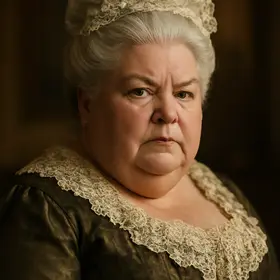 Mrs. Manson MingottMajor character
 Mrs. WellandMajor character
 Julius BeaufortMajor character
 Lawrence LeffertsMinor character
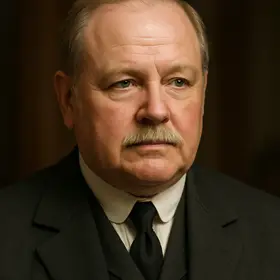 Mr. WellandMinor character
All chapter summaries ›Characters ›
Read The Age of Innocence illustrated
Every scene in these notes comes from the Book2Life reader, where the full public-domain text is illustrated as you read, with character portraits and narration. Free in your browser and on iPhone.
Read The Age of Innocence free
