Scoresby in Moby-Dick
Minor character
A published whaling illustrator/naturalist whose small, useful Right Whale outlines and single whaling scene are cited by the narrator.
Who is Scoresby?
Scoresby appears only as a quoted or cited authority on whales and whaling imagery. The narrator inspects many published outlines and engravings and names Scoresby as providing useful Right Whale outlines, though they are too small, and as producing only a single whaling scene. Scoresby’s presence is entirely that of a referenced expert/artist: he supplies factual or pictorial material the narrator consults while arguing about how badly whales have been imagined and depicted. He does not act in the plot; rather, his work functions as a piece of documentary or illustrative evidence within the narrator’s broader critique of artistic and scientific representations of whales.
Personality
- Artisan
- The narrator singles out Scoresby for the Right Whale outlines he publishes, treating him as a practical draughtsman.
- Precise
- The narrator calls Scoresby’s outlines 'useful,' implying technical accuracy valued by whalemen and scholars.
- Limited
- The narrator complains that Scoresby’s contributions are 'too small' and amount to only one whaling scene.
- Authoritative
- Scoresby is listed among other named authorities and engravers the narrator reviews when assessing pictorial traditions.
Character arc
Within the chapters where he appears, Scoresby has no personal narrative development: he is static and functionary. From first mention to last, he remains an external authority invoked by the narrator to support points about whaling imagery. The narrator first notes Scoresby among many sources, then evaluates his work—praising its usefulness but noting limitations of scale and quantity. Scoresby does not act, change opinion, or undergo events; his role is to anchor the narrator’s argument about the insufficiency of many published images. Thus his 'arc' is simply the narrator’s shifting appraisal (recognition of usefulness balanced by critique), rather than any transformation in Scoresby himself.
Relationships
- Narrator The narrator cites and evaluates Scoresby’s published outlines and engravings while arguing about accurate depiction of whales.
- Sperm Whale Scoresby’s illustrations are part of the broader corpus of whale imagery the narrator compares to the living Sperm Whale’s reality.
- Leviathan Scoresby’s work is used in a discussion that evokes the Leviathan tradition—the monstrous, often-misrepresented whale of scripture and myth.
Why Scoresby matters
Scoresby functions as a concrete example in the book’s examination of how art, science, and print shape human knowledge of nature. His useful but limited outlines show both the value and the insufficiency of secondhand representations: they aid understanding yet fail to capture the living whale’s full scale and motion. By invoking Scoresby, the narrator underscores a central theme—knowledge of the whale (and of the natural world) is mediated, partial, and often misleading unless grounded in direct experience, a point that propels the narrator’s plea to see whales at sea despite the peril.
Chapters with Scoresby
More Moby-Dick characters
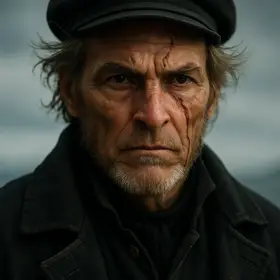 Ahab
Ahab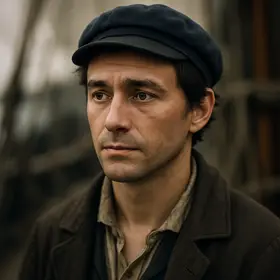 Ishmael
 Stubb
Stubb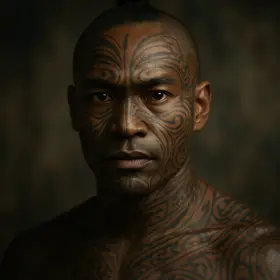 Queequeg
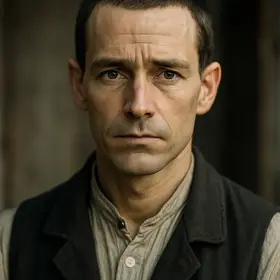 Starbuck
 Flask
Flask Tashtego
 Moby Dick
All chapter summaries ›Characters ›
Read Moby-Dick illustrated
Every scene in these notes comes from the Book2Life reader, where the full public-domain text is illustrated as you read, with character portraits and narration. Free in your browser and on iPhone.
